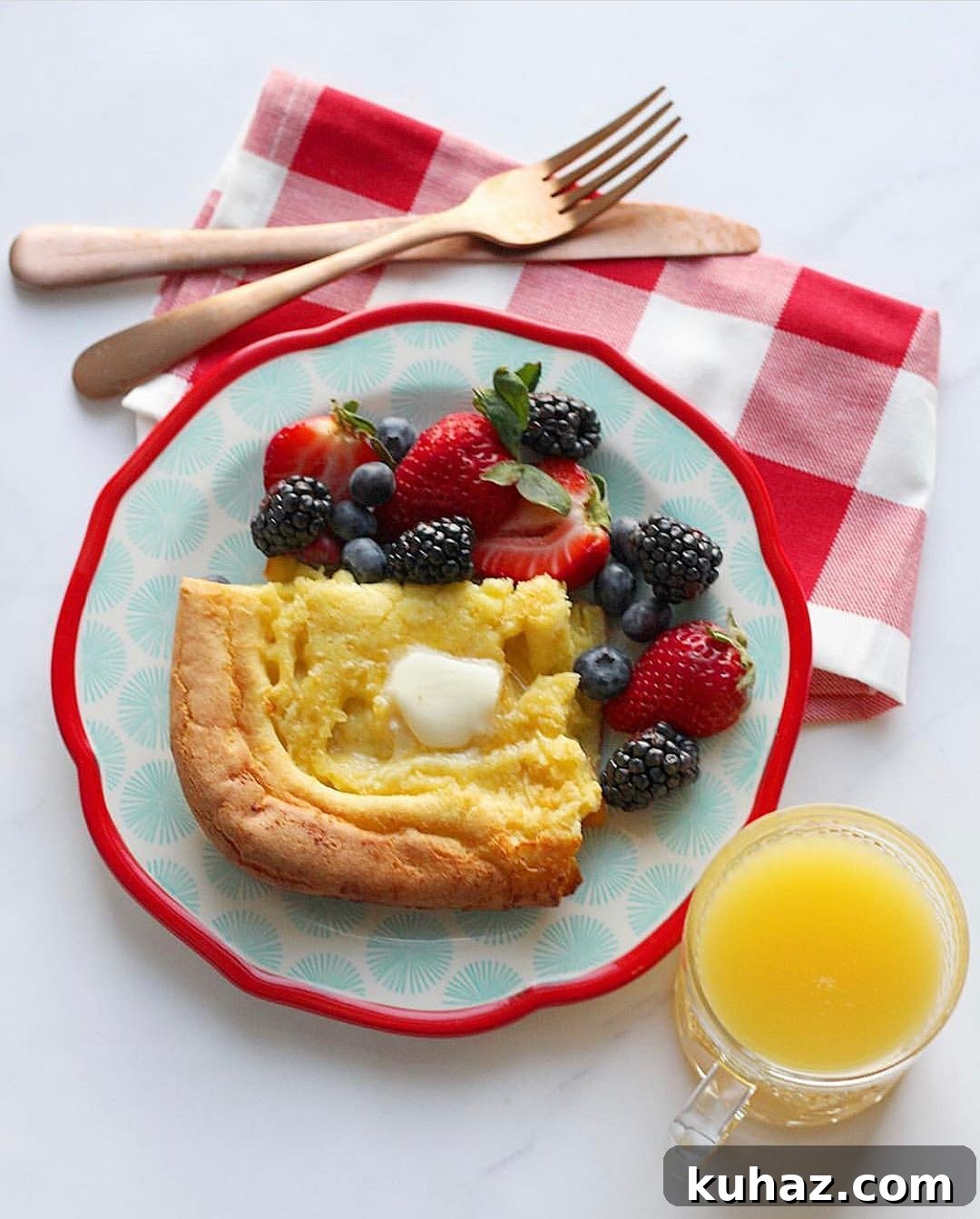
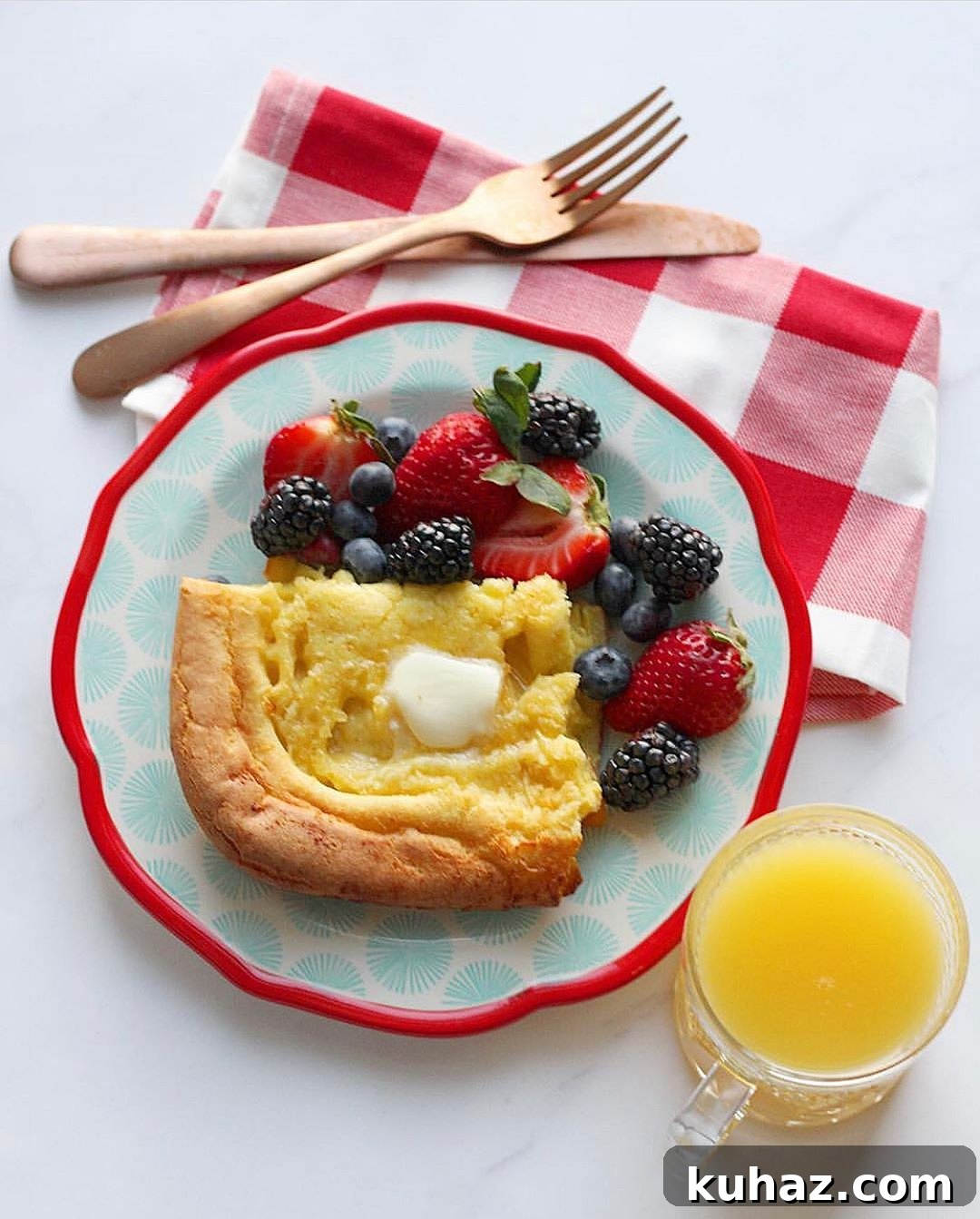
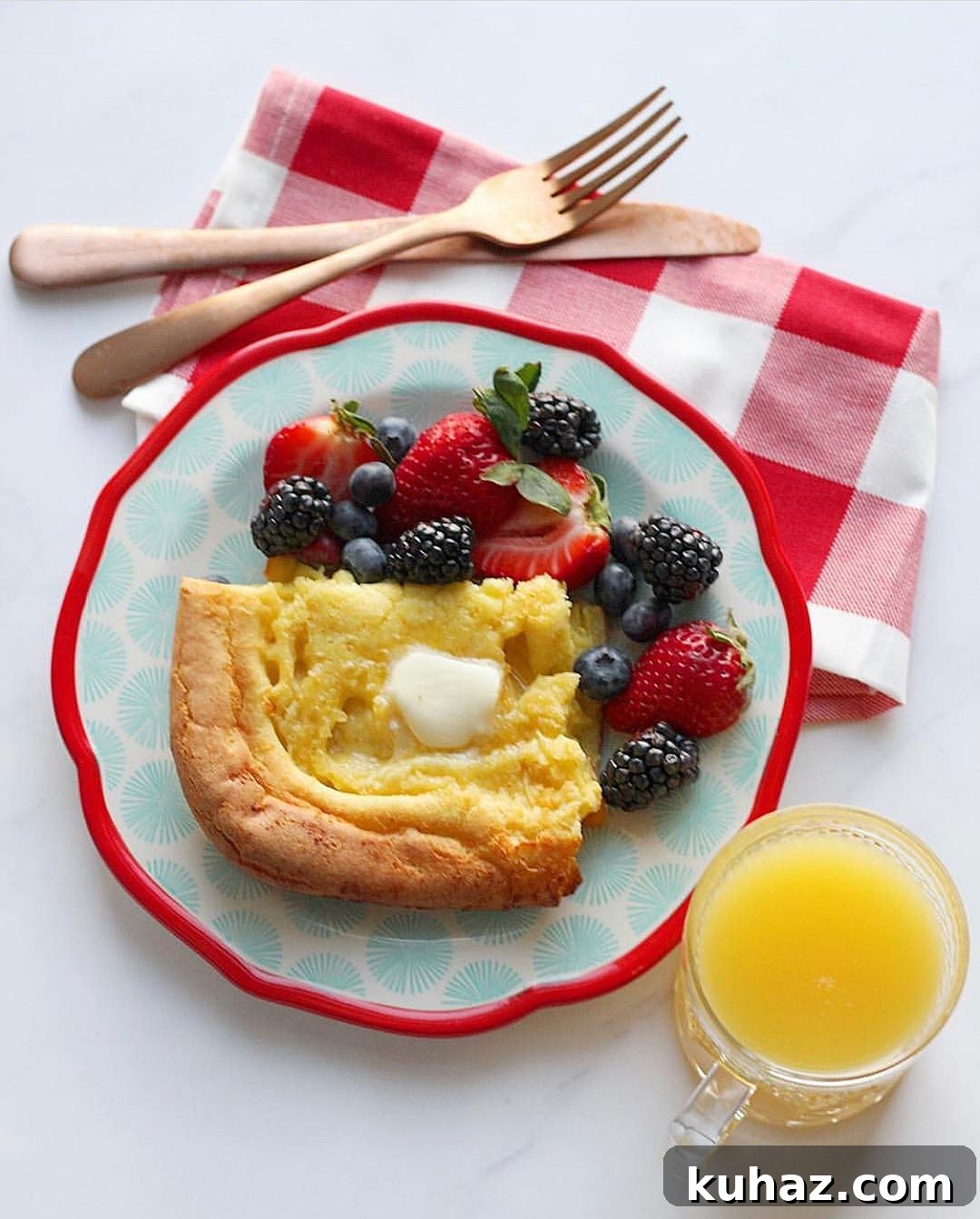
Such a classic. Everyone deserves a taste of this oven-born deliciousness! These German pancakes may look like a fancy breakfast casserole, but they are incredibly simple and made with ingredients you likely already have on hand. Add this to your list of favorite breakfasts—it’s comforting, impressive, and perfect for weekend mornings or serving a crowd.
German Pancakes
A must-have on your breakfast favorites list — light, puffed, and golden straight from the oven.
- Course: Breakfast
- Prep time: 5 minutes
- Cook time: 20–25 minutes
- Servings: 6–8 (depending on portion size)
Ingredients
- 6 eggs
- 1 cup milk
- 1 cup all-purpose flour
- 1/4 tsp salt
- 1 tsp vanilla (optional)
- 1/4 cup butter, to melt in the baking dish
Instructions
- Preheat the oven to 425°F (220°C).
- In a blender, combine the eggs, flour, milk, salt, and vanilla. Blend until the batter is smooth. If bits of flour stick to the sides, scrape them down with a spatula and blend again to ensure a uniform batter.
- Place the butter in a 9×13-inch (23×33 cm) glass baking dish and put the dish in the preheating oven. Watch closely and remove the dish when the butter has melted but before it begins to brown.
- Carefully pour the blended batter into the hot baking dish over the melted butter. Return the dish to the oven immediately.
- Bake for 20–25 minutes, or until the pancake has puffed up and turned golden brown along the edges.
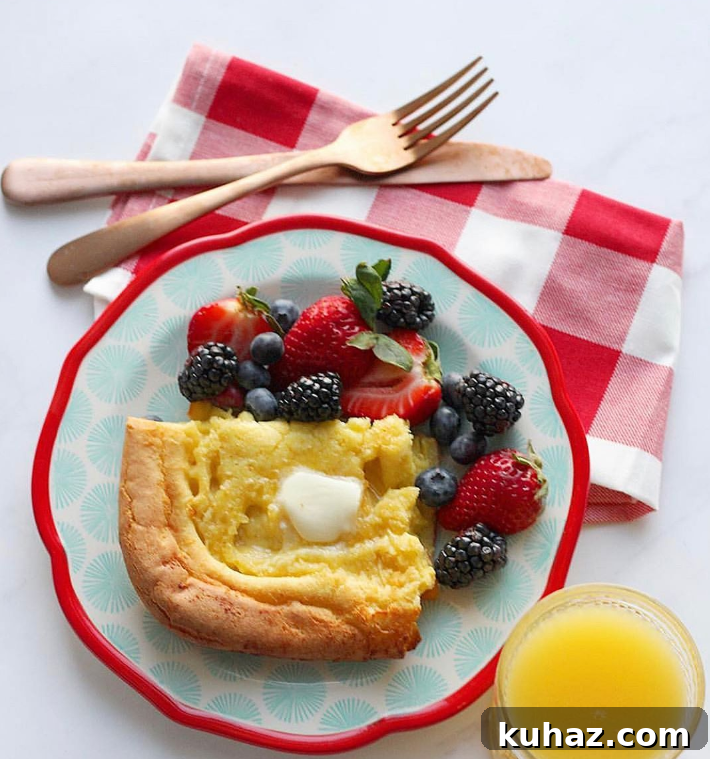
- Remove from the oven and allow it to settle for a minute. Cut into squares or wedges and serve warm. Dust with powdered sugar, drizzle with pure maple syrup, or top with fresh berries for a bright contrast.
Serving Suggestions
German pancakes are best enjoyed hot from the oven. Classic toppings include a sprinkle of powdered sugar and a drizzle of maple syrup. Fresh berries, lemon wedges, or a dollop of whipped cream also pair beautifully. For a savory twist, skip the sugar toppings and serve with smoked salmon, fresh herbs, or a side of sautéed mushrooms.
Tips and Variations
– For extra flavor, try adding a pinch of cinnamon or a little lemon zest to the batter.
– To make a gluten-free version, substitute a 1:1 gluten-free flour blend in place of all-purpose flour. Texture may vary slightly.
– If you prefer richer pancakes, swap half the milk for buttermilk or use whole milk for a creamier result.
– To serve a crowd, double the recipe and bake in an appropriately larger dish; adjust cooking time as needed and monitor the puff and color.
Make-Ahead and Storage
German pancakes are best eaten the day they are made, while still warm and puffed. If you have leftovers, store them in an airtight container in the refrigerator for up to 2 days. Reheat gently in a low oven (about 300°F / 150°C) for a few minutes to regain some crispness. They can also be reheated in a toaster oven or briefly in a skillet over low heat.
Notes on Technique
The hot baking dish with melted butter is key to the classic rise and crisp edge of a German pancake. Pouring the batter into the hot dish creates steam immediately, which helps the pancake puff. Avoid opening the oven during the first 15 minutes of baking to ensure steady heat and an even rise.