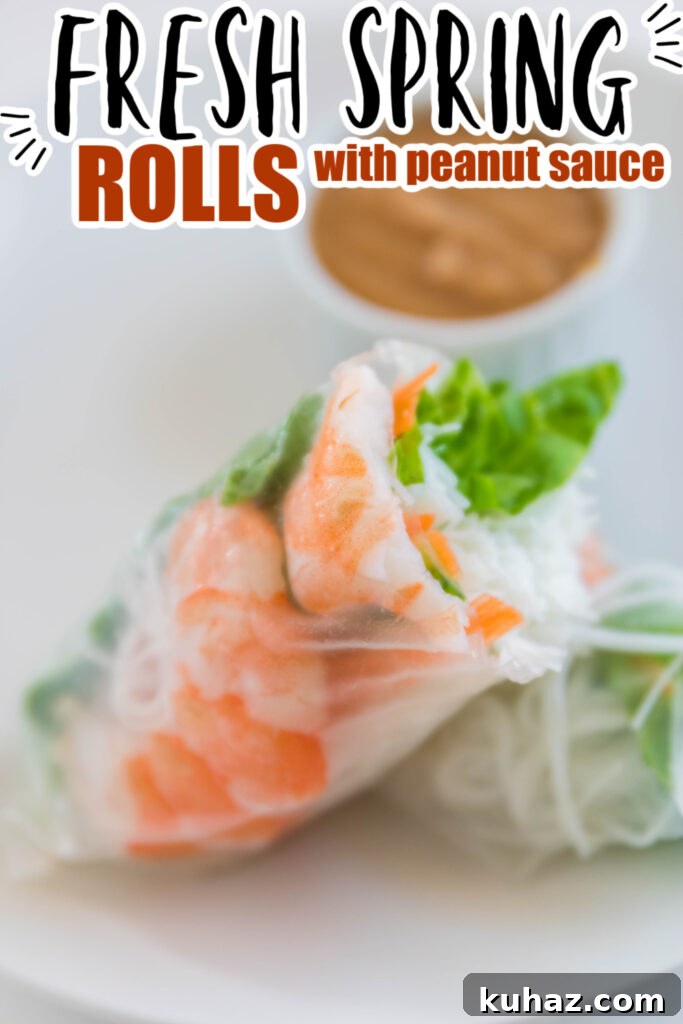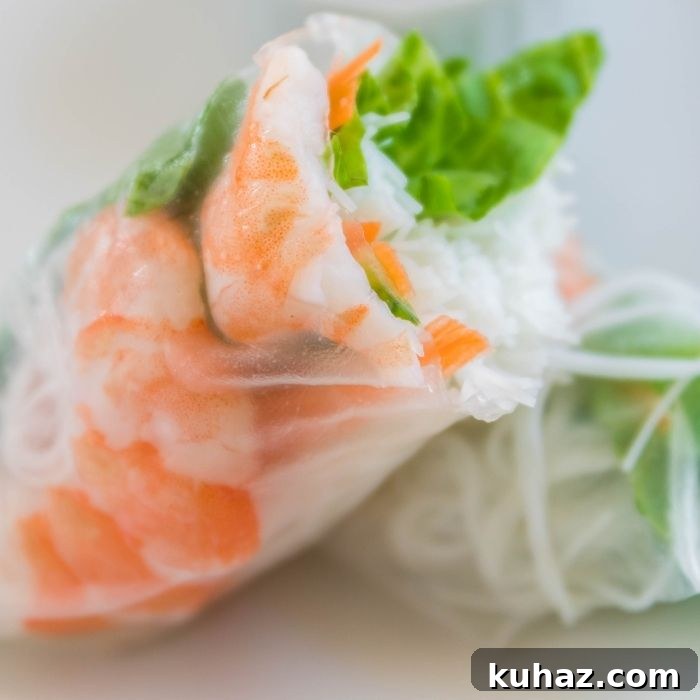
Fresh spring rolls are filled with crisp vegetables and tender shrimp, and they pair beautifully with a creamy homemade peanut dipping sauce. These light, refreshing rice paper rolls are a simple, restaurant-inspired recipe you can make at home. The peanut sauce is rich and balanced, making it the perfect companion to these spring rolls.
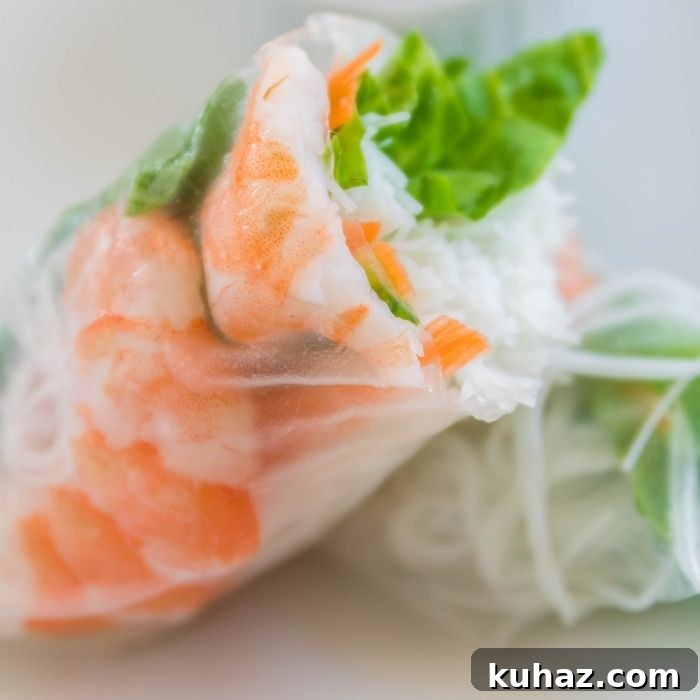
Table of Contents
- Ingredients
- Peanut Sauce Ingredients
- How to Make
- Storing
- Variations
- Tips for Working with Rice Paper
- FAQs
- Related Recipes
I first tasted a version of these as vegan spring rolls at a local Thai restaurant and wanted to recreate them at home. With a few simple adjustments—like adding shrimp or keeping them vegetarian—you can adapt this recipe to suit your preferences. Below is a clear walkthrough and a printable ingredient list and instructions to help you make fresh spring rolls with confidence.
Why these spring rolls are great
- Quick and easy to prepare—use pre-cooked shrimp to skip cooking time.
- Fresh vegetables keep each bite crisp and satisfying.
- Healthy and versatile: serve as an appetizer, light lunch, or part of a meal.
- Easily customized—omit or substitute ingredients to fit dietary needs.
- Can be made vegan by leaving out the shrimp and swapping the honey.
- Restaurant-inspired flavors with a creamy, slightly sweet peanut dipping sauce.
Ingredients
For the spring rolls
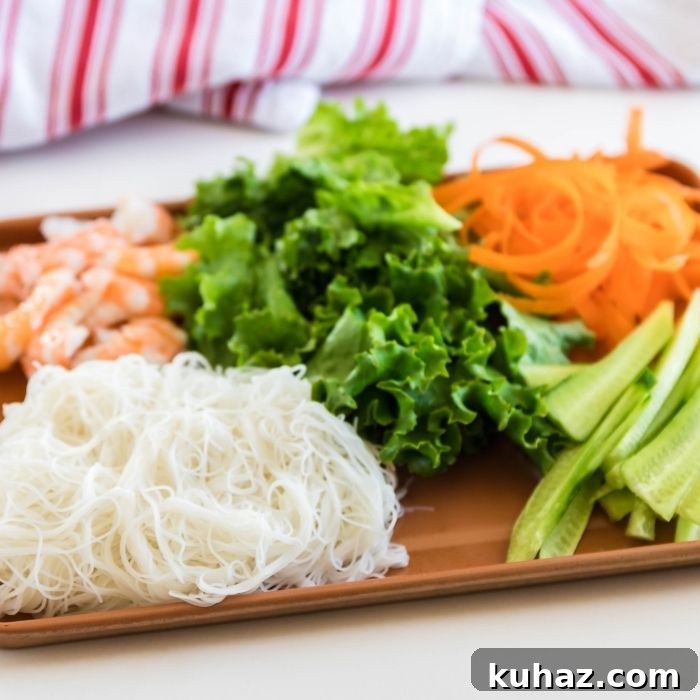
- Rice paper wrappers — usually sold in sheets at most grocery stores.
- Vermicelli (thin rice) noodles — optional; use thin rice noodles if including them.
- Lettuce — leaves or thinly sliced for texture and volume.
- Cucumber — cut into very thin matchsticks.
- Carrots — peeled into thin strips with a peeler or julienne slicer.
- Shrimp — pre-cooked, halved; medium shrimp work well. (Replace or omit for vegetarian/vegan rolls.)
Peanut Sauce Ingredients
- Creamy peanut butter
- Rice vinegar
- Soy sauce or tamari (low-sodium if preferred)
- Honey (or agave/maple for a vegan option)
- Sesame oil
- Water to thin the sauce to your desired consistency
- Hoisin sauce (optional, for added depth)
How to Make
The following is a simple step-by-step to assemble spring rolls. Adjust quantities to make more or fewer rolls as needed.
- Cook rice noodles according to package instructions. Drain, rinse under cold water, and set aside.
- Prepare vegetables: wash and slice lettuce, cut cucumber into thin strips, and peel carrots into thin ribbons.
- Fill a shallow dish with warm water. Dip one rice paper sheet for about 15–20 seconds until it becomes pliable but not overly soft.
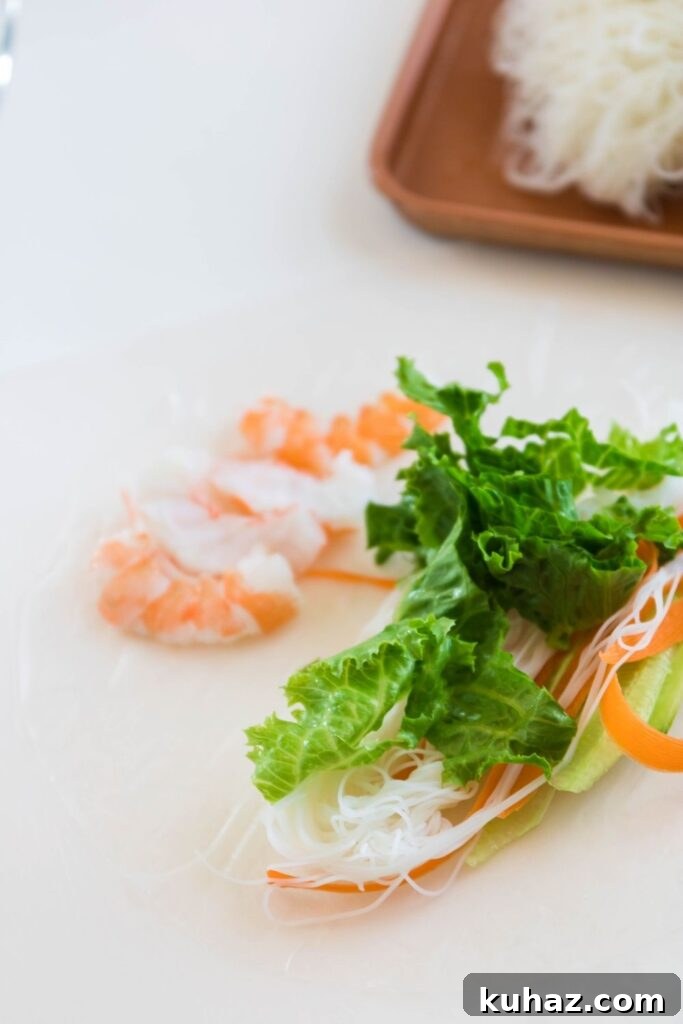
- Lay the softened wrapper on a clean work surface. Arrange a small handful of lettuce, a few carrot and cucumber strips, some noodles (if using), and shrimp near the edge closest to you.
- Fold the sides in, then roll from the filled edge away from you, keeping the roll tight—similar to wrapping a burrito.
- Place finished rolls on a plate and cover with a damp paper towel to prevent drying while you assemble the rest.
- To make the peanut sauce, whisk together peanut butter, hoisin (if using), soy sauce, rice vinegar, honey, sesame oil, and a little water. Add water a tablespoon at a time until you reach the desired texture.
- Serve the fresh spring rolls immediately with the peanut dipping sauce on the side.
Storing
Fresh spring rolls are best eaten soon after assembling. If you need to store them for a short time (2–3 hours), cover them with damp paper towels and place them in an airtight container in the refrigerator. Without moisture, rice paper will dry out and become chewy.
Variations
- Swap in chicken, pork, or thinly sliced steak instead of shrimp.
- Omit protein for a vegan roll and use extra vegetables or tofu.
- Add fresh herbs like cilantro or mint for brightness.
- Use different vegetables—bell pepper, cabbage, or bean sprouts all work well.
- Mix chili sauce into the peanut dip or serve it on the side for heat.
- For a nut-free option, substitute almond or sunflower seed butter for peanut butter.
Tips for Working with Rice Paper Wraps
- Soften the wrappers in warm water for about 10–20 seconds. Time varies by brand—avoid oversoaking.
- Work on a damp surface or place each softened wrapper on a damp towel so it won’t stick.
- Don’t overfill the roll; too much filling makes wrapping difficult and can tear the paper.
- Fold the sides in first, then roll tightly from the filled edge to create a secure seam.
- Keep finished rolls covered with a damp towel until serving to prevent drying.
FAQs
- Is a spring roll healthy?
- Yes—when made with fresh vegetables and lean protein, spring rolls are a nutritious, low-fat option. Rice paper is low in calories and spring rolls allow you to pack in vegetables and lean protein.
- How do you fold a spring roll?
- Place ingredients near the edge of the softened wrapper, fold the sides in like a burrito, then roll away from you tightly to seal the filling inside.
- What are spring roll wrappers called?
- They are commonly called rice paper wrappers. These thin sheets are made from rice flour and water and are designed for fresh (unfried) rolls.
- What is the difference between egg rolls and spring rolls?
- Egg rolls are typically filled with cabbage and other vegetables, wrapped in a thicker wheat wrapper, and deep-fried. Fresh spring rolls use thin rice paper and are usually served unfried.
Related Recipes
- Thai Salad
- Green Goddess Salad
- Chinese Chicken Salad
- Chicken Pad Thai
- Bang Bang Shrimp
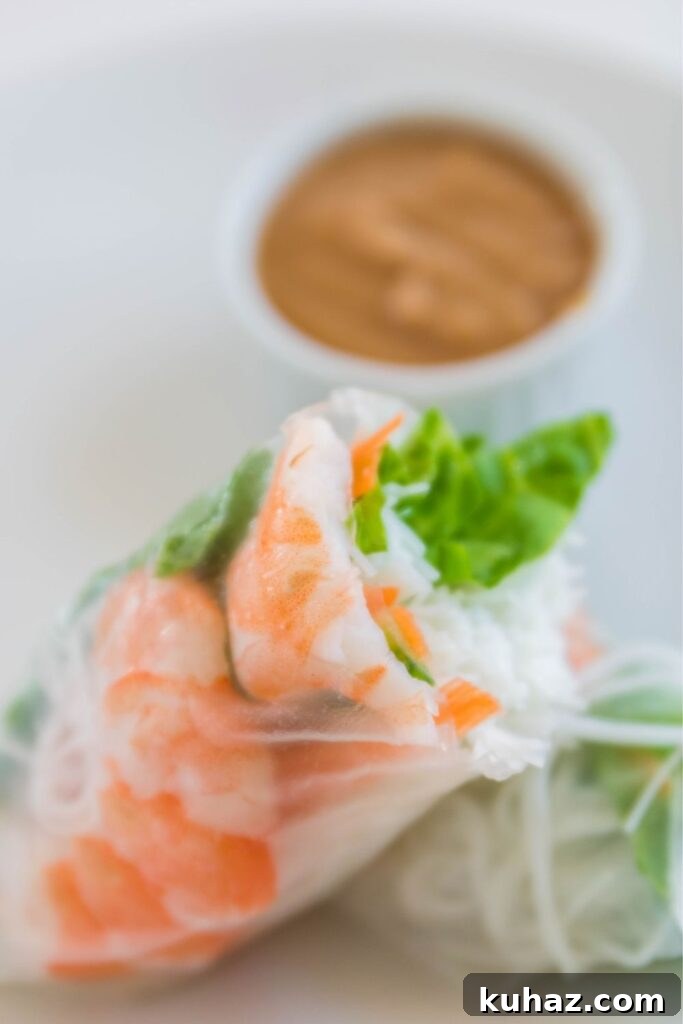
If you try this recipe, experiment with fillings and dipping-sauce thickness until it matches your taste. Fresh spring rolls are forgiving and fun to customize—enjoy creating your favorite combination.