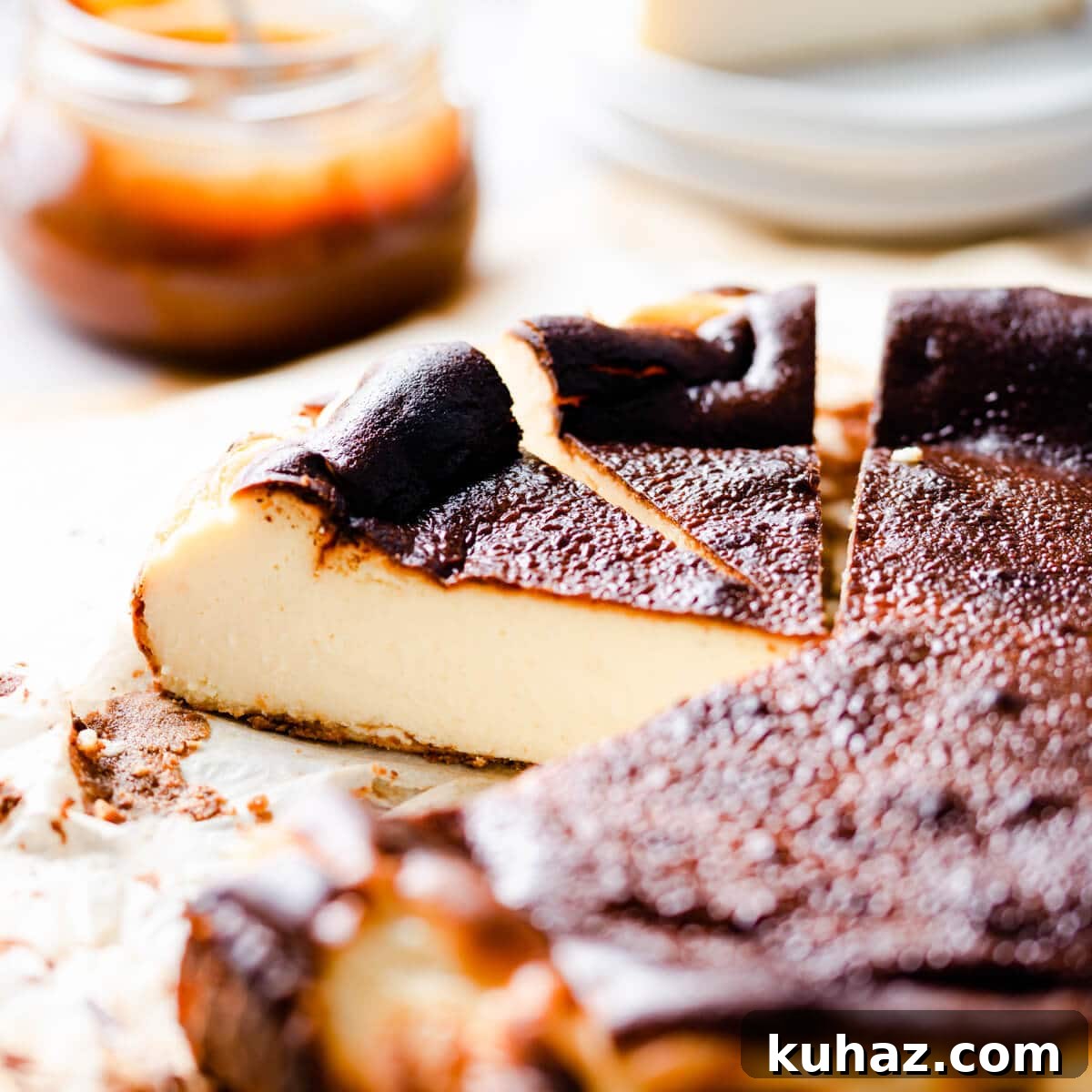
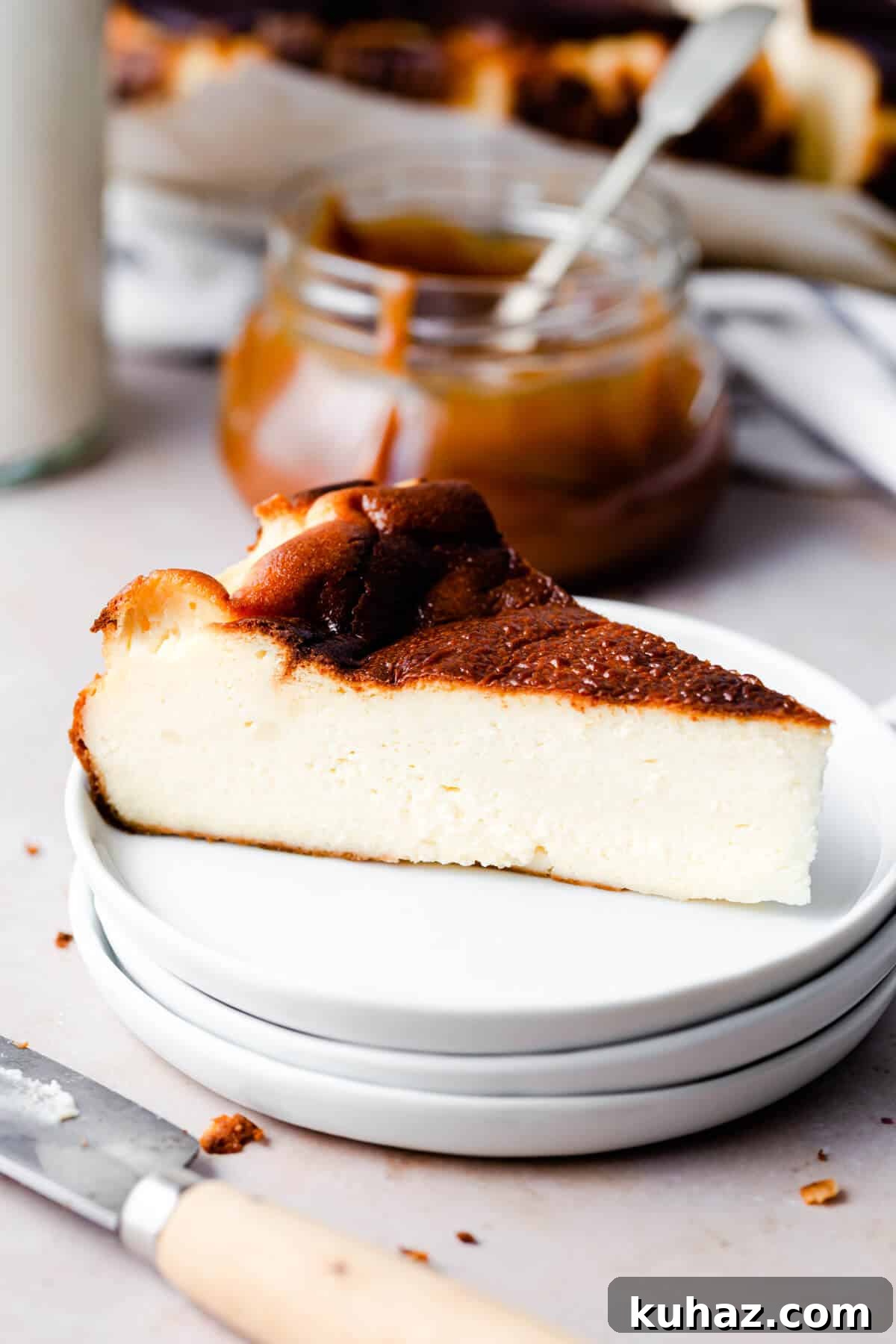
This iconic burnt Basque cheesecake is destined to become your go-to dessert for any occasion. Its deeply golden-brown, caramelised exterior contrasts beautifully with an incredibly smooth, creamy and light interior. This unique cheesecake has no crust and is baked at high temperature — no water bath required — making it an easy, forgiving bake that’s perfect for novice bakers as well as experienced home cooks.
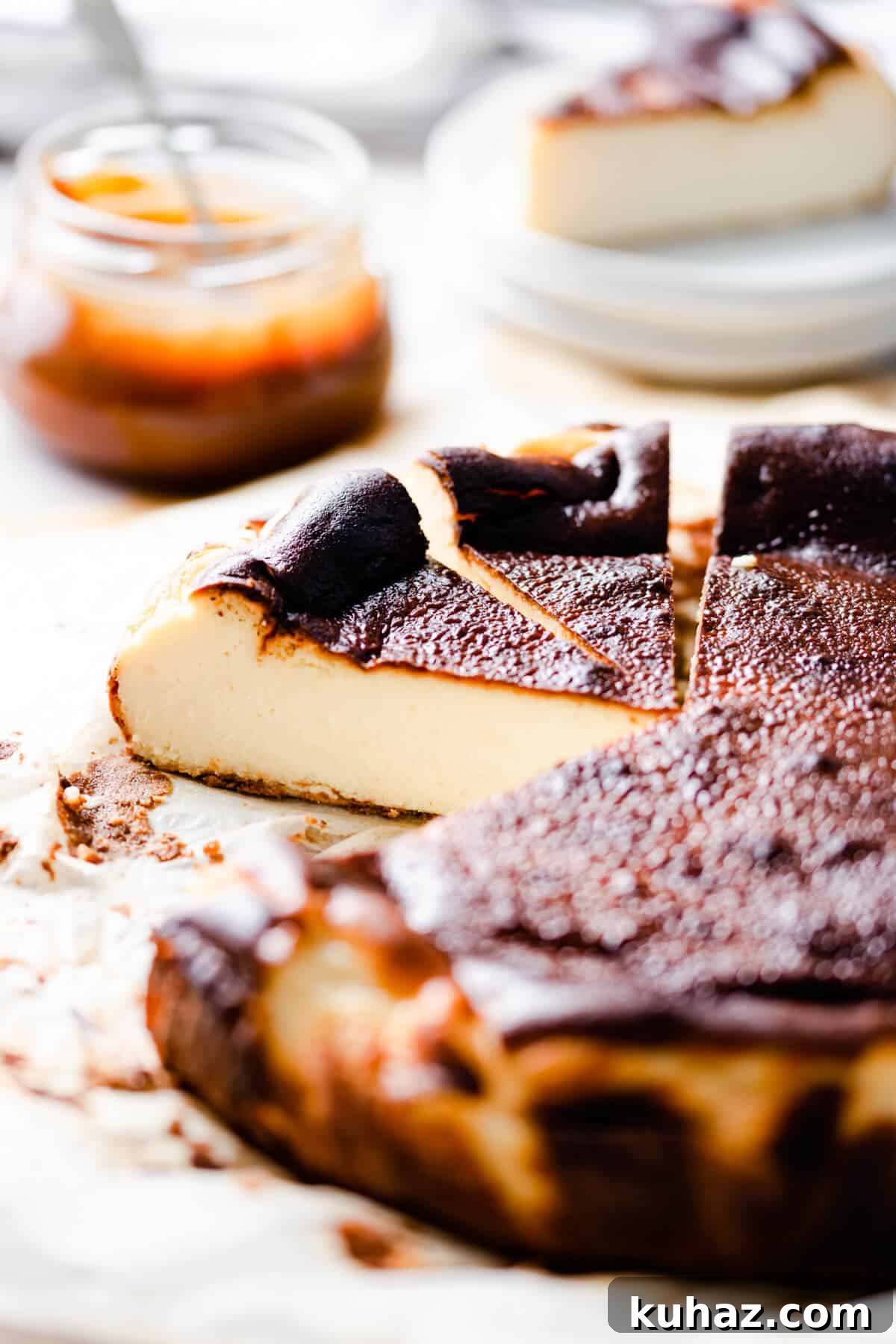
Known in Spanish as Tarta de Queso, Basque burnt cheesecake originates from San Sebastian in the Basque region of Spain. The centre is light and mousse-like while the top forms a dark, caramelised layer that also acts as a delicate crust. If you prefer cheesecakes with a biscuit crust or no-bake versions, consider exploring other recipes for different textures and styles.
Ingredients and substitutions
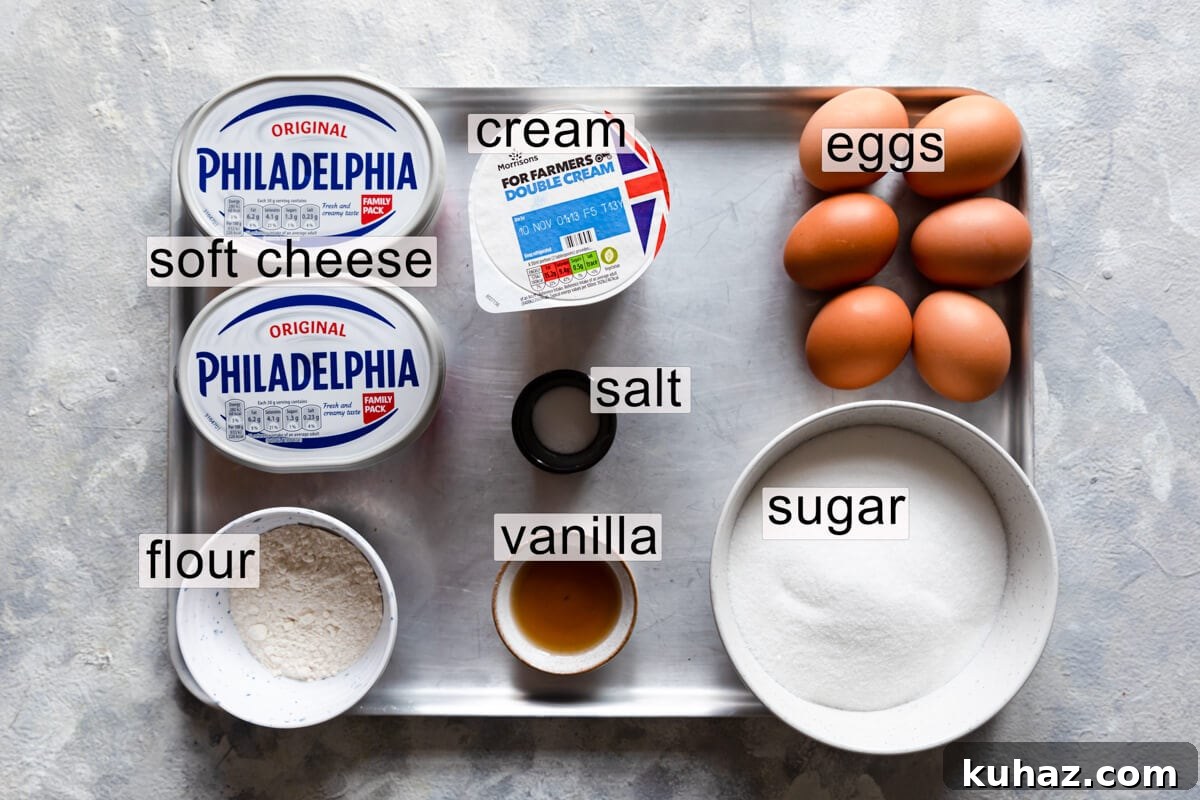
- Cream cheese / soft cheese — Use full-fat cream cheese for the best texture. Philadelphia is a popular option, but any full-fat brand will work.
- Sugar — White caster or granulated sugar works best.
- Eggs — Use large eggs at room temperature.
- Cream — Double or heavy cream creates the rich, silky mouthfeel and helps the cheesecake set. Do not use low-fat alternatives.
- Vanilla — Vanilla extract adds warm flavour notes; vanilla bean paste may be used instead for a stronger vanilla character.
- Flour — A small amount of plain/all-purpose flour improves texture and supports the rise of the cake.
Tip: Make sure all ingredients are at room temperature — remove them from the fridge at least an hour before you begin.
Scroll to the recipe card below for the full ingredient list and measurements.
Instructions
Grease a 10 inch (25 cm) round springform tin thoroughly with butter, making sure to coat the sides and base. Line the tin with two overlapping sheets of baking paper, pressing one sheet into the base and up the sides, then greasing it lightly and topping with a second sheet. Crease and pleat the paper to fit around the tin — these folds create the cheesecake’s characteristic ridged edge. Ensure there is at least 2 inches (5 cm) of overhang above the rim so the cheesecake can rise without spilling over.
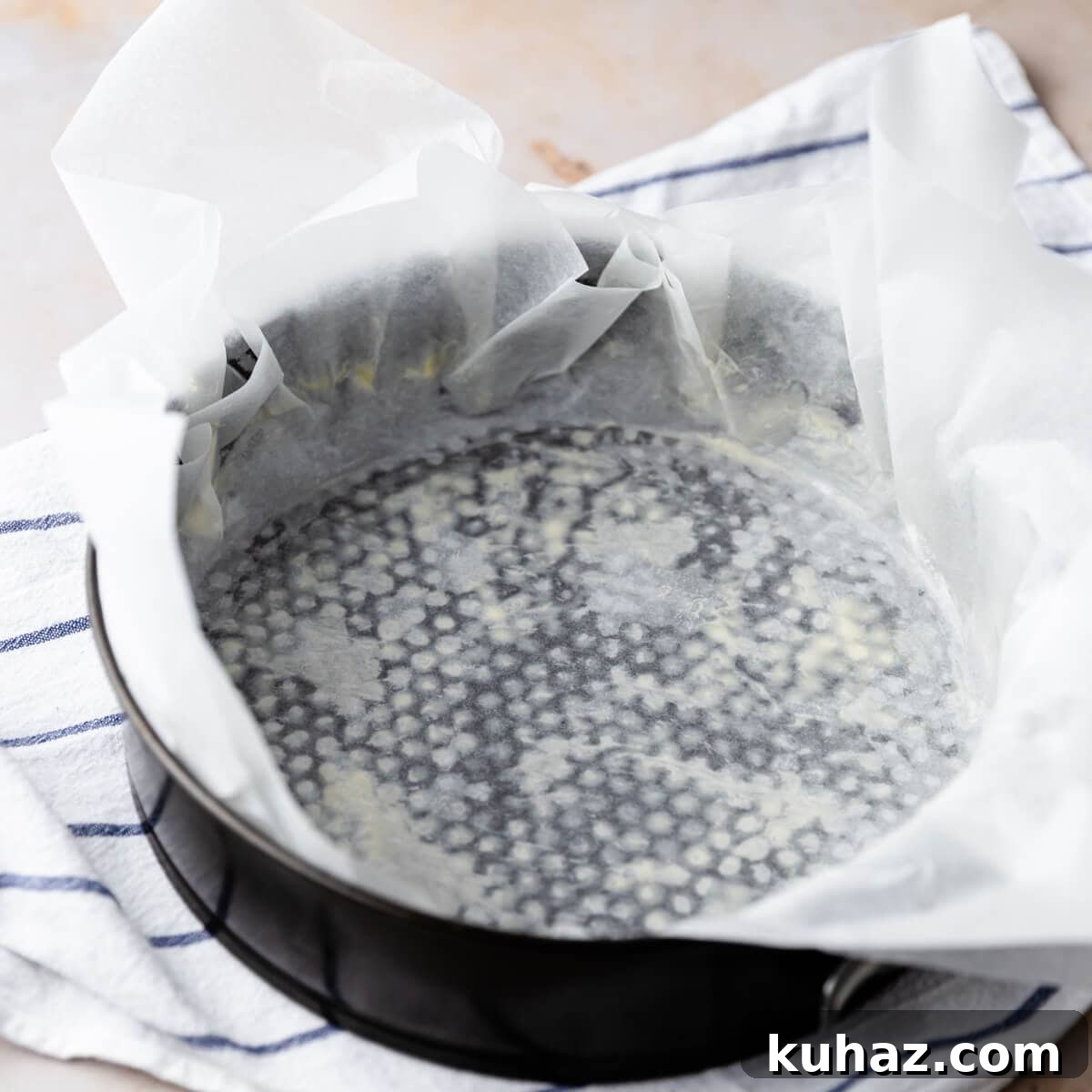
Grease and line the tin carefully, leaving plenty of overhang.
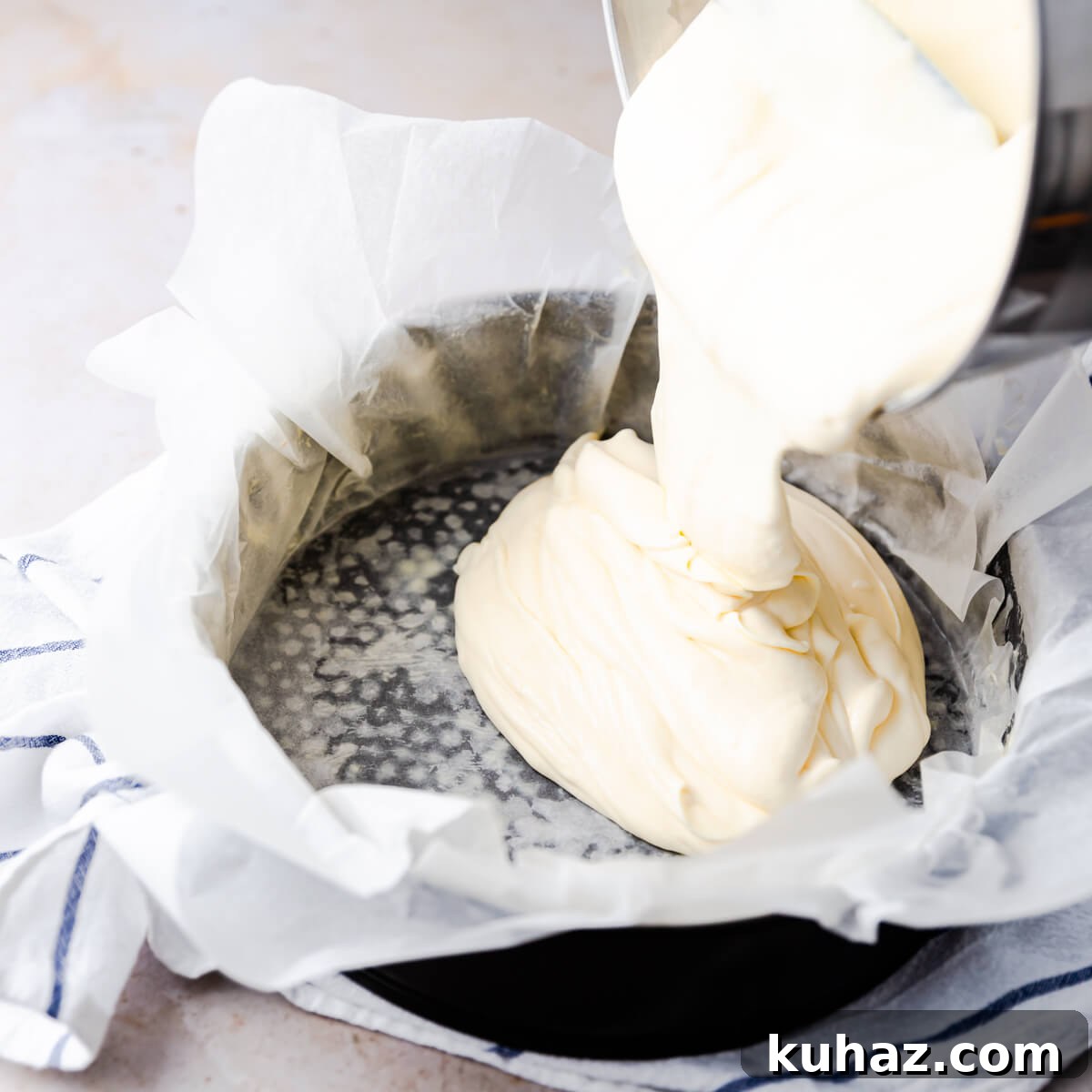
Mix all ingredients until silky smooth and lump-free, then pour the batter into the prepared pan.
Hint: Gently tap the filled tin on the counter to release any trapped air bubbles.
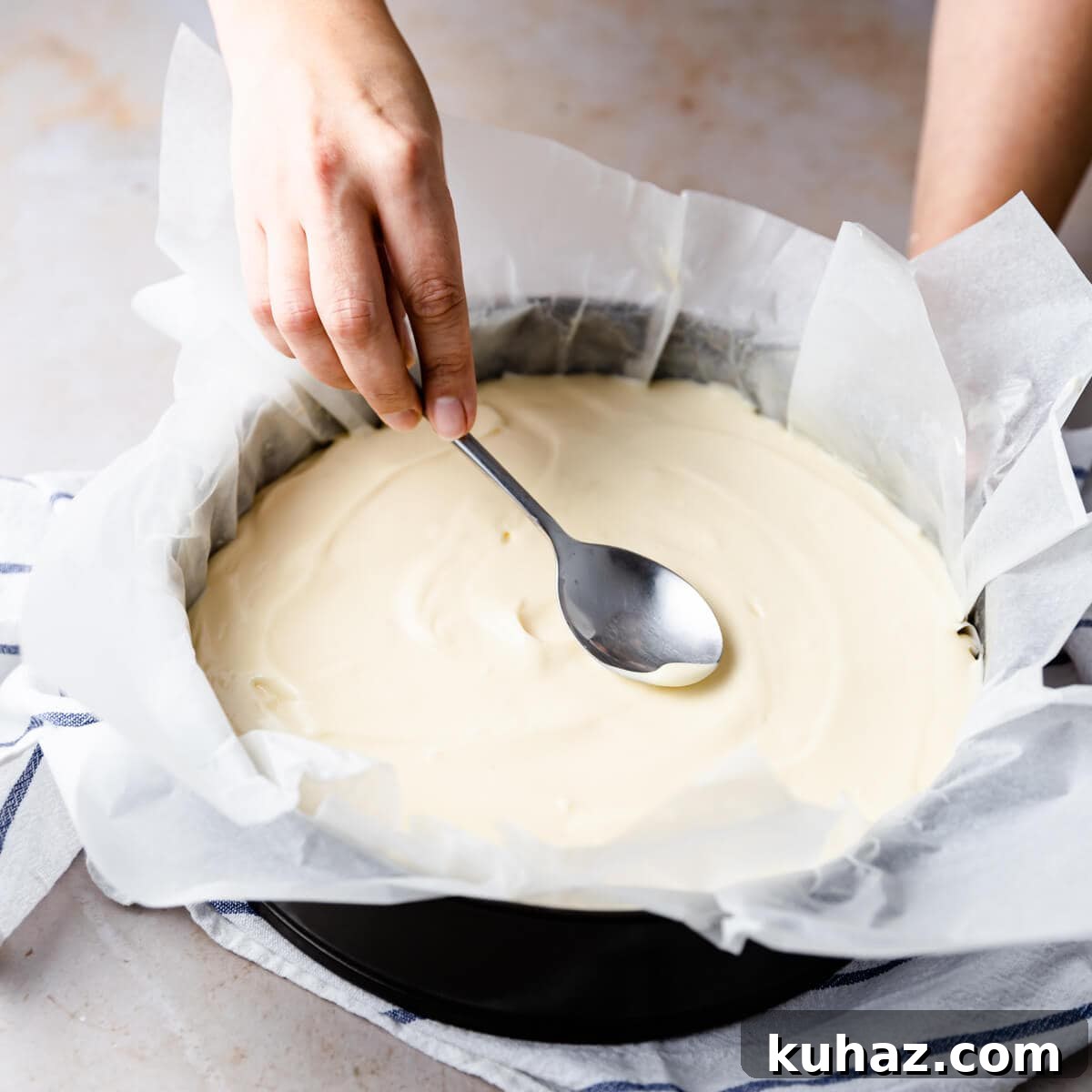
Smooth the surface with the back of a spoon or spatula before baking.
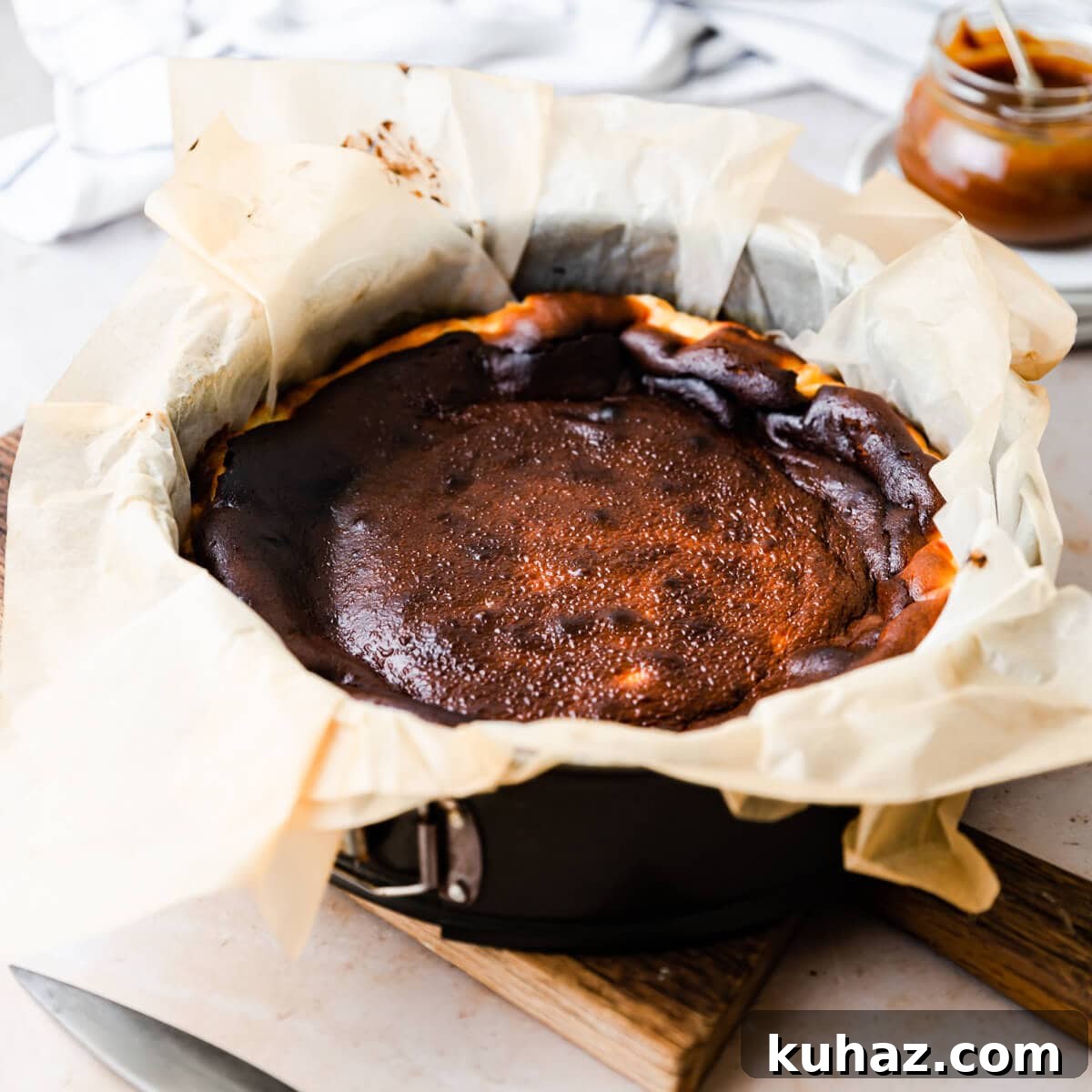
Bake until the top is deeply golden-brown but the centre still jiggles slightly — about 60–65 minutes in a preheated oven (see recipe card for temperature).
Hint: For a softer, creamier centre, reduce baking time by 5–10 minutes. For a firmer, more set texture, add 5–10 minutes to the bake time.
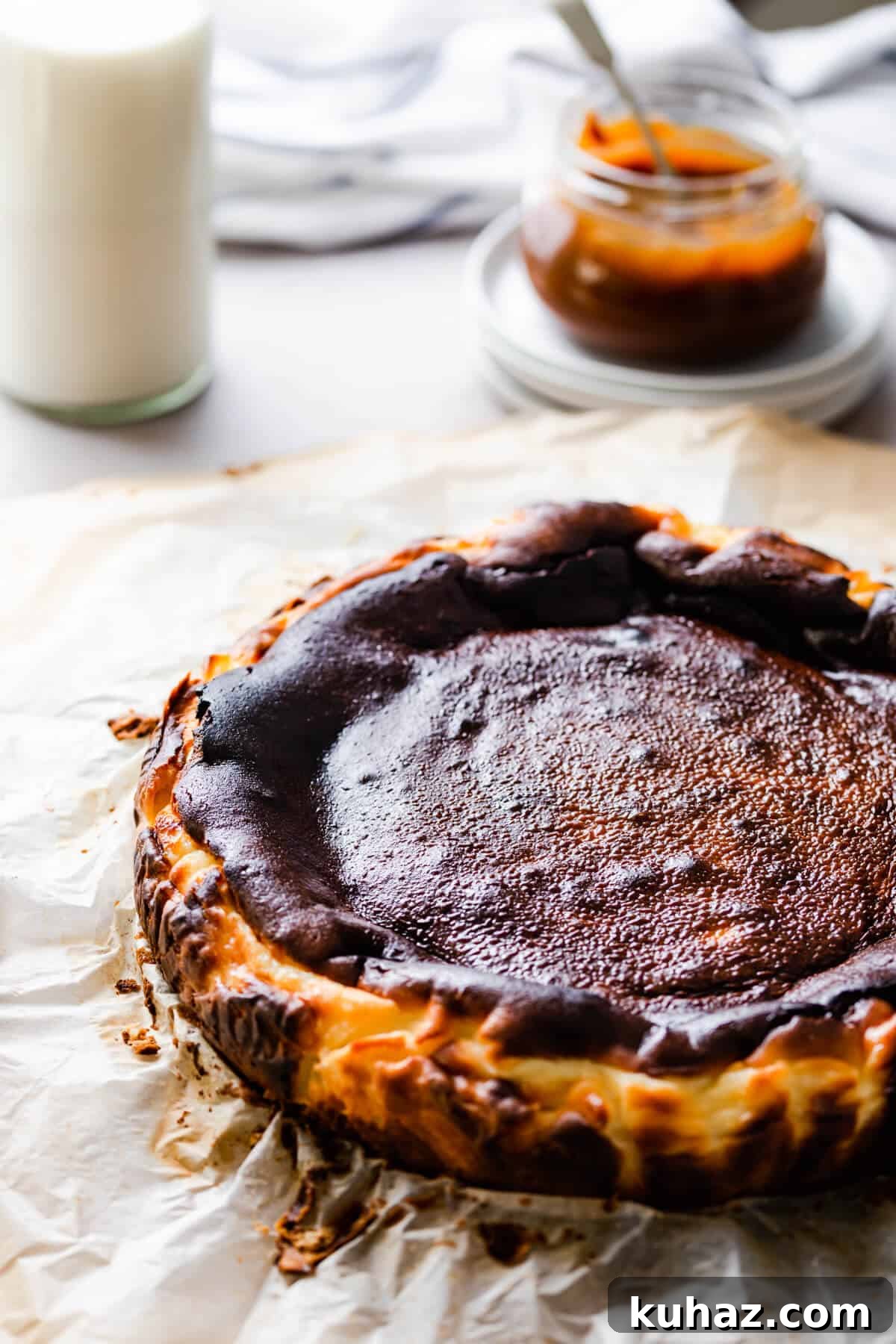
Variations
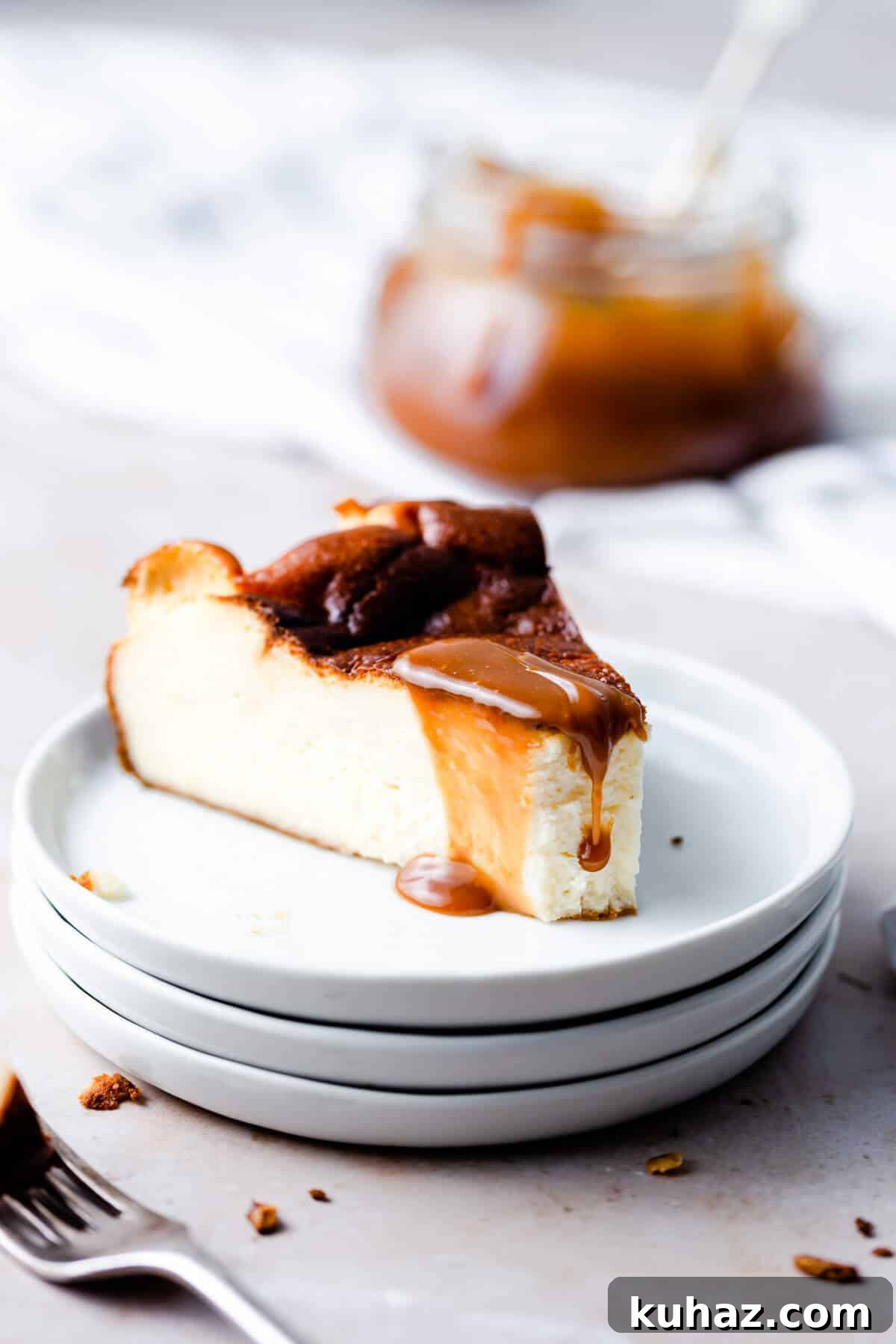
- Toppings: Drizzle with caramel sauce, chocolate sauce or a warm berry compote for contrast. Fresh berries also pair beautifully with the creamy interior.
- Gluten-free: Substitute plain flour with a gluten-free flour blend.
- Citrus twist: Add lemon, lime or orange zest to the batter for a bright, aromatic note.
Equipment
You don’t need fancy tools — a hand-held or freestanding electric mixer, a springform pan and parchment paper are all that’s required.
- Electric mixer — A stand mixer with paddle attachment works best, but a hand-held mixer is fine.
- Springform tin — A 10 inch (25 cm) round springform pan with tall sides is ideal, as the cake puffs up significantly while baking. A pan with a loose bottom will also work.
- Parchment paper — Line the tin with plenty of overhang to prevent leaks and to shape the sides of the cheesecake.
Storage
Store the cheesecake in an airtight container in the refrigerator for up to 3 days. Bring it to room temperature before serving to restore the silky texture and enhance the flavours. I recommend baking it a day ahead — this cheesecake benefits from an overnight chill.
To freeze, wrap the whole cake or individual slices in a double layer of clingfilm and freeze for up to one month. Thaw in the refrigerator overnight and bring to room temperature before serving.
Top tip
If the top browns too quickly, tent loosely with foil for the remainder of the baking time (be careful handling hot foil). Chill the cheesecake for at least several hours — ideally overnight — to allow it to set and for the flavours to develop fully.
Frequently asked questions
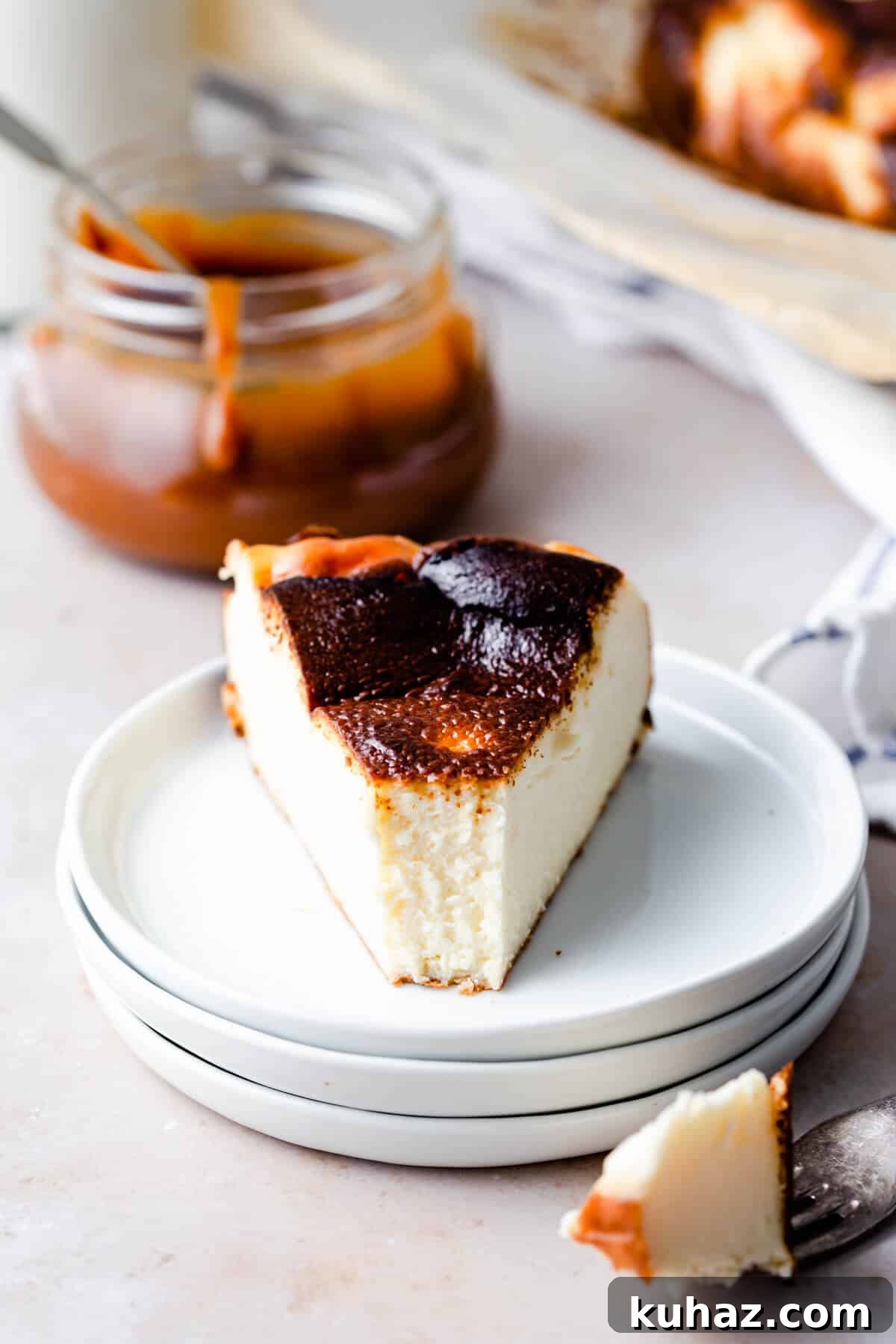
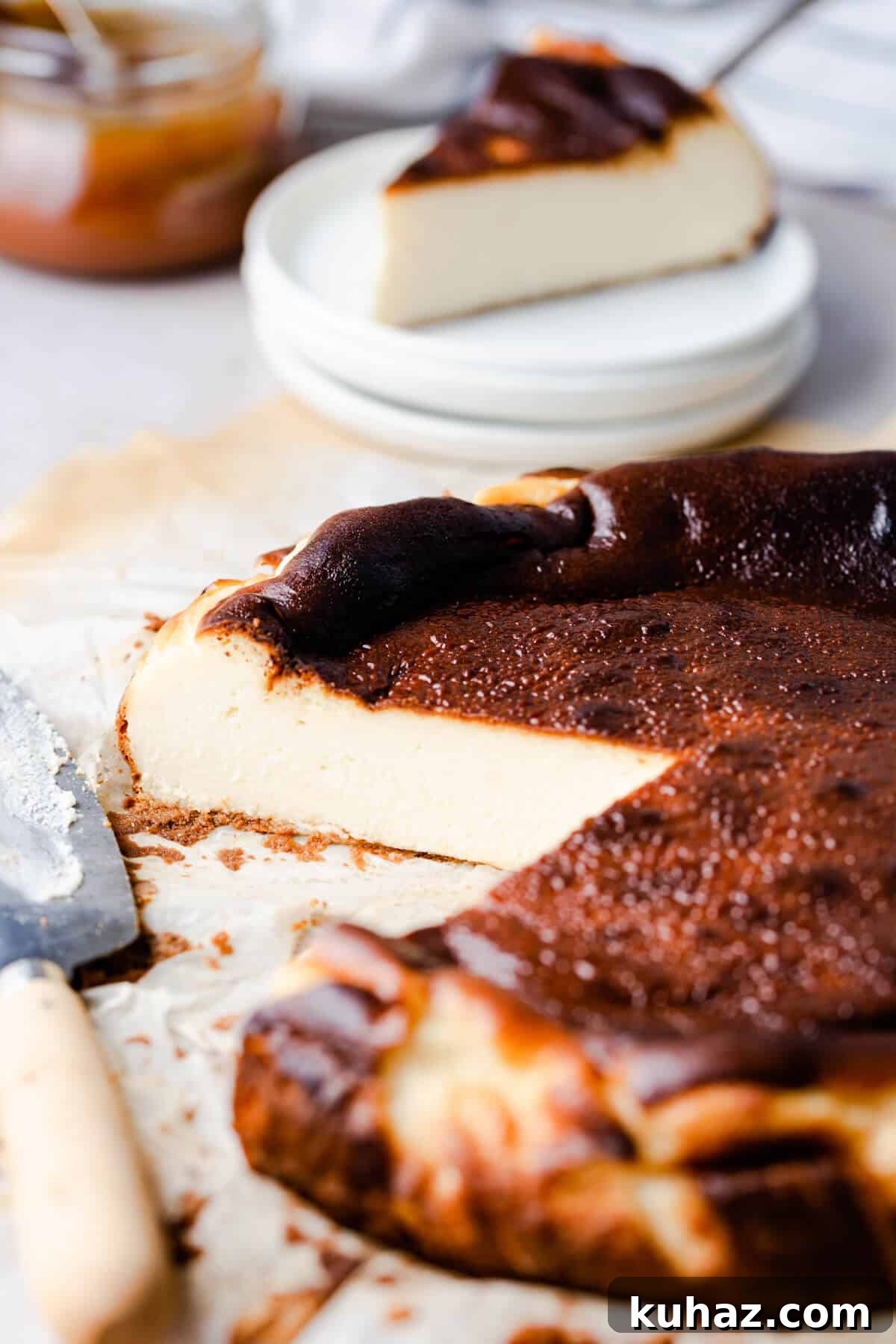
Basque burnt cheesecake breaks many conventional cheesecake rules: it has no crust, is baked at high temperature without a water bath, and the top is intentionally caramelised to achieve a dark, almost burnt appearance. It should sink and crack slightly as it cools, which is part of its charm.
Cracks are normal for a Basque cheesecake. They occur as the cake cools, sinks and shrinks at different rates across the surface. Cracking doesn’t affect flavour or texture.
Check your oven temperature and consider using an oven thermometer, since ovens vary. If the top is under-browned, you can briefly finish the cake under the grill/broiler — watch it closely to avoid over-browning.
Pin or save the photos from this page to keep the recipe handy.
If you try this recipe, please consider leaving a comment or rating on the original recipe page — feedback helps other cooks decide whether to try it.
📖 Recipe
Burnt Basque Cheesecake
One of the easiest and most delicious cheesecakes you will ever make. Caramelised, burnt exterior with a creamy, light centre — impossible to resist.
Equipment
- 10 inch (25 cm) round springform cake tin
- Baking paper / parchment paper
- Hand-held electric mixer or freestanding mixer with paddle attachment
Ingredients
- 900 g full-fat cream cheese (Philadelphia), room temperature
- 300 g sugar (caster or granulated)
- 6 large eggs, room temperature
- 480 ml double cream, room temperature
- 1 teaspoon salt
- 1 teaspoon vanilla extract
- 45 g plain flour
Instructions
- Preheat the oven to 200°C (180°C fan). Grease the 10 inch round springform tin.
- Line the greased tin with two overlapping sheets of baking paper so the paper comes at least 2 inches (5 cm) above the top and sides.
- In a mixer bowl, beat the cream cheese and sugar on low speed until smooth and creamy, about 2–3 minutes. Scrape the bowl and ensure no lumps remain and the sugar has dissolved.
- Increase speed to medium and add eggs one at a time, beating well after each addition and scraping the sides and bottom of the bowl. Reduce to medium-low and add the cream, salt and vanilla, mixing for 30 seconds.
- Turn off the mixer and sift the flour over the mixture. Beat on low until incorporated, about 30 seconds, scraping the bowl so the batter is silky and lump-free.
- Pour the batter into the prepared tin. Bake until the top is deeply golden-brown and the centre still jiggles slightly, about 60–65 minutes.
- Remove from the oven and allow to cool completely in the tin — it will sink and may crack as it cools. Chill in the refrigerator for a minimum of 4–5 hours, ideally overnight. Remove from the tin, peel away the paper, bring to room temperature before serving, then slice and enjoy.
Note: All recipes are developed and tested using metric grams. For best accuracy use digital scales. US customary conversions are provided for convenience but metric measurements are recommended.
Notes
- Bring all ingredients to room temperature before beginning.
- Use plenty of baking paper and ensure a 5 cm overhang so the cheesecake can rise without spilling.
- Cool completely in the tin before removing — removing early will result in an unset cake.
- Storage: Keep in an airtight container in the fridge for up to 3 days. Bring to room temperature before serving.
- To freeze: Wrap the whole cake or individual slices in two layers of clingfilm and freeze for up to one month. Thaw overnight in the fridge and bring to room temperature before serving.
Nutrition
This recipe was originally published in December 2020 and updated with new photos and revised tips in November 2022.