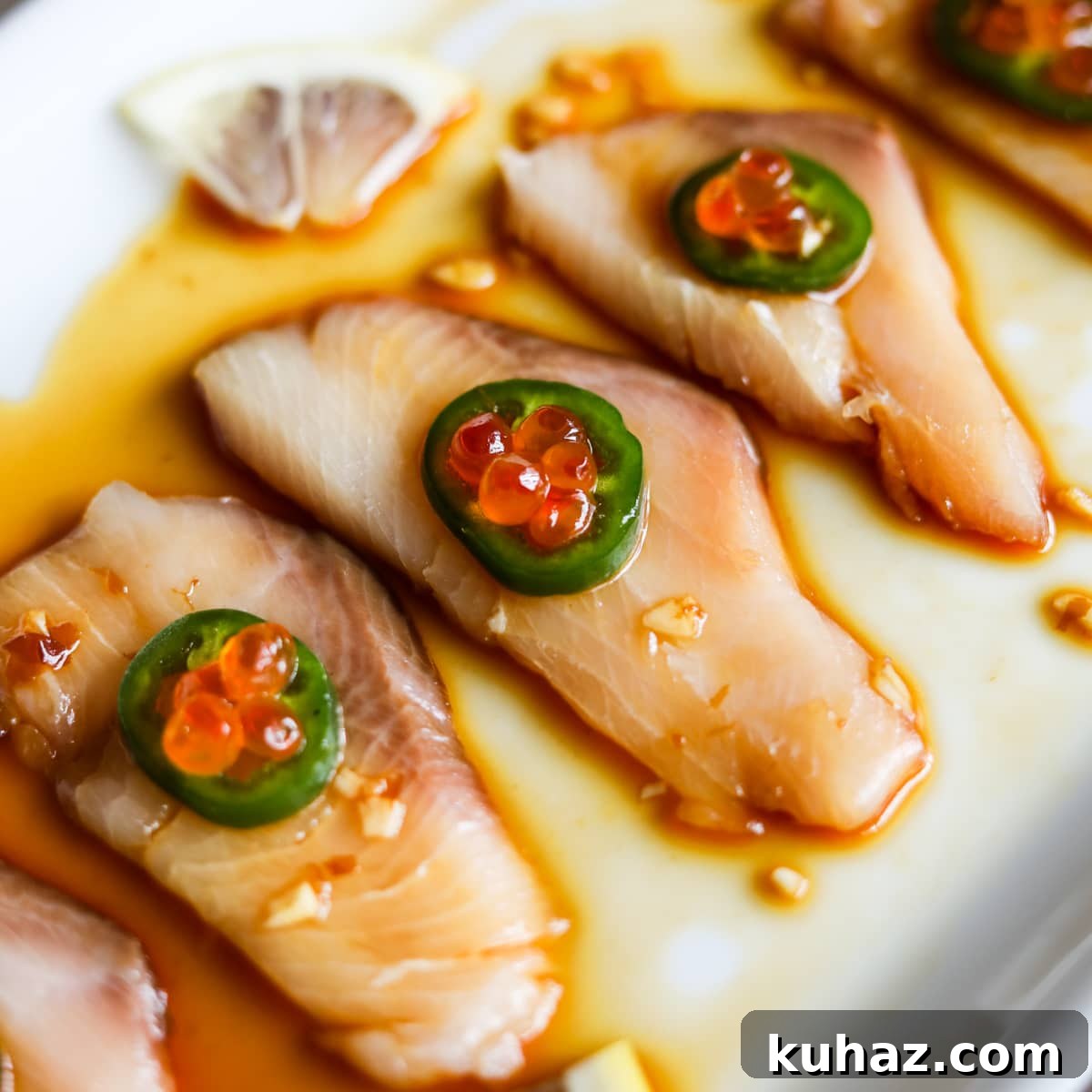
Hamachi Crudo is a vibrant yellowtail sashimi appetizer dressed with a citrusy yuzu ponzu and finished with thin jalapeño slices and ikura (salmon roe). Bright, savory, and easy to prepare, this hamachi crudo delivers restaurant-quality flavor in minutes and makes a striking starter for any meal.
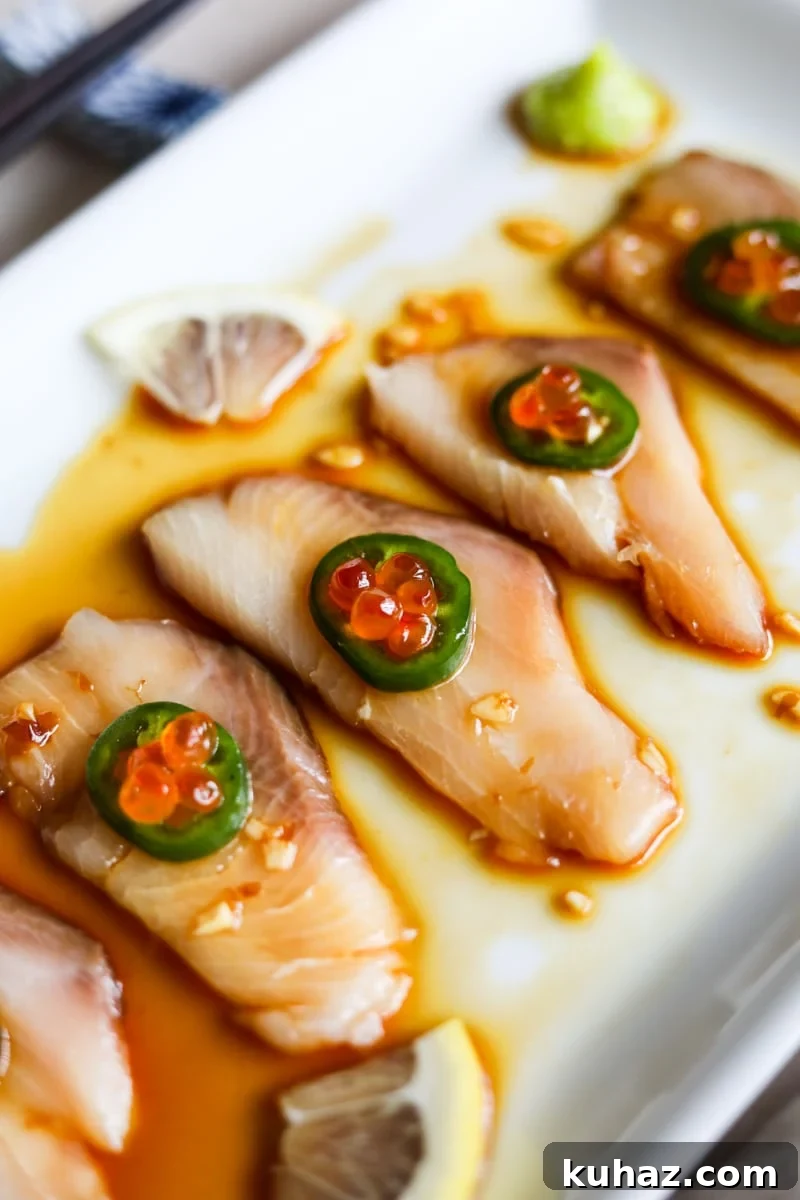
Yellowtail sashimi is delicious on its own, but a simple dressing elevates the fish with extra umami and texture. This version pairs buttery hamachi with smoky, tangy yuzu ponzu, a hint of garlic, a jalapeño bite, and the briny pop of ikura. Make the yuzu ponzu from scratch or use a quality store-bought version to save time. Serve the crudo as an appetizer or alongside steamed rice and a dab of wasabi for an extra kick.
About This Dish
- Taste – Mild, buttery hamachi lifted by citrusy yuzu and savory soy for a balanced, layered flavor.
- Texture – Silky raw fish contrasts with crisp jalapeño and the burst of ikura.
- Effort – Minimal: simmer the ponzu base and slice the fish precisely.
- Time – About 15 minutes to make the ponzu and 10 minutes to slice and assemble.
What is Hamachi?
Hamachi, also called Japanese amberjack or yellowtail, is a popular sashimi fish known for its soft, slightly fatty texture and mild flavor. When served raw as sashimi or crudo, hamachi offers a buttery mouthfeel that pairs well with bright citrus and salty condiments. It is commonly enjoyed for its protein content and omega-3 fatty acids.
What is Crudo?
Crudo is Italian for “raw” and refers to raw fish dressed simply with citrus, oil, vinaigrette, or other seasonings. Unlike ceviche, crudo is not cooked in acid; it is dressed to enhance the natural qualities of the fish. This hamachi crudo uses a garlic-yuzu ponzu to highlight the fish’s clean flavor.
Ingredients
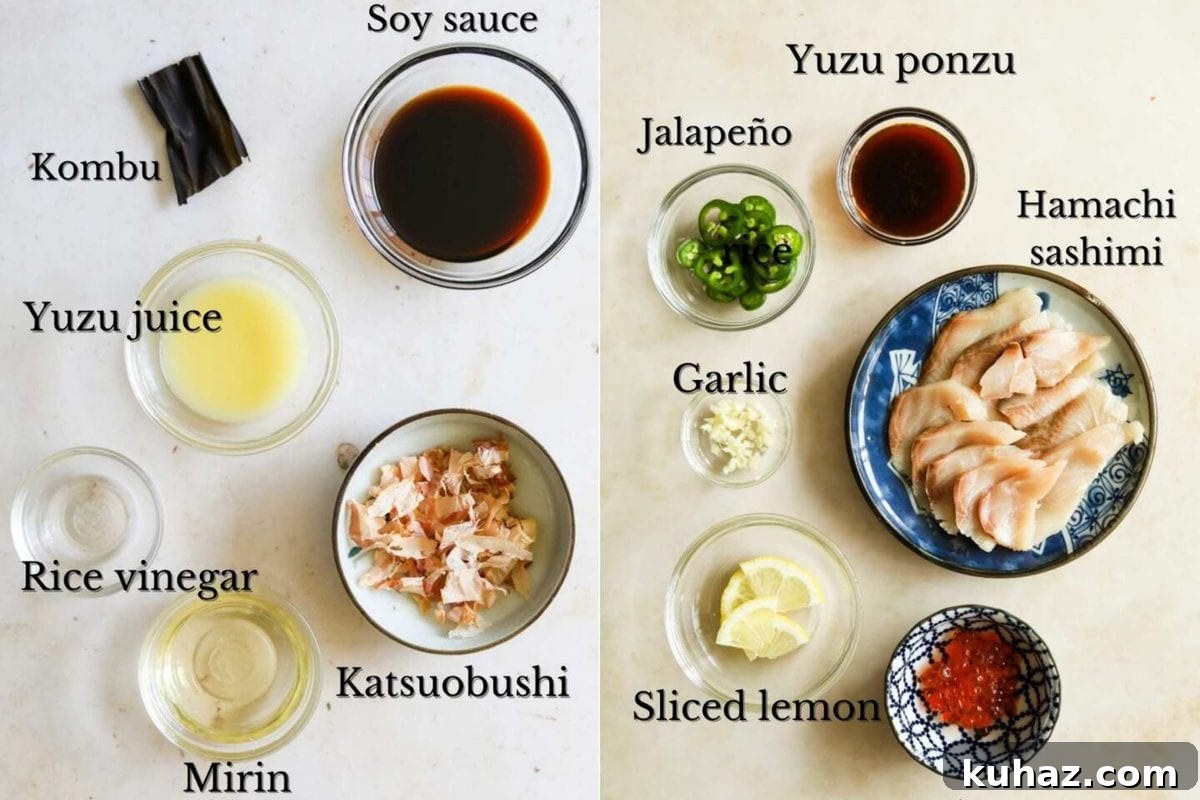
Yuzu Ponzu
- Yuzu juice – adds bright citrus notes.
- Kombu – dried kelp that provides savory umami when simmered.
- Katsuobushi (bonito flakes) – adds a smoky, savory depth.
- Mirin – a sweet rice wine that softens and balances the sauce.
- Rice vinegar – light acidity to brighten the ponzu.
- Soy sauce – salty, savory base for the dressing.
Hamachi Crudo
- Sashimi-grade yellowtail (hamachi) – the star ingredient; use the freshest, sushi- or sashimi-grade fish available.
- Jalapeño – thin slices add fresh heat and crunch.
- Garlic – finely minced for aromatic lift.
- Ikura – salmon roe for briny pops of flavor (optional).
- Lemon – thin slices or wedges to brighten the plate.
- Wasabi – optional for a pungent finish.
Quantities are provided in the recipe card below.
Substitutions
- Salmon crudo – use sashimi-grade salmon instead of hamachi.
- Lemon juice – can replace yuzu if unavailable; increase citrus to taste.
- Store-bought ponzu – a good quality bottled yuzu ponzu is a convenient alternative.
- Spicier heat – swap jalapeño for serrano or habanero for more intensity.
- Vegan – omit katsuobushi and replace fish with firm tofu; use microgreens instead of ikura.
- Tobiko or masago – flying fish roe can substitute for ikura for a different texture and flavor.
- Lime juice – works in place of lemon or yuzu for a different citrus profile.
Variations
- Mild – omit the jalapeño for a gentler flavor.
- Sesame – a few drops of toasted sesame oil add a nutty aroma.
- Sweeter ponzu – add a touch of sugar or extra mirin if you prefer a sweeter sauce.
- Green onion – thinly sliced scallions add crisp aromatic notes.
- Yuzu kosho – serve on the side for a spicy, citrusy condiment.
Instructions
Make the Yuzu Ponzu
- Simmer the base – In a small saucepan combine kombu, katsuobushi, mirin, and rice vinegar. Warm on low until just simmering, then remove from heat and let cool slightly until fragrant and the kombu softens.
- Strain – After about 10 minutes, strain out the kombu and bonito flakes and transfer the liquid to a jar.
- Finish – Add soy sauce and yuzu juice to the jar, seal, and shake to combine. Chill the ponzu before assembling the crudo.
Assemble the Dish
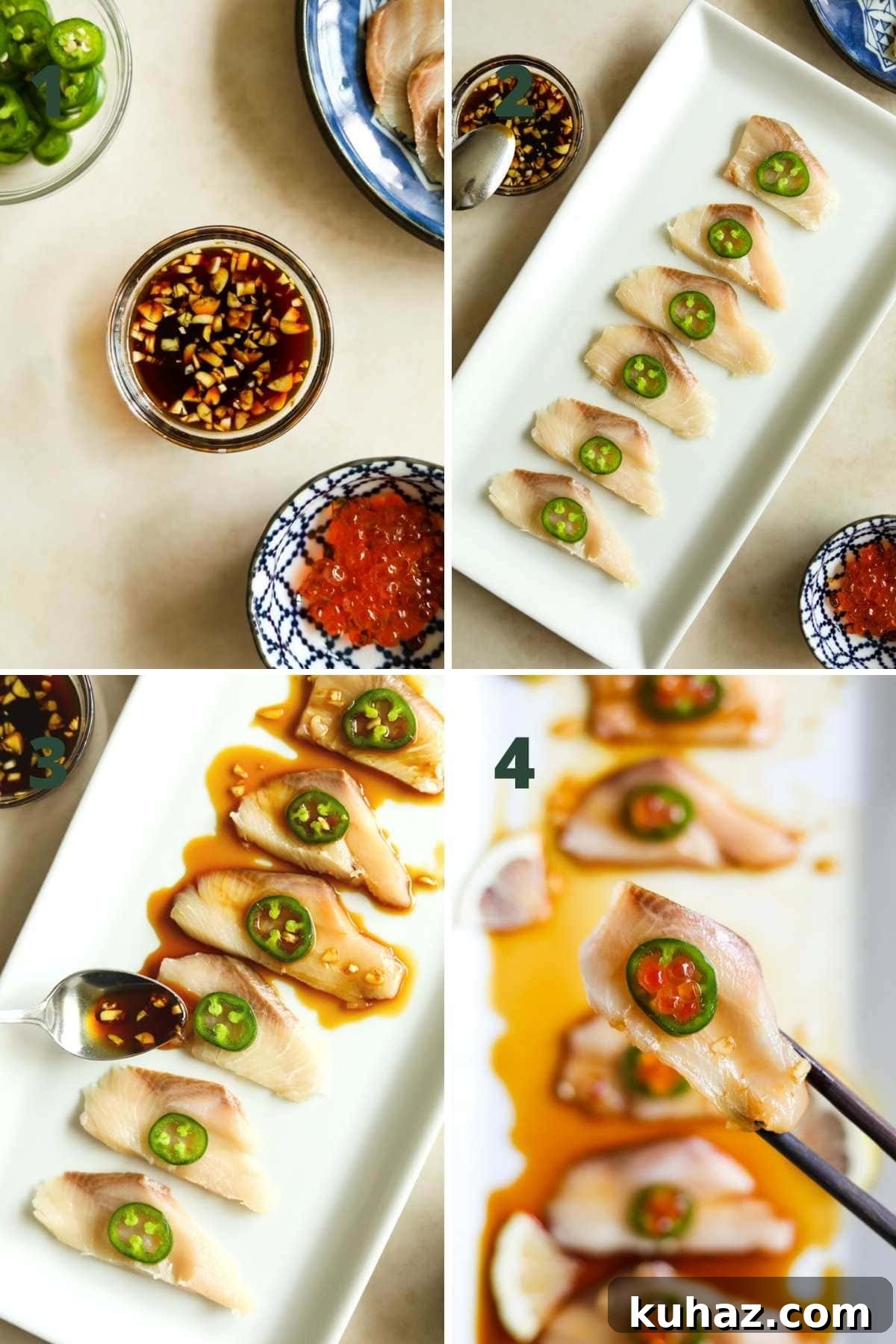
- Mince garlic and combine – Stir minced garlic into a small amount of yuzu ponzu and let it sit while preparing the fish.
- Slice the fish – With a sharp knife, slice hamachi against the grain at a 45° angle. Aim for a uniform thickness; about 3/8 inch is standard. For a carpaccio-style presentation, slice thinner (about 1/4 inch).
- Arrange and garnish – Lay slices on a chilled plate, top each with a jalapeño slice, then spoon the yuzu ponzu over the fish. Scatter ikura on top, add lemon slices, and serve with wasabi if desired.
Pro tip: Chill the fish briefly before slicing—firmer fish is easier to cut and yields cleaner slices.
How to Eat Crudo
Crudo is typically served as an appetizer or light course. Each slice is intended to be eaten in one bite with its garnishes. You can also serve hamachi crudo over cooled steamed rice as a donburi-style starter; allow the rice to cool slightly so it doesn’t cook the fish. This crudo pairs well with simple Japanese mains and other small plates.
Recipe: Hamachi Crudo (Yellowtail Carpaccio)
Overview
Servings: 2 • Prep time: 10 minutes • Cook time (ponzu): 15 minutes • Total time: 25 minutes
Ingredients
Homemade Yuzu Ponzu
- 1 strip kombu (about 2 inches)
- 1/4 cup katsuobushi (bonito flakes)
- 3 tbsp mirin
- 1 tsp rice vinegar
- 1/4 cup soy sauce
- 1/4 cup yuzu juice
Hamachi Crudo
- 1/2 lb sashimi-grade hamachi, sliced (3/8-inch or thinner)
- 1 garlic clove, minced
- 2 tbsp yuzu ponzu (homemade or store-bought)
- 6 jalapeño slices, thinly sliced
- 1 tbsp ikura (optional)
- Lemon slices and wasabi, for garnish
Instructions Summary
- Simmer kombu, katsuobushi, mirin, and rice vinegar until just simmering; cool and strain.
- Combine strained liquid with soy sauce and yuzu juice, then chill.
- Toss a small amount of minced garlic into 2 tablespoons of yuzu ponzu and let sit.
- Slice hamachi against the grain and arrange on a plate. Top each slice with jalapeño.
- Drizzle the yuzu garlic ponzu over the fish, garnish with ikura and lemon, and serve with wasabi.
Storage
This dish is best eaten immediately or within 24 hours. Store fish and sauce separately in airtight containers in the refrigerator. Do not freeze the prepared crudo; the texture will degrade.
Top Tips
- Use a very sharp knife for clean sashimi slices.
- Chill the fish briefly before slicing to make cutting easier.
- Always slice against the grain and trim any sinew for the best texture.
- Prepare the yuzu ponzu ahead of time to streamline assembly when entertaining.
Equipment
- Sharp knife and cutting board
- Small saucepan for the ponzu
- Strainer and jar for storing the ponzu
- Mixing bowl or small dish for the garlic-ponzu
Nutrition (per serving, approximate)
Calories: 143 • Carbohydrates: 4 g • Protein: 25 g • Fat: 2 g • Sodium: variable depending on soy sauce
Recipe FAQs
- Where can I buy ingredients? Many ingredients are available at Japanese markets, specialty grocers, or quality supermarkets. Look for sashimi-grade hamachi where fresh sushi fish is sold.
- Crudo vs. sashimi: Sashimi is raw fish served plain to showcase its quality; crudo is raw fish dressed with sauce or seasoning.
- Crudo vs. ceviche: Crudo is dressed and served raw; ceviche is marinated in citrus juice long enough to change the fish’s texture.
- Is hamachi crudo healthy? Yes—this dish is generally low in calories and rich in protein and omega-3s. Use reduced-sodium soy sauce if you want to lower sodium.
- Is it safe to eat? When using sashimi-grade fish and proper handling, raw fish dishes are commonly enjoyed. If you are pregnant or have specific health concerns, follow your healthcare provider’s guidance.
If you prepare this hamachi crudo, taste and adjust the ponzu and garnishes to your preference—this simple dish rewards fresh ingredients and thoughtful, precise preparation.