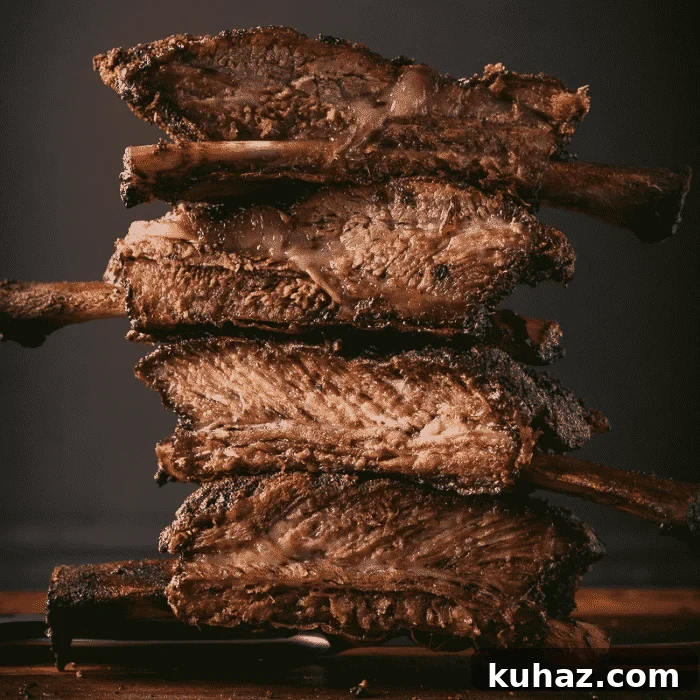
Smoked beef ribs are one of the most exciting trends in barbecue right now. These generous, meat-forward ribs steal the show on any platter, delivering deep smoky flavor, a richly developed bark, and tender, beefy bites that keep people coming back for more.
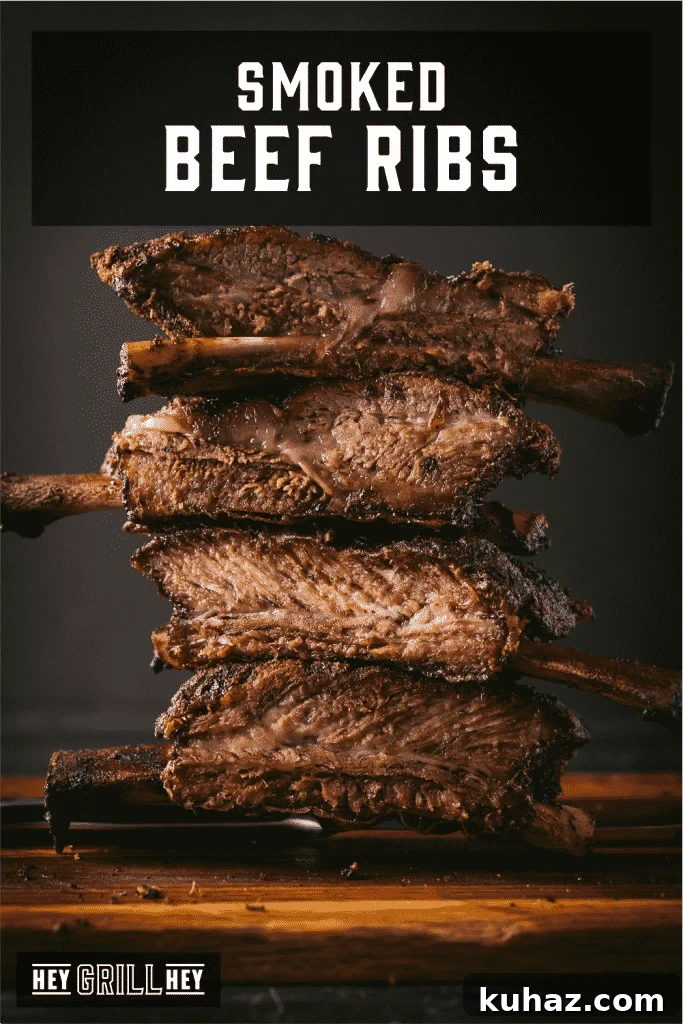
What are Beef Ribs?
When shopping for beef ribs to smoke, ask your butcher for the full beef rib section rather than the smaller back ribs. The ribs used for smoking are cut from the lower portion of the rib cage and typically carry a thick cap of meat — often an inch or two — right on top of the bone. That generous meat cap is what makes them ideal for long, slow smoking.
Beef ribs come in two common varieties that are good for smoking:
- Chuck ribs: Often come as a 4-bone section. The bones can be a bit shorter and the meat slightly less tall, but they still deliver excellent flavor and texture when smoked.
- Plate ribs: Usually a 3-bone section with a higher, meatier cap. These are sometimes called “dino ribs” because of their size and robust meat layer.
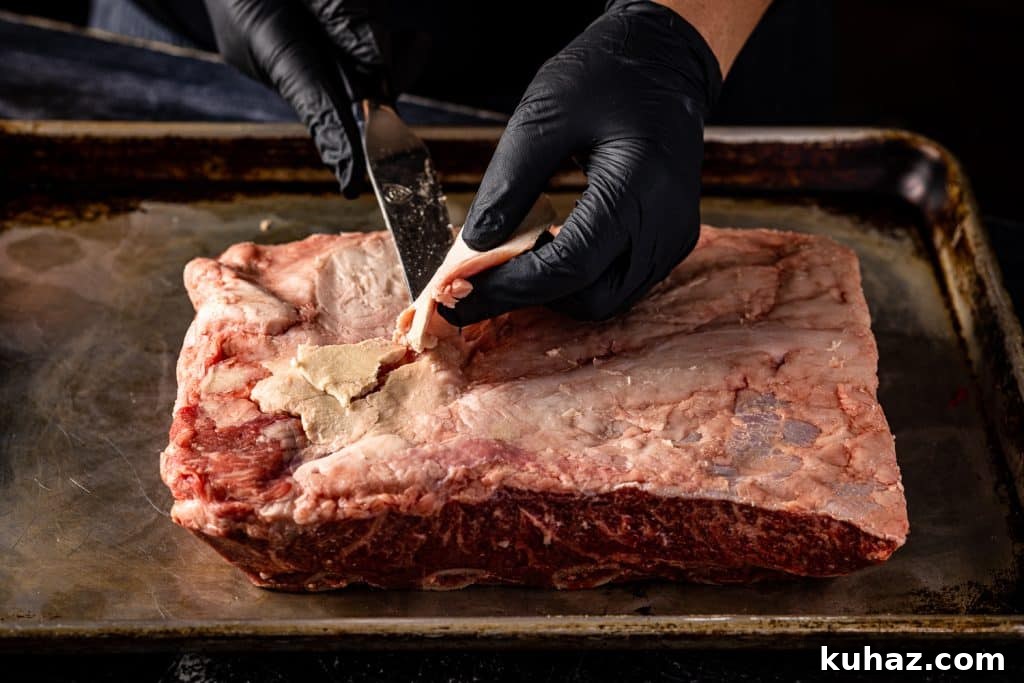
Both cuts work well in this recipe — choose whatever your butcher has available. If you’re trimming at home, removing the papery membrane on the bone side will make for a much more pleasant eating experience.
Smoked Beef Ribs
This smoked beef ribs recipe highlights simple seasoning and patient smoking to showcase the meat. A mustard binder helps the dry rub adhere and adds a subtle tang; the rub itself should be salt-forward with coarse black pepper and garlic to complement the beef. I used a coffee-forward rub for a TV barbecue challenge, but a straightforward beef rub or the classic salt‑and‑pepper combination works beautifully.
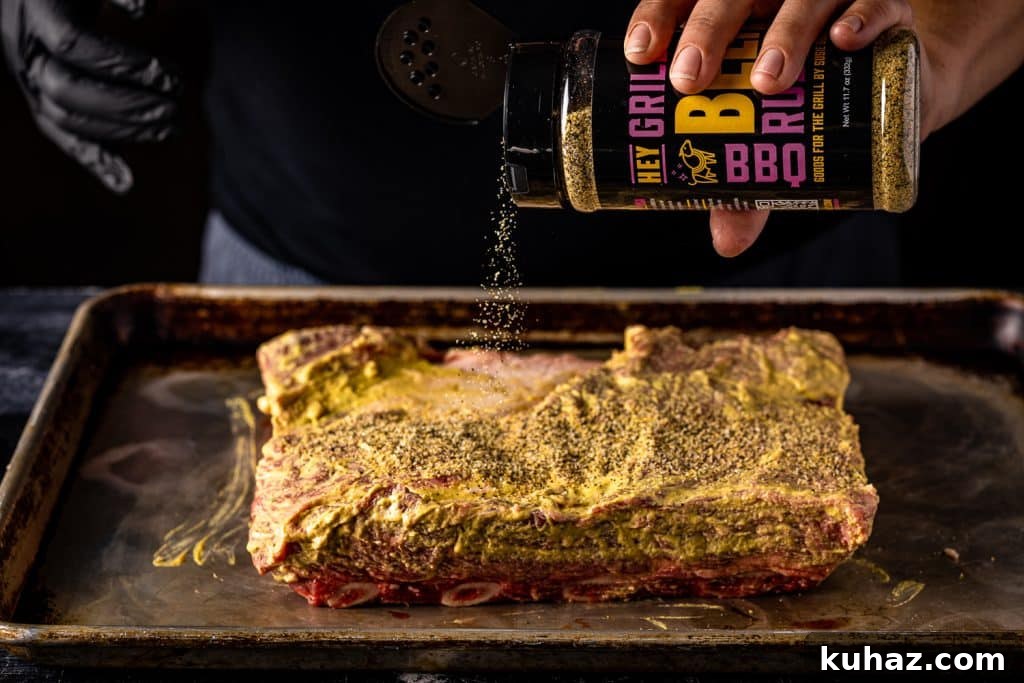
For time-pressed cooks you can push the smoker a bit warmer to finish faster, but when possible cook low and slow for the best texture and bark development. The next image shows racks being prepped with mustard and rub before the smoker.
Beef Ribs Seasoning
Big beef cuts don’t need complicated seasoning. Let the meat and smoke be the stars. A light slather of Dijon mustard (choose one with horseradish if you like a touch of warmth) helps the rub stick and adds a faint tang that complements smoke and beef.
Use a beef-focused dry rub or make your own: equal parts kosher salt, coarse black pepper, and garlic powder is a classic and effective combination. Apply the mustard, then season generously on all sides.
How to Smoke Beef Ribs
Low and slow is the name of the game. These ribs need time for smoke to flavor the meat, for a dark bark to form, and for connective tissue and fat to render until the meat becomes tender. Follow these steps for reliable results:
- Prep. Trim excess fat and remove the membrane from the bone side. To remove the membrane, slide a butter knife under the edge, grip it with a paper towel, and pull it off in one piece.
- Season. Slather the ribs with Dijon mustard, then coat liberally with your dry rub of choice (or the salt/pepper/garlic mix). The mustard helps the rub adhere and gives a subtle layer of flavor.
- Smoke. Preheat your smoker to 250°F for indirect cooking. Use a hardwood such as oak or hickory for steady, beef-friendly smoke. Place the ribs on the smoker and close the lid.
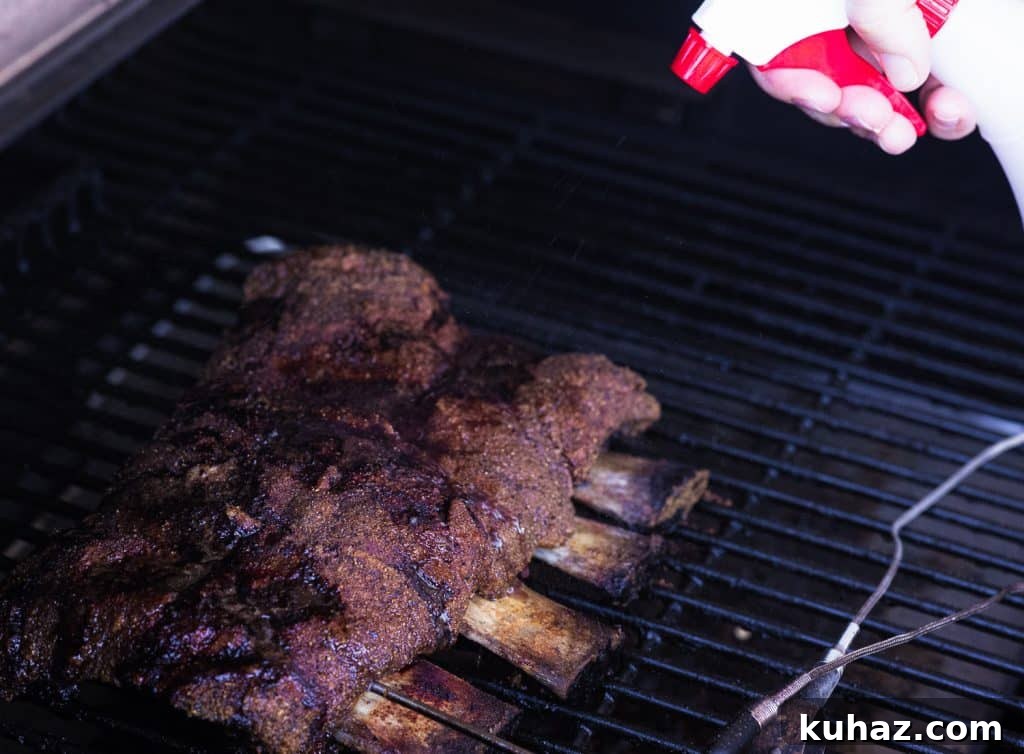
- Spritz. After the initial smoke period, spritz the ribs every 45–60 minutes with a mixture of white vinegar and hot sauce. Because these ribs aren’t wrapped, the spritz keeps the exterior moist and helps develop a balanced, flavorful bark.
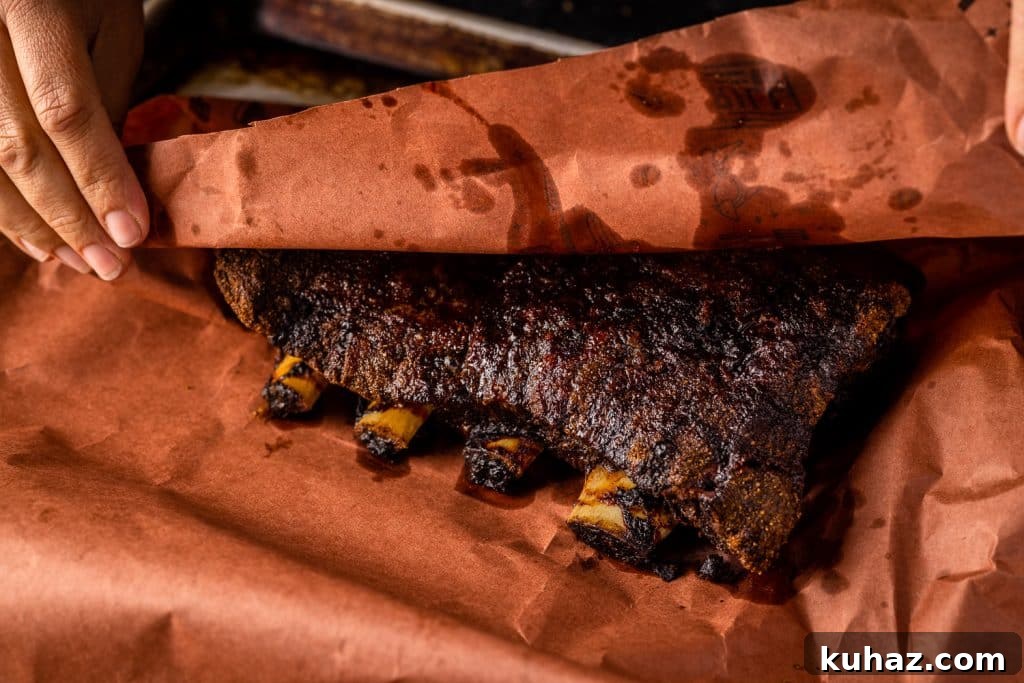
- Finish and rest. Smoke until the ribs reach an internal temperature of 203°F in the thickest part of the meat, then remove and rest. Wrap the ribs in butcher paper or foil and place them in an insulated cooler or covered pan for about an hour before slicing and serving.
How Long to Smoke Beef Ribs
Plan on roughly 8–10 hours total for most racks, though times vary with rack size, smoker consistency, and ambient conditions. Rather than relying on clock time, use an instant-read or probe thermometer and target the internal temperature listed below — that ensures reliably tender results.
Temperature for Beef Ribs
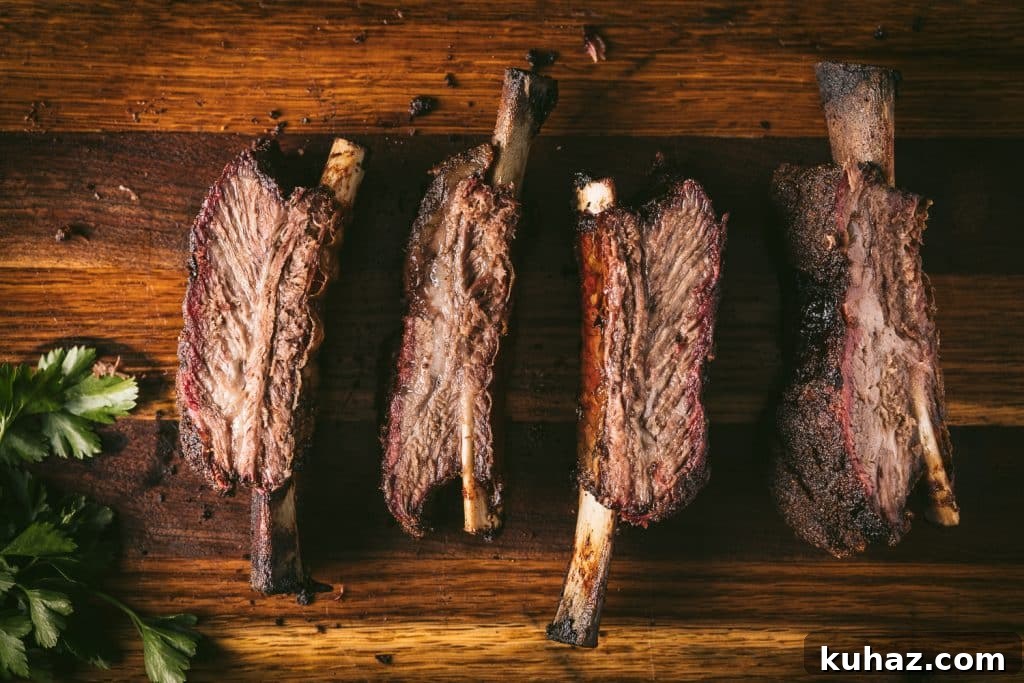
Finish smoked beef ribs to an internal temperature of 203°F measured in the thickest part of the meat without touching bone. Accurate temperature monitoring is essential for perfect texture; use a reliable thermometer and set an alert if available. Consistent smoker temperature and patience are the keys to fall-off-the-bone ribs.
More Beef Ribs Recipes
If you enjoy smoked beef ribs, try exploring other beef rib preparations such as:
- Smoked beef back ribs
- Shredded smoked boneless beef short ribs
- Smoked beef short ribs
Beef Ribs Recipe
Use this straightforward recipe to make smoked beef ribs at home. It focuses on clean seasoning, steady smoke, and careful temperature monitoring to deliver tender, flavorful results.
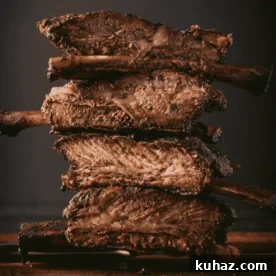
Smoked Beef Ribs
Equipment
- Smoker (set up for indirect cooking)
- Instant-read or probe meat thermometer
- Spray bottle for spritz
Ingredients
- 1 four-bone section beef ribs (about 4–5 pounds)
- 2 tablespoons Dijon mustard (with horseradish if desired)
- 6 tablespoons beef rub, or equal parts kosher salt, coarse black pepper, and garlic powder
Rib Spritz
- 1 cup white vinegar
- 1/4 cup hot sauce
Instructions
- Preheat the smoker. Bring your smoker to 250°F and use a beef-friendly hardwood such as oak or hickory for flavor.
- Season. Trim any excess fat and remove the membrane. Slather the ribs with Dijon mustard, then season liberally with the beef rub or the salt/pepper/garlic mix.
- Smoke the ribs. Place the ribs bone-side down on the smoker. Insert a probe if using and smoke for about 3 hours to build smoke and bark.
- Spritz and continue smoking. Combine white vinegar and hot sauce in a clean spray bottle. After the first few hours, spritz the ribs every 45–60 minutes to maintain moisture and enhance bark development. Continue until internal temperature reaches 203°F. Time typically ranges 8–10 hours total depending on rack size and smoker stability.
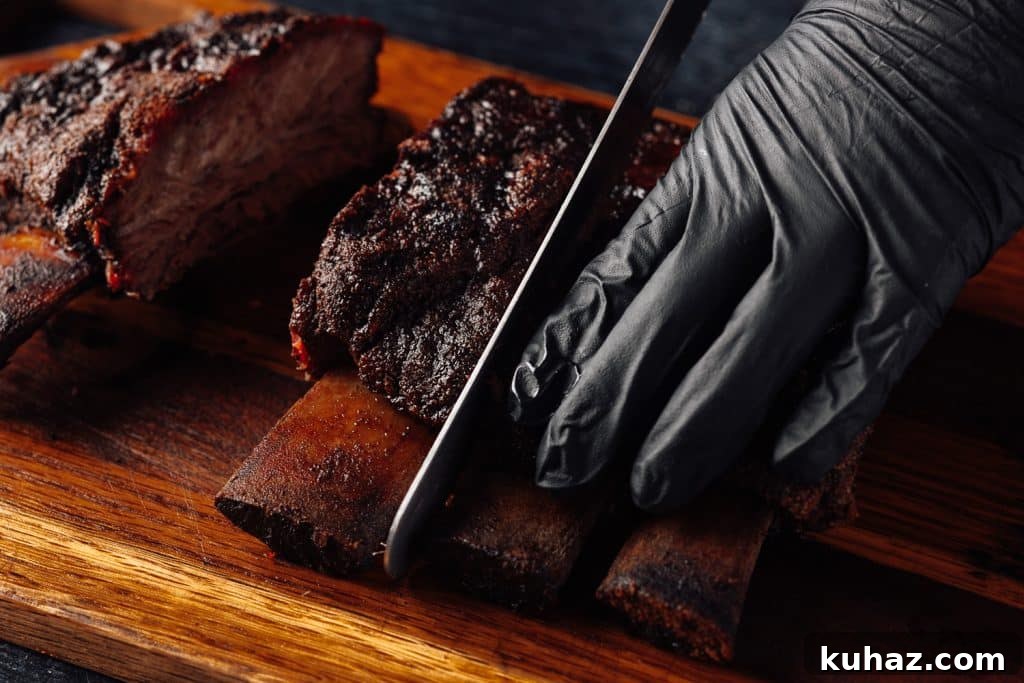
- Rest and serve. Remove ribs when they hit 203°F, wrap in butcher paper or foil, and rest in an insulated cooler or covered pan for at least one hour. Slice between the bones and serve.
Nutrition
Nutrition values below are estimates and should be used as guidance only.
Calories: 45 kcal | Carbohydrates: 9 g | Protein: 2 g | Fat: 1 g | Sodium: 90 mg
This post was originally published April 2018 and has been updated with additional details and tips. The recipe remains the same.