It’s a careful balance to introduce kids to cooking: you want them to use real tools so they learn proper technique, but the tools also need to be the right size and complexity for their age. I’m a strong proponent of giving children authentic kitchen tools so they don’t feel talked down to and so they develop correct habits from the start. At the same time, safety and comfort are essential, so tool size and ergonomics matter.
Over the years I’ve selected a set of authentic yet kid-friendly cooking tools that help children feel competent and keep the kitchen running smoothly for the whole family. These are practical items that won’t clutter your counters but will let kids meaningfully participate in cooking and food prep. There’s nothing more rewarding than watching a child prepare a dish on their own, and having the right tools makes that experience far less frustrating for everyone.
If you prefer to watch demonstrations, I have a video showing these tools in action and sharing my hands-on impressions. If you don’t have time for the video, the notes below summarize the key recommendations and why they work well for young cooks.
Our Favorite Cooking Tools for Kids
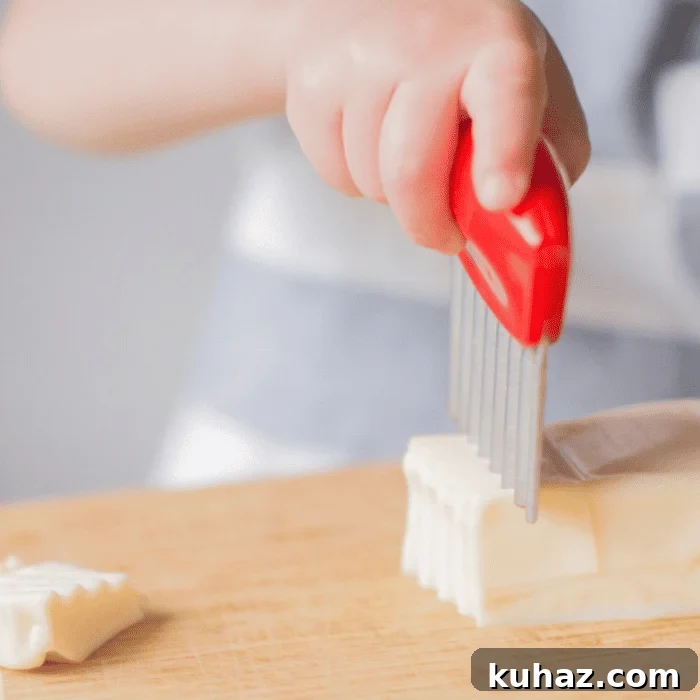
- 0:30: Crinkle cutters — A crinkle cutter with a top-mounted handle is great for preschoolers. The pushing-down motion is easier for small hands and produces fun, engaging shapes for fruits, vegetables, and cheese.
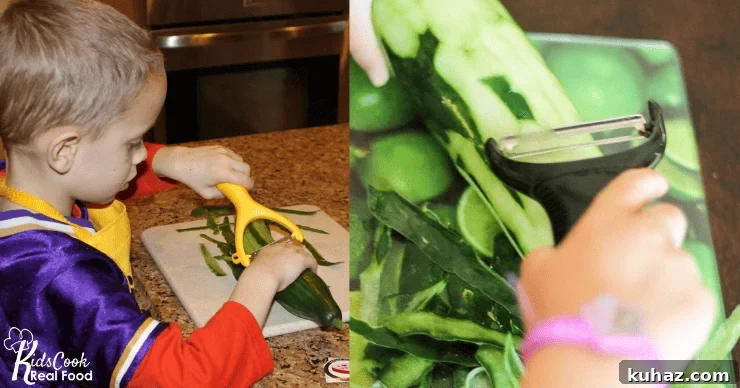
- 1:23: Y-shaped peeler — Y-shaped peelers are easier for little hands to master and are comfortable for adults too. They work well on fruits and vegetables and help kids learn a safe peeling motion.
- 2:34: Stainless steel measuring cups and spoons — Durable metal measuring sets are preferable to flimsy plastic. Look for sets with clearly identifiable handles or colors for quick recognition. Narrow measuring spoons are handy because they fit into spice jars and small containers.
- 4:35: Small tongs — Tiny tongs sized for children are excellent for developing fine motor skills and for serving. Tongs give kids a level of control when flipping, turning, and transferring food without requiring a full grasp like a large adult tool.
Our Favorite Knives for Kids
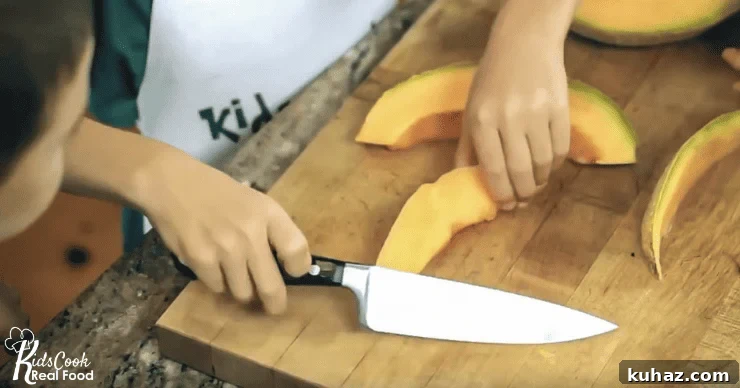
- 6:17: Kid-appropriate knives — There are several purpose-built knives that work well for young cooks. Look for small, well-balanced knives designed for kids or short-bladed paring-style knives from reputable makers. These allow children to practice chopping and cutting with proper technique while maintaining control.
- 8:24: Safety knives have a role — Fully blunt plastic safety knives aren’t my first choice for teaching knife skills, but they can be useful for very young children or for certain tasks like cutting soft salad greens. Use them as a transitional tool while building confidence.
- 9:21: Cutting boards — A stable cutting board is essential. Bamboo or wooden boards are durable and attractive, while small plastic boards with grippy edges can be perfect for kids who are still learning to stabilize their work surface. Avoid boards labeled “antibacterial” if you prefer to minimize added chemicals; choose well-finished wood or food-safe plastic instead.
- 10:54: Watch materials and finishes — When selecting boards and tools, pay attention to finishes and coatings. Food-safe finishes are important, and many families prefer untreated or simply finished wood and stainless-steel tools to avoid unnecessary additives.
Kids Love Having Their Own Cooking Tools!
- 11:36: Personal tools are exciting — Children take pride in using their own tools. Colorful silicone whisks, small spatulas, and mini utensils make cooking more fun and help build ownership over kitchen tasks.
- 12:27: Mini spiralizers — A compact spiralizer can be a fun way for kids to explore vegetables like zucchini. Choose a simple model with an easy-to-operate crank and a stable base.
- 13:24: Silicone muffin molds and small cups — These are excellent for portioning, separating items in lunches, and baking with kids. Flexible silicone makes unmolding straightforward for little hands.
- 14:35: Metal spatulas for cast iron — If you cook with cast iron, a sturdy metal spatula is indispensable. It pairs well with durable pans and provides the leverage children and adults need for flipping and turning food.
Practical tools make excellent gifts for aspiring young chefs. If you’re looking for more ideas, consider assembling a starter kit with a small knife appropriate for their age, a child-sized cutting board, measuring spoons and cups, a peeler, and a whisk. These basics encourage safe skill-building and let kids help consistently in the kitchen.
My hope is that these recommendations help you bring children into the kitchen with confidence, safety, and real tools that teach good habits. Thoughtful, age-appropriate tools encourage independence and make cooking together more enjoyable for the whole family.