
This Pork Chops with Apples recipe is a fall favorite one-pan dinner. It combines savory pork with a touch of sweetness for a warm, seasonal meal. This easy skillet dish is something I prepared often for clients and it makes a great weeknight supper or a cozy weekend dinner during cooler months.
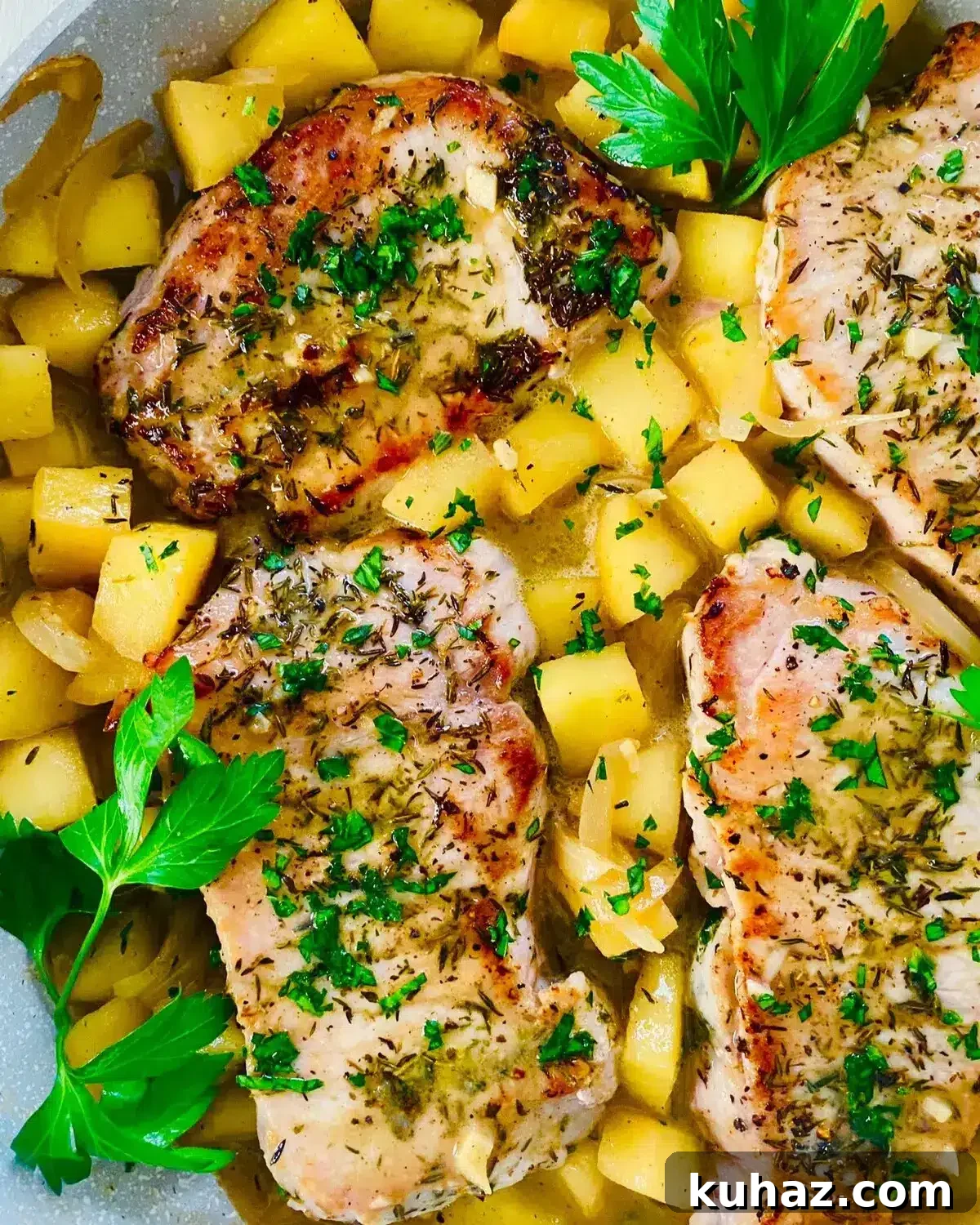
Growing up, my mom made pork chops with homemade applesauce — the classic pairing of rich pork and bright apples was always perfect for autumn. I adapted that childhood favorite into a streamlined one-pan version that keeps the nostalgic flavors while making prep and cleanup simple.
The method starts with a quick brine for the boneless center-cut pork chops so they stay tender and juicy. The chops are then seasoned and seared in a sauté pan. A sautéed mixture of apples and onions, finished with a wine, mustard and honey pan sauce spiced with Garam Masala, is spooned over the pork for a slightly sweet, warmly spiced finish.
Why you’ll love this pork chop and apple recipe
This pan-seared pork chop recipe feels a bit special but is surprisingly easy. It works just as well for a busy weeknight as it does for entertaining. Key reasons to try it:
- One-pan convenience – Everything cooks in a single skillet, minimizing dishes.
- Balanced flavor – Not overly sweet: savory pork meets warm, earthy spices and a hint of honey for balance.
- Flexible – Use bone-in chops if you prefer, or swap in boneless chicken thighs for a different protein.
Ingredients & substitutions
The stars in this recipe are center-cut pork chops, cooking apples, yellow onion, and Garam Masala, an aromatic Indian spice blend. If you don’t have Garam Masala, a mild curry powder will work in a pinch. Below are the main ingredients and common substitutions; full quantities appear in the recipe card further down.
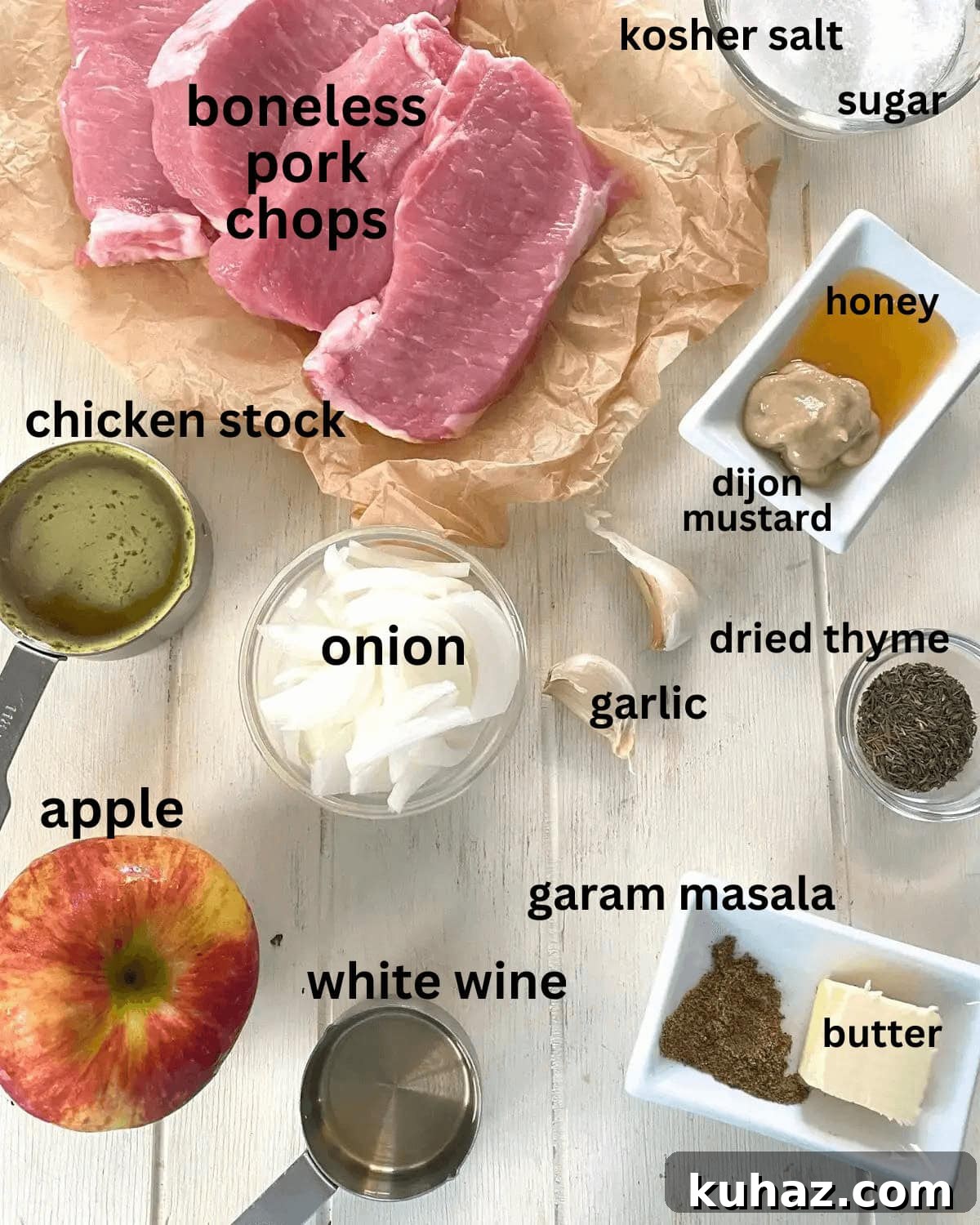
- Boneless center-cut pork chops — 1-inch bone-in chops may be used instead.
- Kosher salt and granulated sugar — used for a quick brine to retain moisture.
- Dried thyme — fresh thyme is a fine substitute.
- Fresh ground black pepper — fresher flavor than pre-ground pepper.
- Olive oil or another neutral cooking oil for searing.
- Cooking apples — Braeburn, Jonagold, Gala or Cortland are good choices; firm apples hold up in the pan.
- Yellow onion — sweet onions, shallots or white onion are all fine alternatives.
- Garlic, chicken stock, dry white wine (optional), honey and Dijon mustard — combine to make the pan sauce.
- Garam Masala — adds warm, earthy notes; use curry powder if needed.
- Salted butter — unsalted butter can be substituted and seasoned to taste.
How to make pork chops with apples and onions
Here’s a practical overview of the technique. The full, step-by-step recipe follows below.
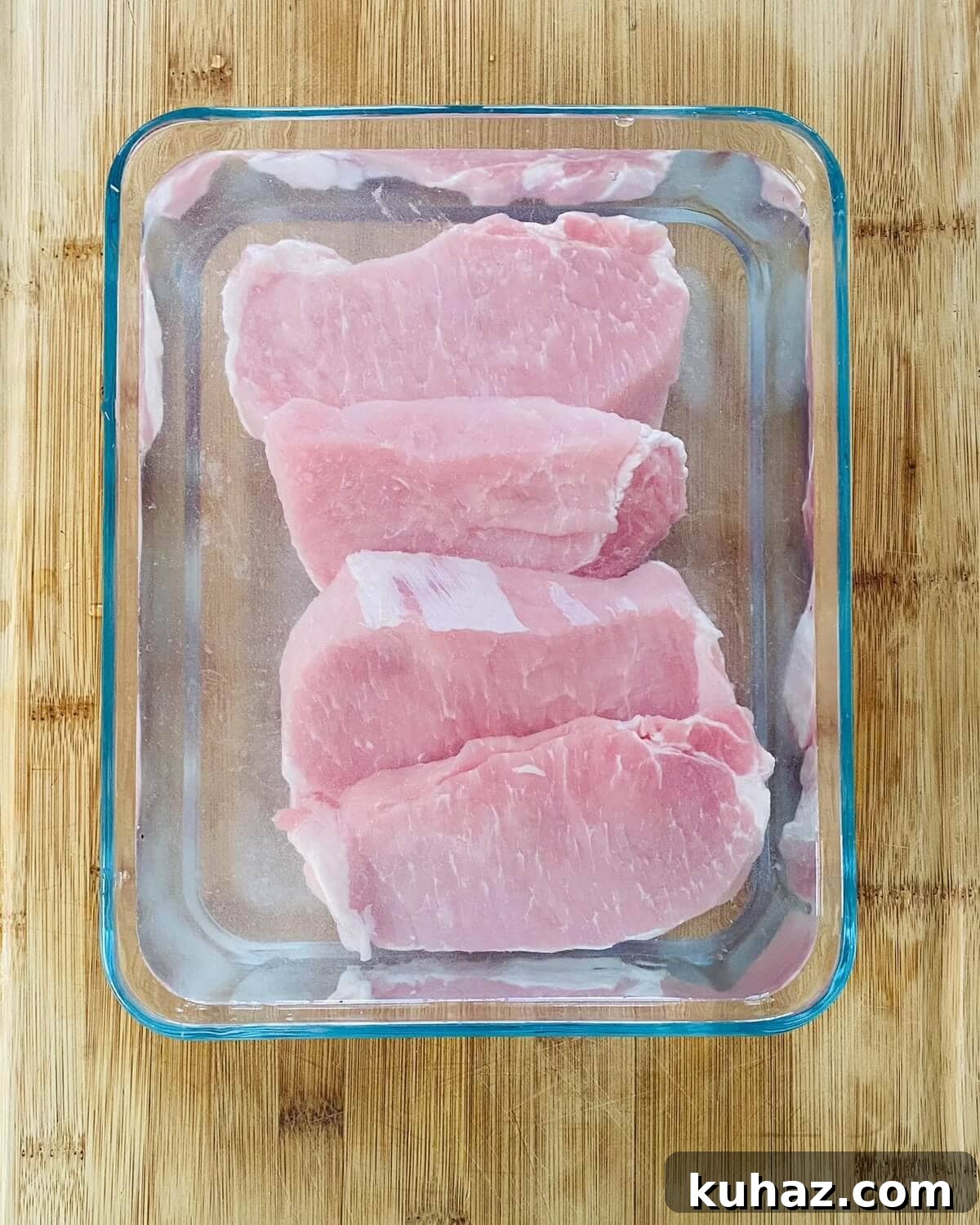
Dissolve sugar and kosher salt in cold water and brine the chops in the refrigerator for 30–60 minutes. This quick brine improves tenderness and juiciness.
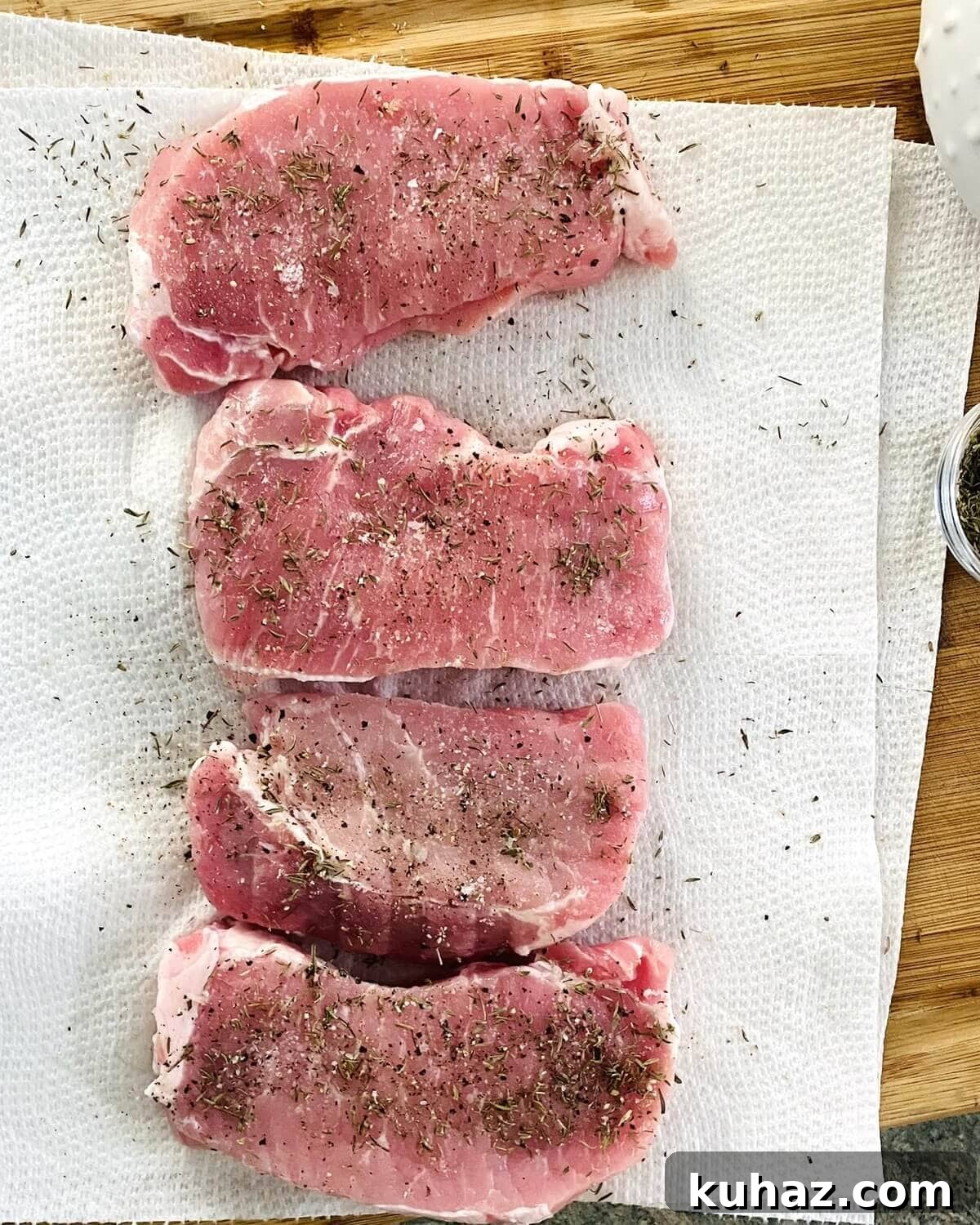
Remove the chops from the brine, pat dry and season with thyme, salt and pepper before searing.

Sear the chops in a hot skillet until golden on each side and just cooked through. Transfer to a plate and tent to keep warm.
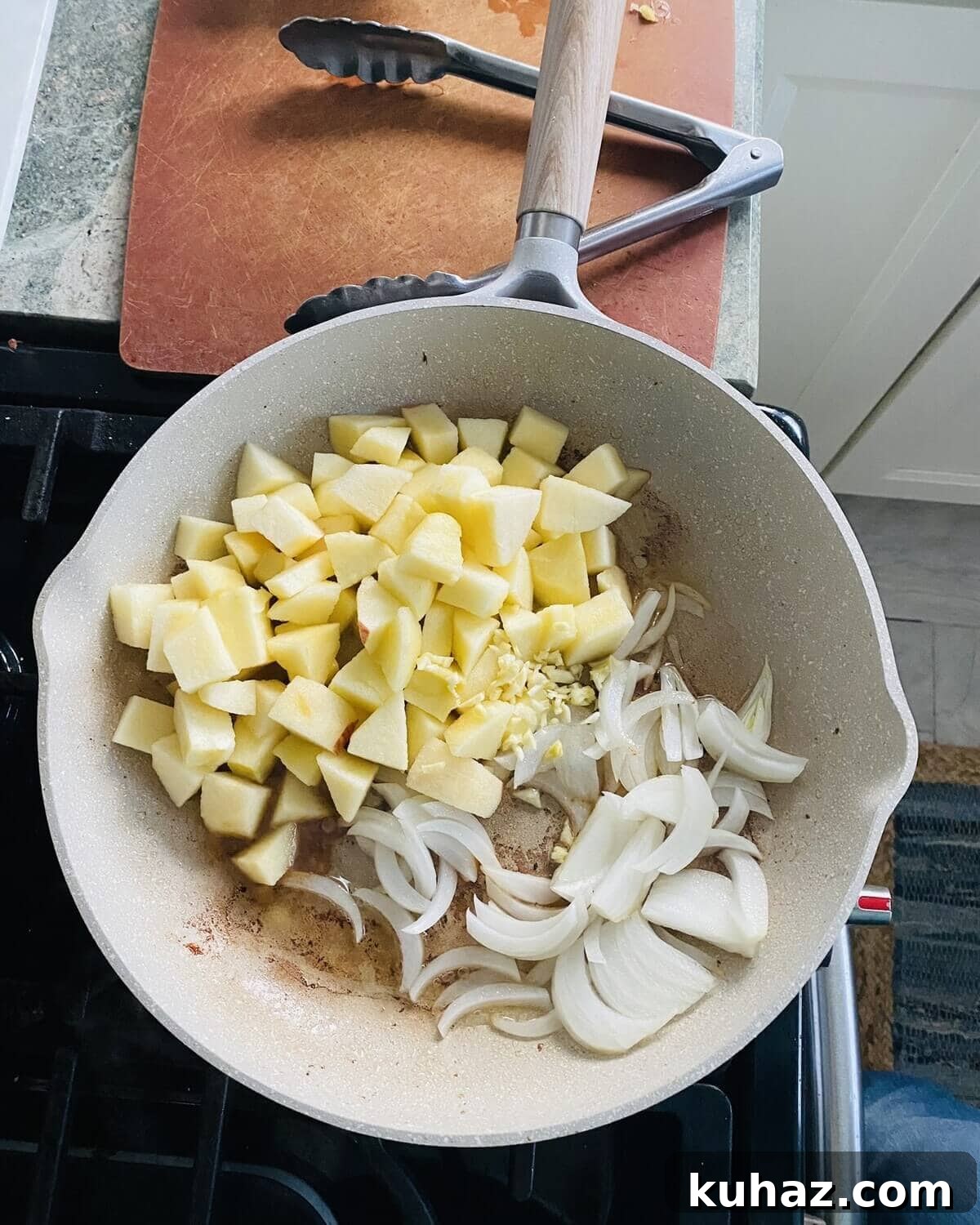
In the same pan, sauté apples, onions and garlic until the apples start to soften and the onion becomes translucent.
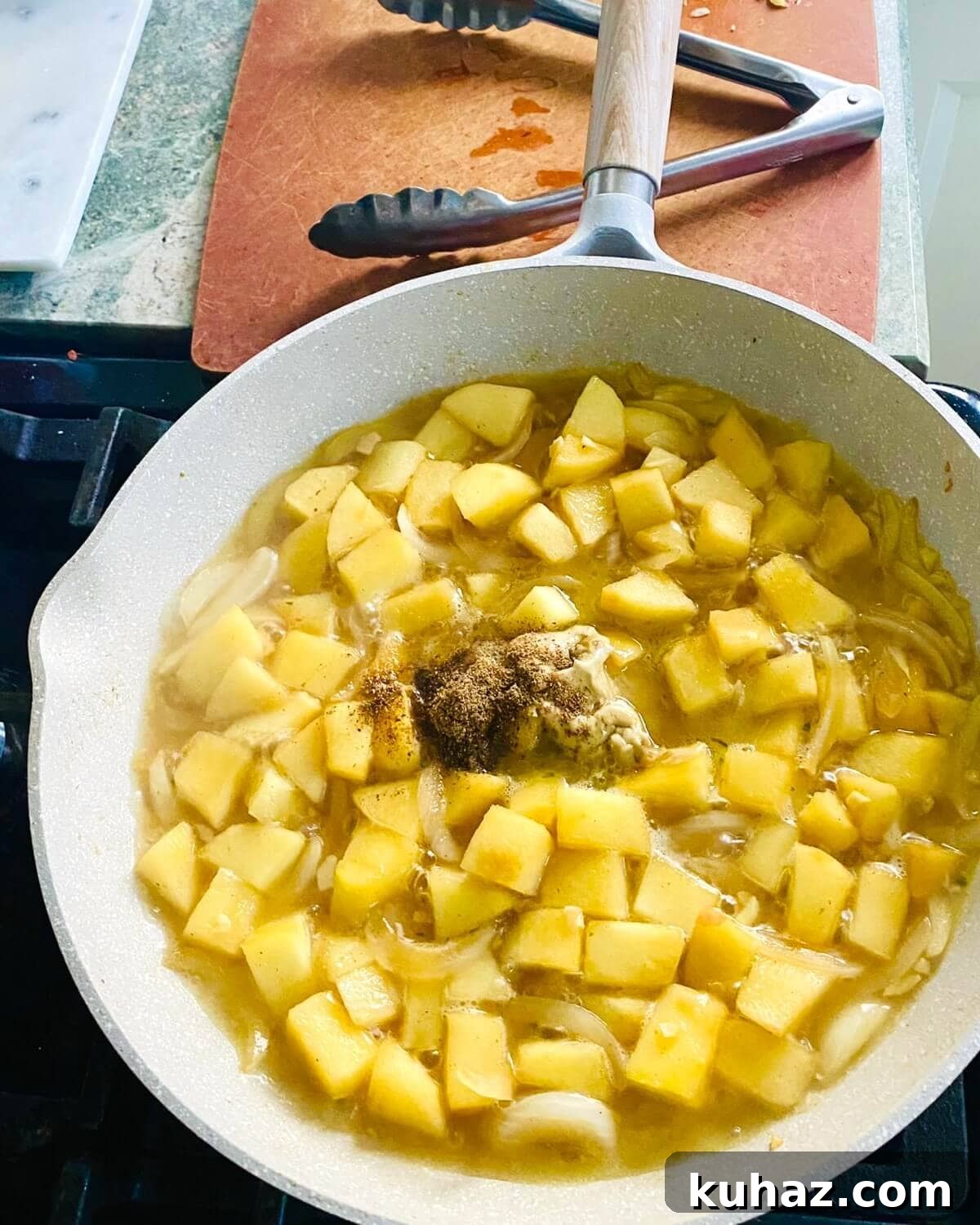
Add reduced-sodium chicken stock, white wine (optional), honey, Dijon mustard and Garam Masala. Simmer briefly until the sauce starts to thicken.

Finish the sauce with butter, taste and adjust seasoning, then return the chops to the pan and spoon the sauce, apples and onions over them to serve.
Hint
Thin boneless pork chops cook quickly and can dry out if overcooked. Use an instant-read thermometer to check doneness. The recommended target is 145°F (63°C) followed by a 3-minute rest for juicy, safe pork.
What is brining?
Brining is a simple soak in a salt-and-sugar solution that helps meat retain moisture and improves tenderness. For this recipe, a short brine of 30–60 minutes is enough to make the pork chops noticeably juicier without adjusting the flavor profile like a marinade would.

Storage and reheating
- Refrigerator or freezer — Cool completely, then store in airtight containers. Refrigerate for up to 4 days or freeze for up to 3 months. Thaw frozen portions in the refrigerator before reheating.
- Reheating — Place pork chops, apples, onions and sauce in an ovenproof dish, cover with foil and warm in a 350°F oven for 10–15 minutes, checking for even heating. Alternatively, microwave at 60% power in 30–60 second intervals until heated through.
Amy’s top tip
After brining and seasoning, let the pork chops sit at room temperature for about 15 minutes before cooking. Bringing the meat closer to room temperature helps it cook more evenly and prevents the pan from cooling too much when the meat is added.
Frequently asked questions
Brine them briefly in cold water with kosher salt and a little sugar. The quick brine helps the pork retain moisture during cooking without significantly changing the flavor.
Yes. Pork is safe and juicy when cooked to an internal temperature of 145°F (63°C) and allowed to rest for a few minutes. A slight pink hue in the center can be normal at that temperature.
What to serve with pork chops
This simple dish pairs beautifully with roasted or sautéed baby potatoes, steamed green beans, or a creamy risotto. Other good side options include honey-mustard roasted Brussels sprouts, stuffed sweet potatoes, or twice-baked potatoes to round out the meal.
More recipes like this one
If you enjoy pork with fruit or warm pan sauces, try smothered pork chops with mushroom gravy, maple-glazed pork tenderloin with sautéed apples, or pork tenderloin with a berry-bacon sauce for a different flavor profile.
One more thing

Did you try this recipe?
Leave a comment and a star rating below if you made it. Share your photos on social channels and tag the recipe author so others can enjoy your results. Thanks — Amy.
Recipe

Savory Herb Pork Chops with Apples and Onions
Center-cut pork chops are quickly seared and finished with a warm apple-onion pan sauce flavored with white wine, Dijon, honey and Garam Masala.
Ingredients
- 4 pork chops (6-ounce each), boneless, center cut and about 1-inch thick
- 3 tablespoons kosher salt
- 3 tablespoons granulated sugar
- 1 teaspoon dried thyme
- Fresh ground black pepper to taste
- 1 tablespoon olive oil
- 2 medium apples, peeled and cut in large dice (about 3 cups)
- 1 medium onion, thinly sliced (about 1 cup)
- 1 garlic clove, minced
- 1/2 cup reduced-sodium chicken stock
- 1/4 cup white wine (optional)
- 2 teaspoons honey
- 2 teaspoons Dijon mustard
- 1/2 teaspoon Garam Masala
- 1 tablespoon salted butter
Instructions
- Dissolve the salt and sugar in 6 cups of cold water in a bowl or container large enough to hold the pork chops. Submerge the chops, cover and refrigerate for 30 minutes to 1 hour.
- Remove the pork chops from the brine and pat dry with paper towels. Sprinkle both sides with thyme, salt and pepper.
- Heat a sauté pan over medium-high heat and add the olive oil. Sear the pork chops 3–4 minutes per side, or until golden and just cooked through. Transfer to a plate and tent loosely to keep warm.
- In the same pan over medium heat, add the diced apples, sliced onion and minced garlic. Sauté, stirring occasionally, for 2–4 minutes until the apples begin to soften and the onion is translucent.
- Stir in the chicken stock, white wine (if using), honey, Dijon mustard and Garam Masala. Simmer for 3–4 minutes until the sauce reduces and thickens slightly.
- Stir in the butter until melted. Taste and adjust seasoning with salt and pepper as needed.
- Return the pork chops to the pan and spoon the apple-onion sauce over them. Serve warm.
Notes
After brining and seasoning, allow the chops to rest at room temperature for about 15 minutes to promote even cooking.
Overcooking will make pork dry — aim for an internal temperature of 145°F followed by a 3-minute rest for tender, juicy results.
Nutrition (per serving)
Calories: 427 | Carbohydrates: 22.2 g | Protein: 45.2 g | Fat: 16.2 g | Saturated Fat: 5.5 g | Cholesterol: 138 mg | Sodium: 494 mg | Fiber: 3.7 g | Sugar: 15.8 g
Tag your photos on social media and share how it turned out — it’s always great to see variations and serving ideas.