
While meringue can seem intimidating at first, it doesn’t have to be. In this article you’ll learn how to make dependable meringue, common uses for it, how to avoid the most frequent mistakes, and answers to typical meringue questions.
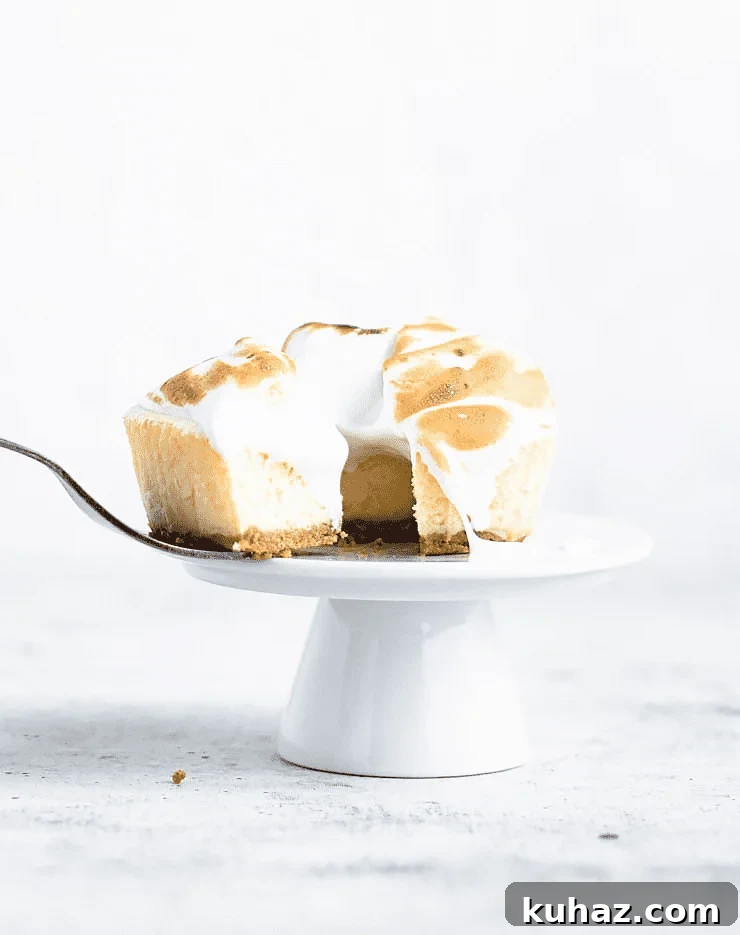
My first attempts at meringue were a disaster: runny, messy, and everywhere. Since then I’ve practiced a lot—made plenty of mistakes—and refined a reliable approach. Below I share a straightforward recipe, the three main meringue methods, practical tips from experience, and troubleshooting advice so your kitchen can stay clean and your meringue can turn out perfect.
What is meringue and how is it used?
Meringue is a simple mixture of egg whites and sugar whipped until light and airy. Some recipes add stabilizers or flavorings, like cream of tartar or vanilla, to improve texture and shelf life.
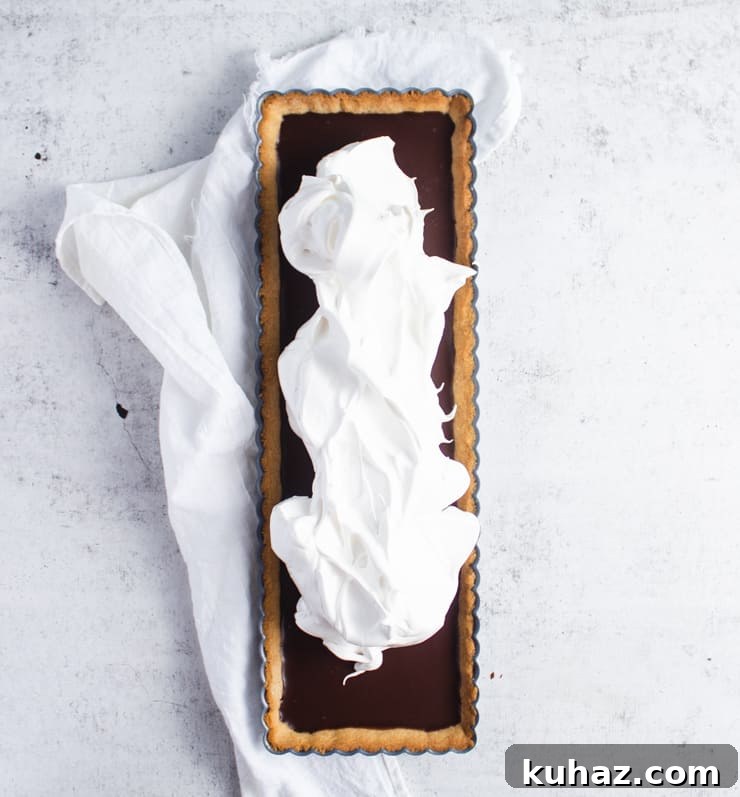
Meringue can be baked, gently toasted, folded into batters, or used as a topping for pies, tarts, or cakes. Common preparations include pavlova, baked Alaska, meringue cookies or “kisses,” macaron shells, and meringue-topped pies.
Ingredients
Basic ratio: meringue is typically a 1:2 ratio of egg whites to granulated sugar by volume. One egg white is roughly 2 tablespoons, so use 1/4 cup sugar per egg white.
If you like extra stability, add about 1/8 teaspoon cream of tartar per egg white.
My go-to amounts for a basic batch:
- 4 egg whites
- 1 cup granulated sugar
- 1 teaspoon vanilla extract
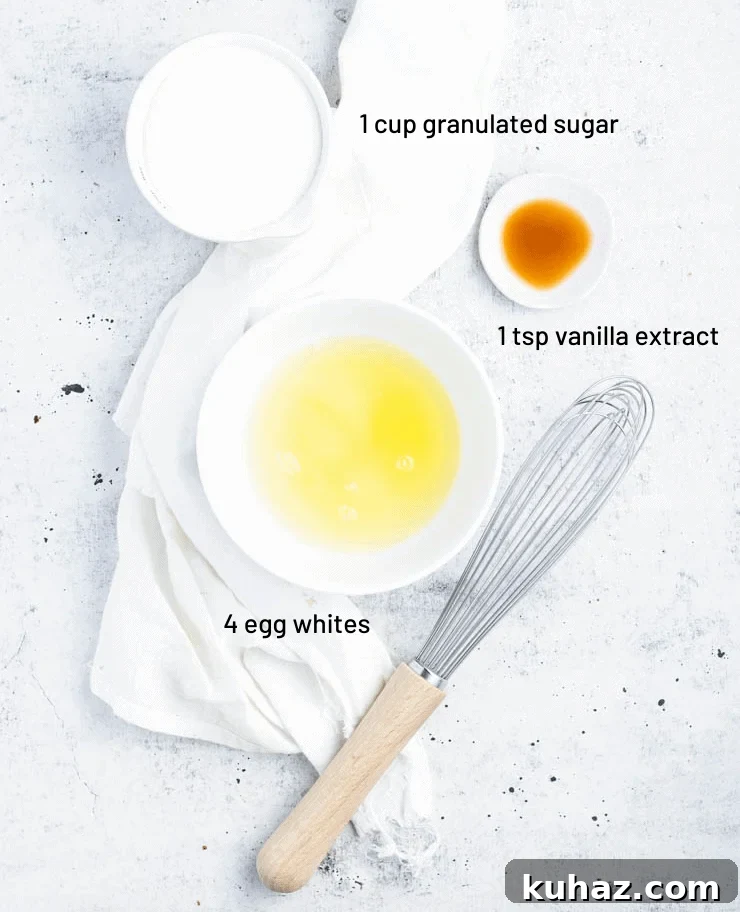
That amount yields roughly 40–50 small meringue kisses, a single 8–9″ pavlova layer, a dozen cookies, or enough meringue to frost a 9″ pie or cake.
For baked meringue items (cookies, kisses, pavlova) I typically use the French method. For frostings and toppings that will not be baked further, I prefer the Swiss or Italian methods because they produce a cooked, more stable meringue.
How to make meringue: Three methods
French meringue
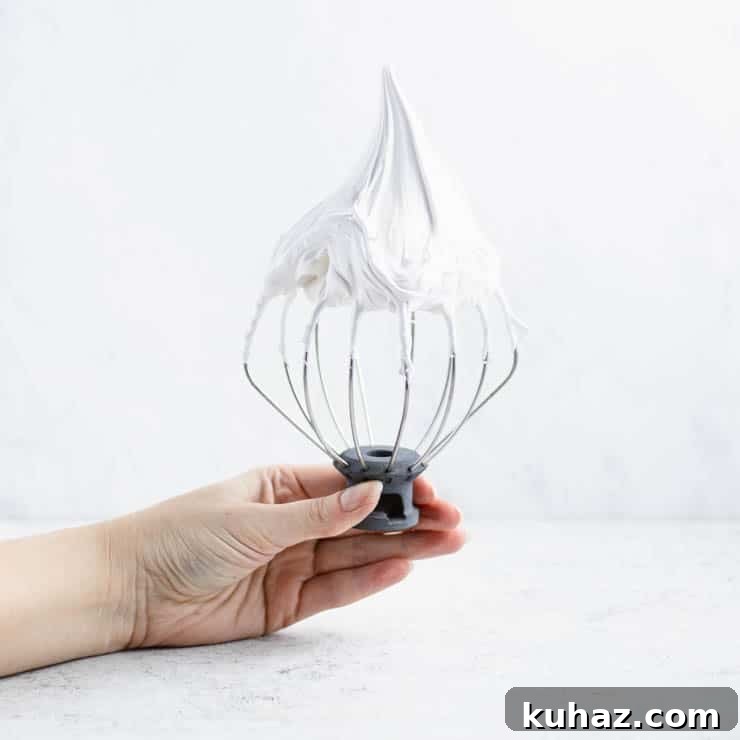
The French method is the simplest: whip egg whites to soft peaks, then gradually add sugar while continuing to beat until the sugar is dissolved and the mixture is glossy and holds firm peaks. Because the whites remain raw, this method is best for meringues that will be baked—cookies, pavlova, and meringue kisses.
Italian meringue
Italian meringue is made by pouring hot sugar syrup (cooked to the soft-ball stage, about 235°F/112°C) into whipped egg whites while the mixer runs. The hot syrup cooks the whites and yields a very stable meringue that works well for buttercreams, toppings, and frostings.
Swiss meringue
Swiss meringue begins by gently heating egg whites and sugar together over a double boiler until the mixture reaches about 160°F (71°C) and the sugar has dissolved. After heating, whip the mixture until it cools and becomes glossy and voluminous. Swiss meringue is smooth, stable, and excellent for frostings and pavlova.
Expert tips
- Use fresh, cold egg whites: Fresh egg whites whip up more reliably and cold whites are slightly more stable when you begin whipping.
- Start with clean, grease-free equipment: Any grease will prevent egg whites from forming stiff peaks. Wash bowls and utensils with hot, soapy water and dry thoroughly. Avoid plastic bowls and utensils if possible, since they can retain oily residues.
- Be patient when dissolving sugar: Add the sugar gradually and ensure it dissolves completely—grainy sugar left undissolved can cause weeping or collapse later.
Troubleshooting
Why did my meringue crack?
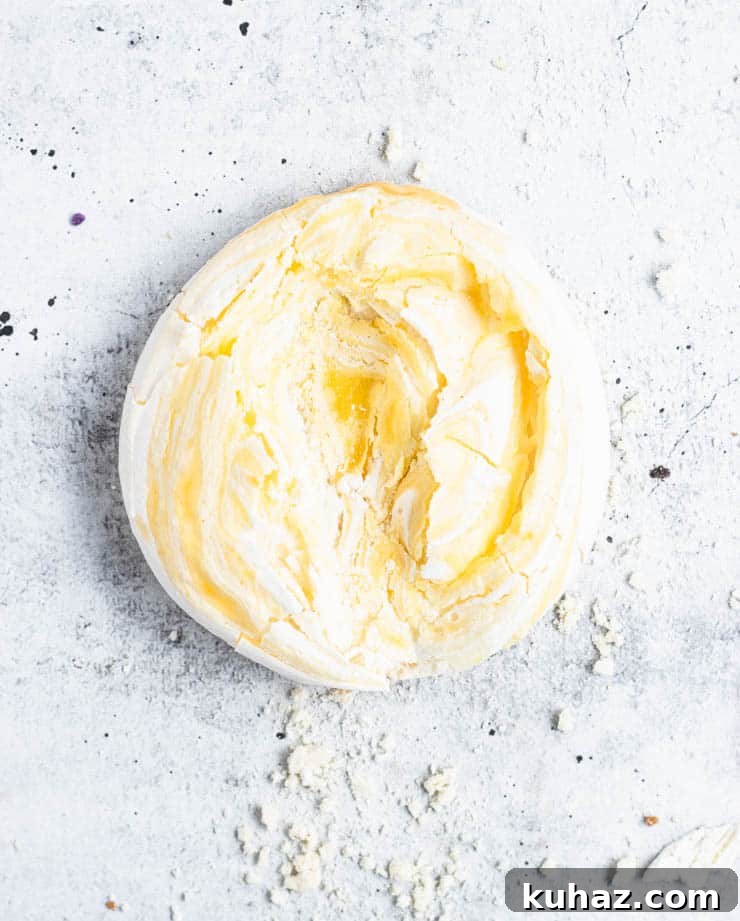
Cracking is common in baked meringues and is usually due to temperature issues. If your oven runs hot, or if the meringue cools too quickly after baking, the surface can crack. Check your oven temperature with an oven thermometer and consider baking at a lower temperature—many meringues do well around 200°F (95°C). To reduce cracking from an abrupt temperature change, turn off the oven when the meringue is done and leave the meringue inside to cool gradually.
Why does meringue weep?
Weeping (a layer of liquid appearing beneath the meringue) can result from undercooking, overcooking, or topping a very moist filling. Adding a stabilizer like cream of tartar or a small dusting of cornstarch can help. Humid conditions also encourage weeping—try to make or store meringues on drier days or in a dry area.
Why didn’t my meringue get stiff?
Grease or oil on equipment is the most common reason meringue won’t reach stiff peaks. Ensure bowls, beaters, and utensils are spotless. Also avoid plastic bowls, which can retain oils and interfere with whipping.
Why does meringue stick to baking paper?
Properly baked meringue should lift easily from parchment or baking paper. If it sticks, it likely needs more baking time to dry out completely.
Why did my meringue wrinkle after baking?
Meringue absorbs moisture readily and can wrinkle or look scaly if it hasn’t dried fully or is exposed to humidity. To prevent this, cool the meringue slowly in the oven and allow the oven to sit sealed for a while after turning it off; a brief crack of the oven door (about 10 minutes) can help escape built-up moisture before fully cooling later.
Frequently asked questions
Can meringue be frozen?
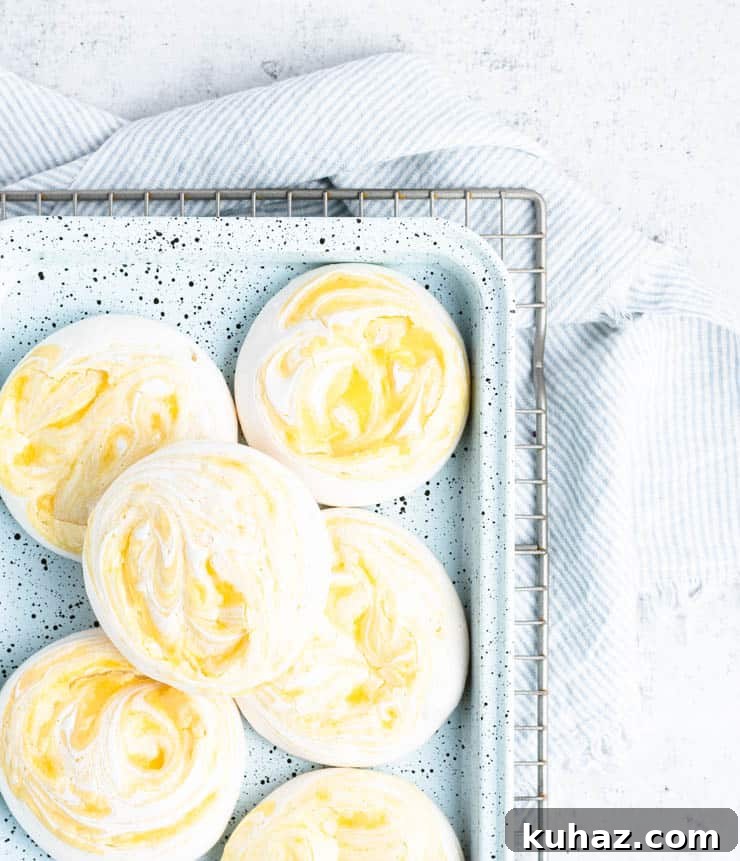
Baked meringues freeze well for up to one month if stored in an airtight container. Thaw them unwrapped on a wire rack at room temperature and serve immediately once thawed.
Can meringue be refrigerated?
Refrigerators are usually too humid for baked meringues; storing them at room temperature in an airtight container is best. Unbaked meringue may be refrigerated briefly—up to 24 hours—if necessary.
Is meringue gluten-free?
Yes. Pure meringue (egg whites and sugar, with optional stabilizers or flavorings) is gluten-free; however, items meringue adorns may not be.
Storage
Baked meringue keeps best in an airtight container at room temperature for 1–2 days, depending on humidity. Unbaked meringue can be stored in a covered container in the refrigerator for up to 24 hours.
Recipes that use meringue
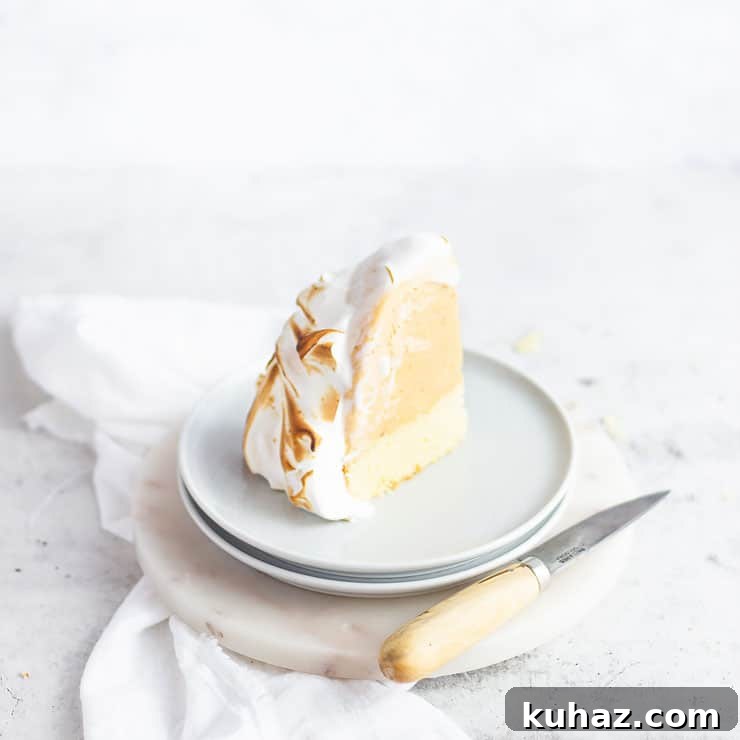
If you want to practice, meringue features in many desserts and confections: pavlova, baked Alaska, meringue cookies, marshmallow-style treats, and as a topping for pies and tarts. Start with a simple batch and try piping kisses or spreading it over a pie before moving on to more complex preparations.
Did you try this recipe? Leave a rating and a short comment to share your results—feedback helps refine recipes and tips.
Recipe
Basic Meringue Recipe

Light, glossy meringue that can be made by French, Swiss, or Italian methods.
- Author: Claire Coffey
- Prep Time: 10 minutes
- Total Time: 10 minutes (longer if using Swiss or Italian methods)
- Yield: About 24 small servings (varies by method)
- Category: Dessert
Ingredients
- 4 egg whites
- 1 cup granulated sugar
- 1 teaspoon vanilla extract
Instructions
Swiss meringue:
- Whisk together egg whites and sugar in a heatproof bowl.
- Place the bowl over a pot of simmering water and gently heat, stirring, until the sugar dissolves and the mixture reaches about 160°F (71°C).
- Remove from heat and whip on high until the meringue is glossy, fluffy, and cool to the touch.
- Fold in vanilla on low speed and use as directed.
French meringue:
- Combine egg whites and sugar in a clean bowl.
- Whip on high until the sugar has dissolved and the meringue holds firm, glossy peaks.
- Add vanilla and mix briefly to combine.
Italian meringue:
- In a small saucepan, combine sugar and 1/2 cup water and cook to about 235°F (soft-ball stage).
- While the syrup cooks, whip egg whites until frothy and then to stiff peaks.
- With the mixer running, pour the hot syrup in a thin stream into the whites. Continue whipping until the meringue is cool and glossy.
Notes
When baking meringues, lower oven temperatures and slow, gentle drying produce the best texture and reduce cracking. If your oven runs hot, aim for 200°F (95°C) or slightly lower. Cooling meringues gradually inside the turned-off oven reduces cracking from sudden temperature changes. In humid conditions, meringues are more likely to weep or soften; store them in a dry place.
Nutrition
- Serving Size: 1
- Calories: 35
- Sugar: 8.4g
- Sodium: 6mg
- Fat: 0g
- Carbohydrates: 8.4g
- Protein: 0.6g