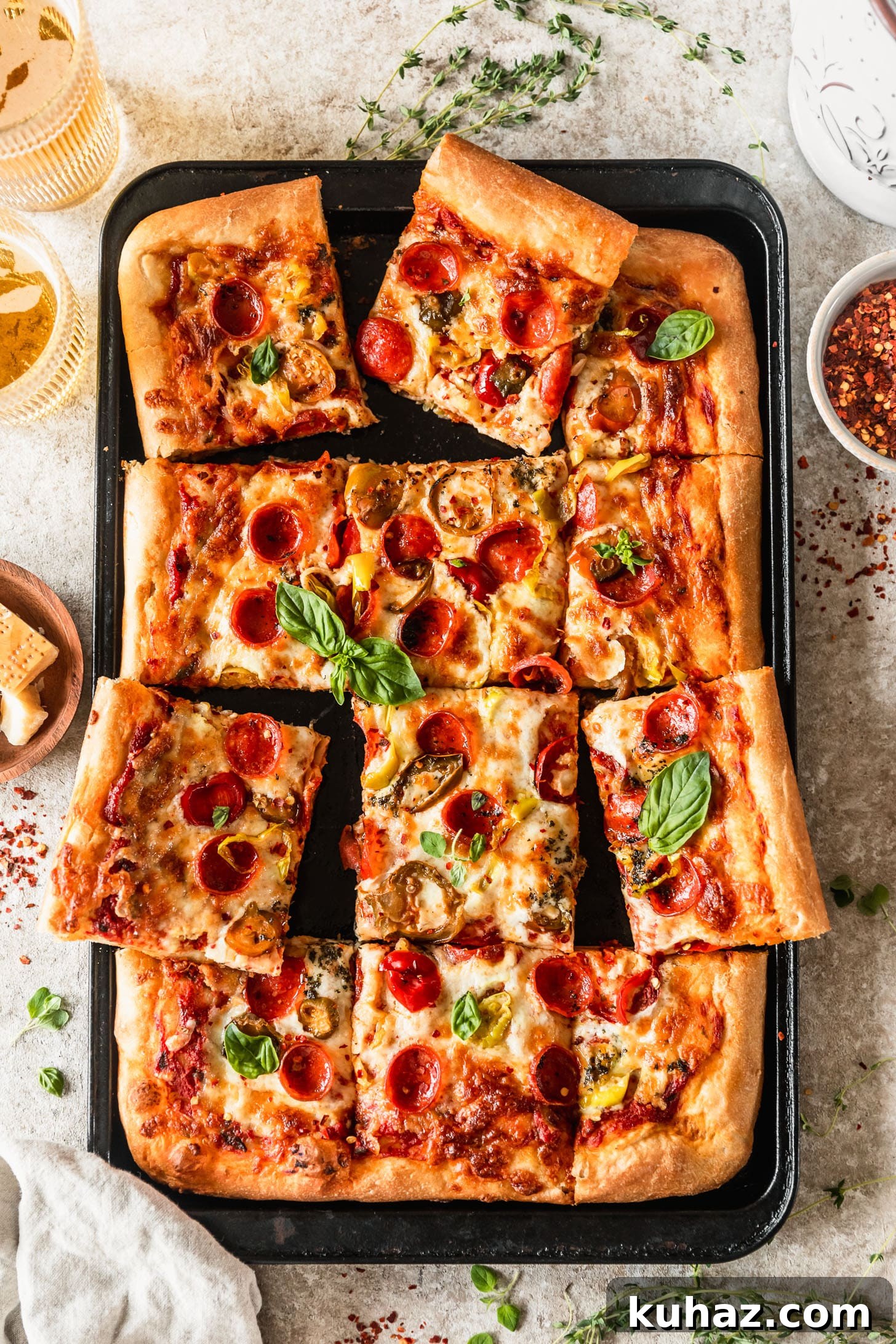
This Sicilian-style pizza is based on my in‑laws’ traditional recipe: simple, flavorful, and baked in a pan for a thick, crisp crust. The dough is foolproof and quick to mix, and I include both sea‑level and high‑altitude versions so you can make it whether you live by the ocean or in the mountains.
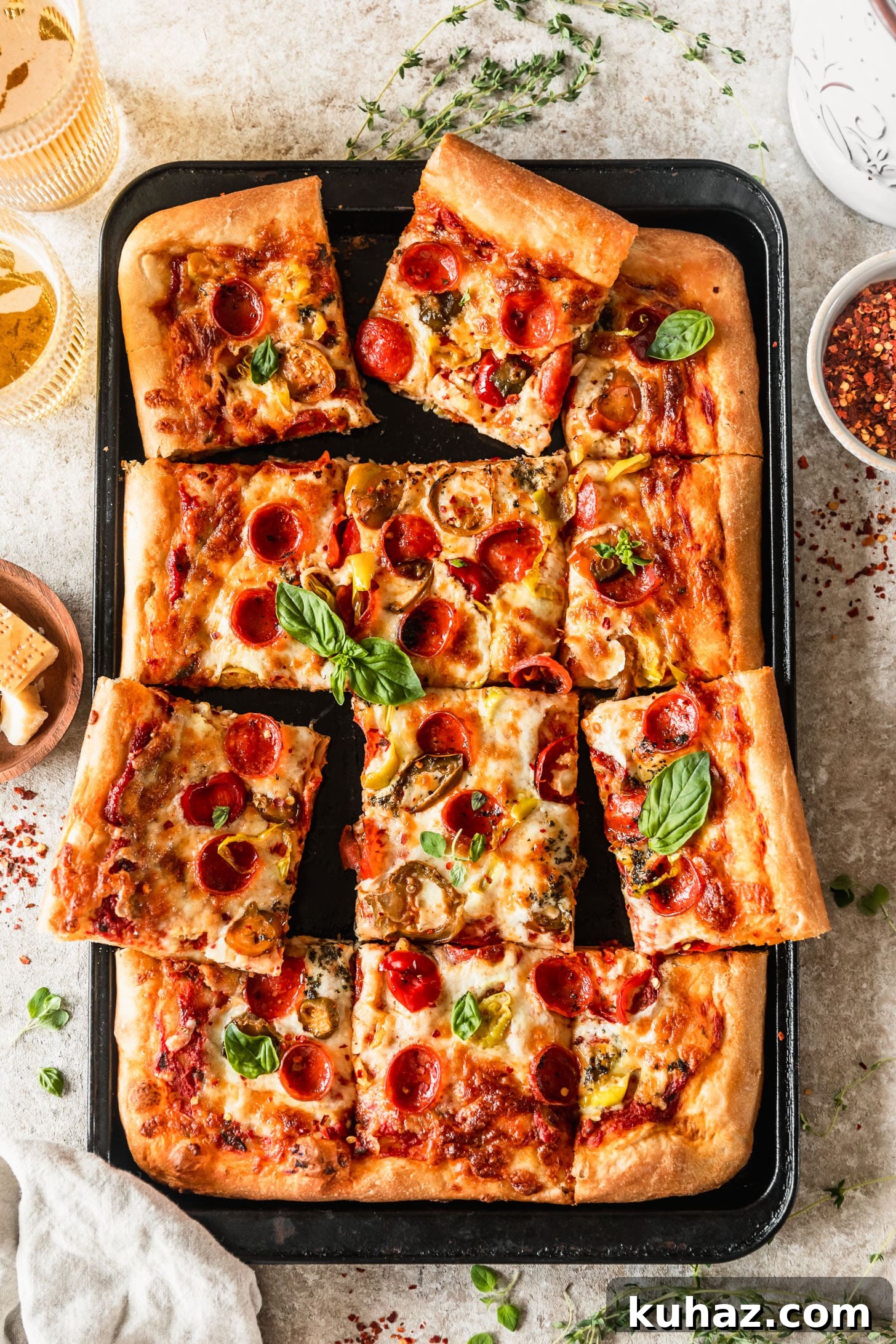
Last weekend we planned to do nothing and ended up doing everything: floating the Truckee, discovering a local meadery, staying up late with friends, and wandering a Rib Cook‑Off. On Sunday night we ignored the laundry and made homemade pizza instead. One of the best things about marrying an Italian is having someone who knows how to make great pizza — his family recipe for Sicilian pan pizza is a favorite in our house.
I first learned about Sicilian pan pizza in culinary school, but this version comes from my husband’s family, passed down from Sicily through New York to Las Vegas and eventually here. It’s an Americanized Sicilian recipe that’s easy to make at home and ideal for feeding a crowd. I’ve tested and adjusted the dough for high altitude so the recipe works whether you’re baking at sea level or at elevation.
Pantry staple ingredients
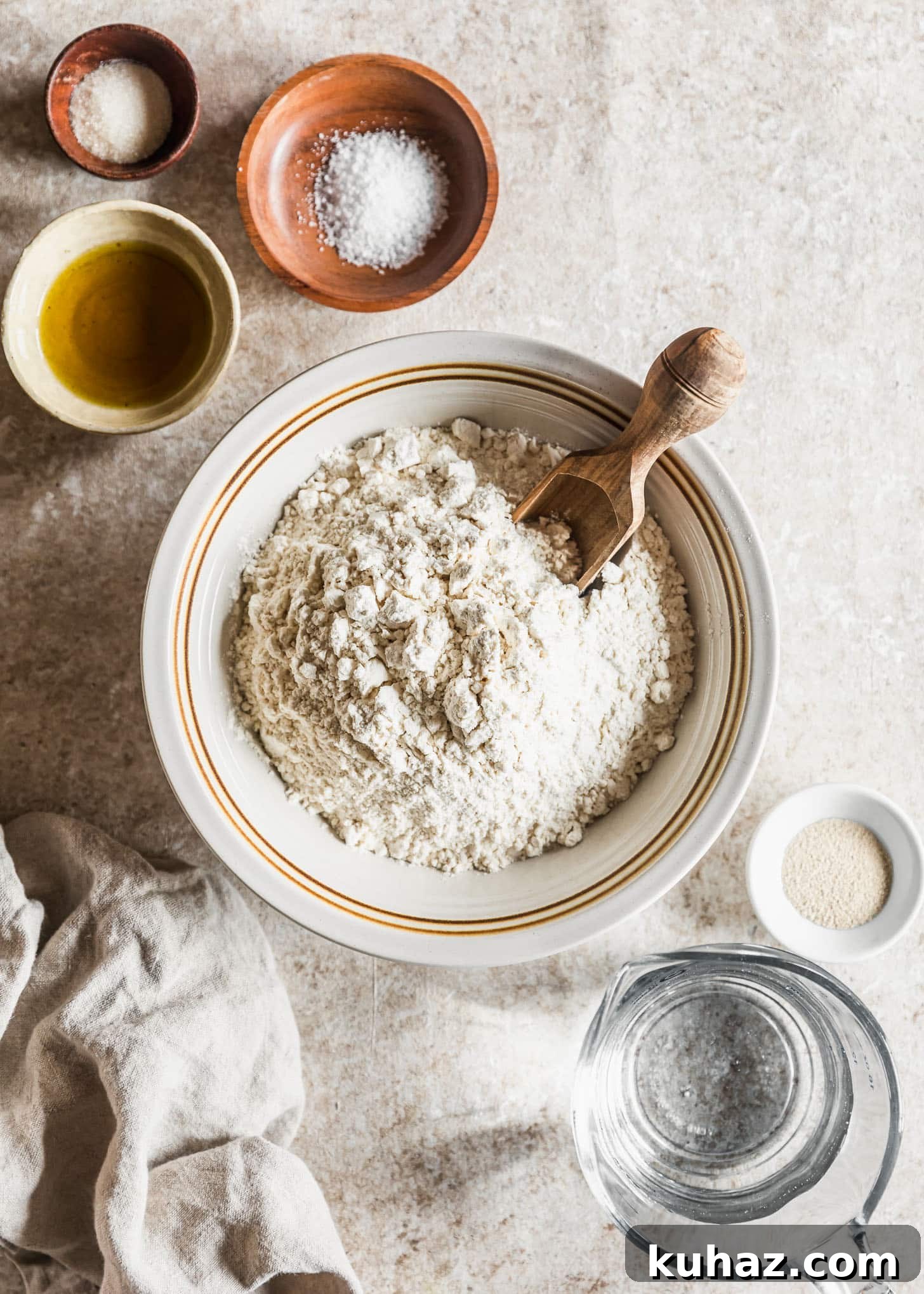
You probably already have most of what you need: olive oil, active dry yeast, sugar, warm water, all‑purpose flour, and kosher salt for the dough, plus cheese, sauce, and any toppings you like. Use a good quality pizza sauce — homemade or store bought — and plenty of fresh mozzarella for the classic Sicilian texture. If you use packaged yeast, check the expiration; old yeast may not activate.
Topping ideas
Sicilian pan pizza is versatile. Try any of these popular combinations:
- Italian sausage with bell peppers
- Margherita: fresh mozzarella, sliced tomatoes, and basil
- Cacio e pepe style: garlic butter base with mozzarella, ricotta, and cracked pepper
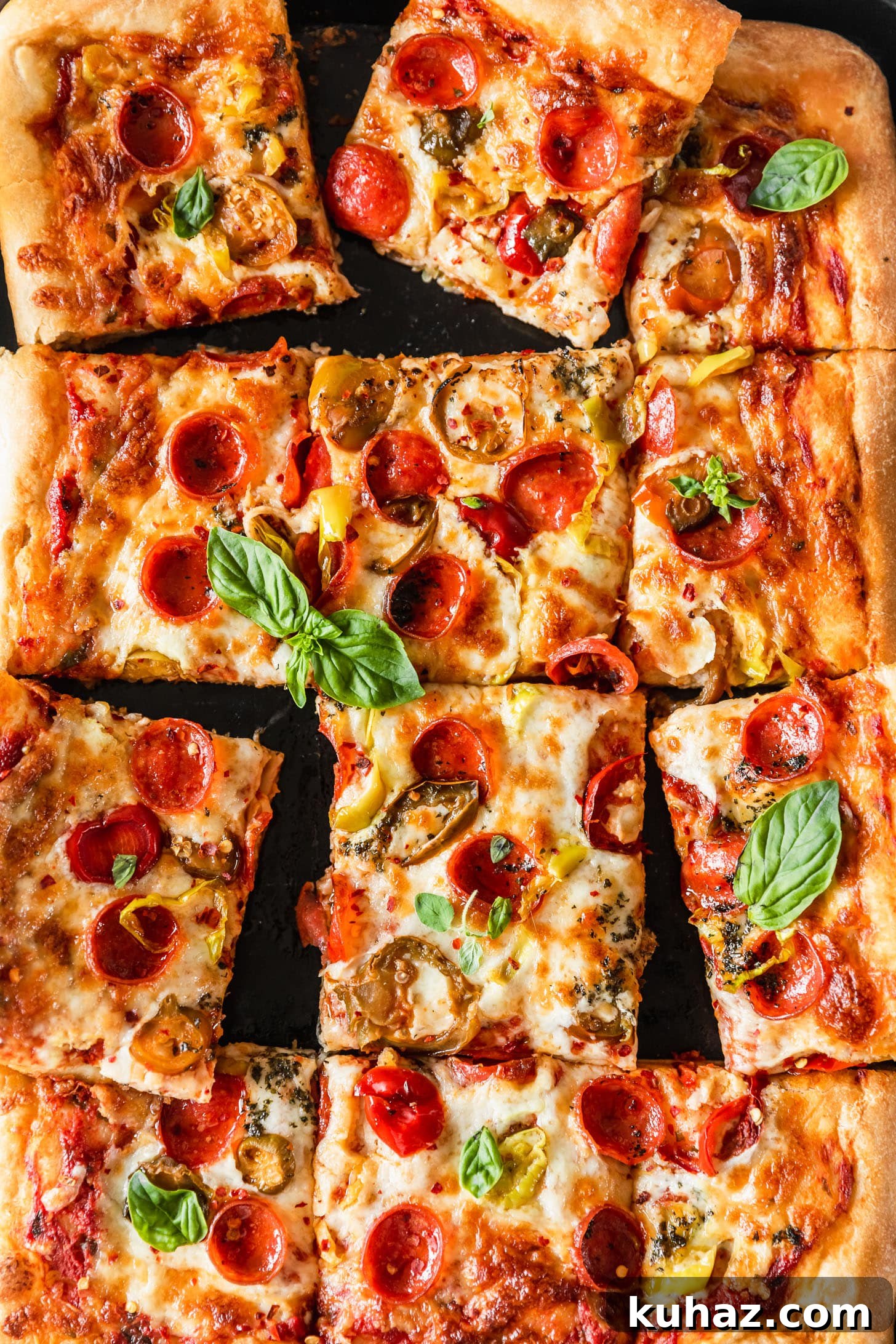
- Soppressata with basil, thinly sliced shallot, and a drizzle of hot honey
Activate the yeast
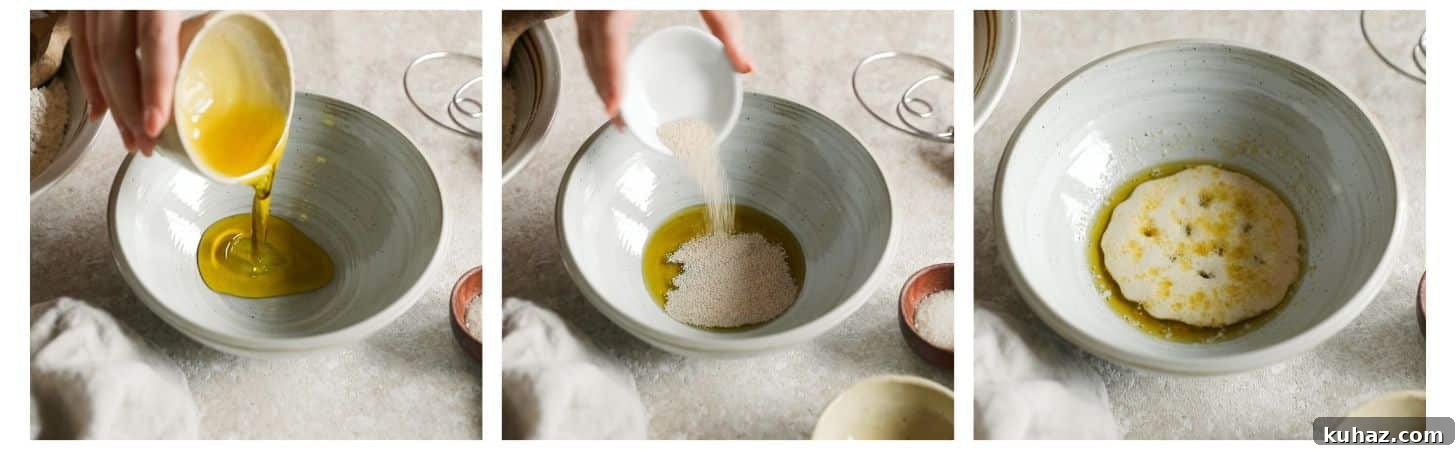
The water should be warm but not hot — about 105–110°F (40–43°C) — which is ideal for activating active dry yeast. Mix the yeast, a pinch of sugar, a little olive oil, and a portion of the warm water, then wait until it becomes foamy.
Make the dough
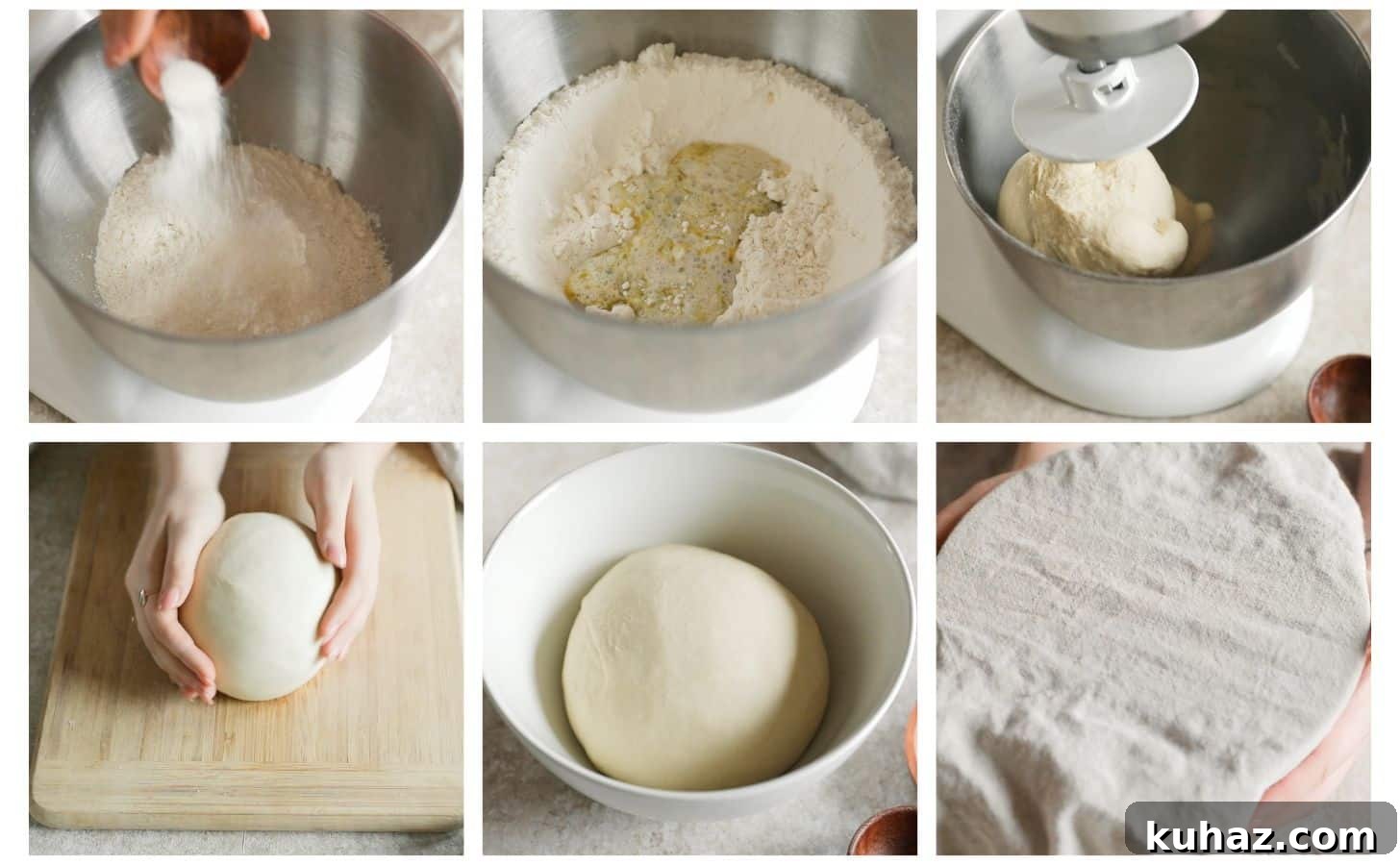
In a stand mixer fitted with a dough hook or in a large bowl if making by hand, combine all‑purpose flour, kosher salt, and the remaining sugar. Add the activated yeast and slowly incorporate the remaining water until the dough is tacky but not sticky. Knead the dough for 5–7 minutes on medium‑low speed, or by hand on a lightly floured surface. When the dough passes the poke test — it springs back quickly — place it in a lightly oiled bowl, cover, and let it rise in a warm spot until doubled, about 1½–2 hours. At high elevations the dough may rise faster, so check earlier.
Assemble & bake
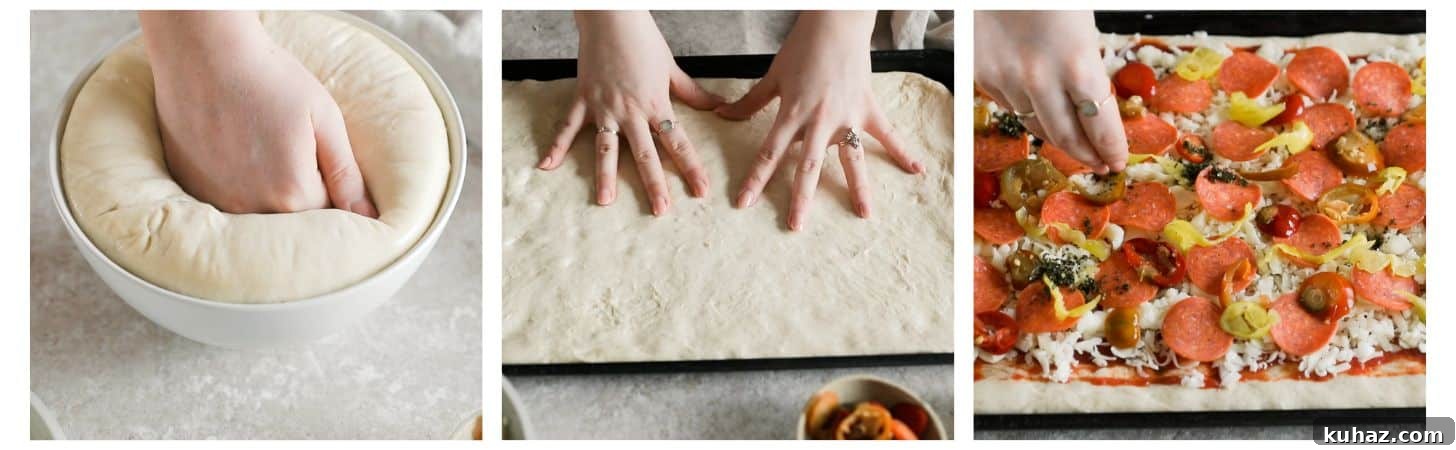
Preheat your oven to 425°F and position a rack in the lower third. Generously oil a seasoned sheet pan or a Sicilian pizza pan, then stretch the dough evenly into the pan, pressing to the edges. Leave about a 1/2‑inch border, spread the sauce, add shredded or torn fresh mozzarella, and finish with your chosen toppings. Bake 20–25 minutes until the crust is golden, the bottom is crisp, and the cheese is bubbling. Let the pizza rest five minutes, then cut into squares and serve.
Make the dough by hand
To make the dough without a stand mixer:
- Activate the yeast in warm water with a pinch of sugar and a splash of olive oil.
- In a large bowl, combine flour, salt, and sugar. Add the activated yeast and stir with a wooden spoon while gently adding the remaining water until a slightly tacky dough forms.
- Turn the dough onto a floured surface and knead 5–7 minutes until smooth and elastic. Proceed with rising, shaping, and baking as directed above.
Freeze this dough
To freeze, shape the kneaded dough into two discs, coat lightly with olive oil, wrap tightly in plastic wrap, and place in an airtight container or freezer bag for up to one month. Defrost in the refrigerator overnight. If the dough hasn’t fully risen, let it come to room temperature and rise again until doubled — this can take up to an additional hour because the dough will be cold.
Make‑ahead instructions
You can slow‑rise the dough in the refrigerator for 8–24 hours. After kneading, place the dough in an oiled bowl and cover tightly. When ready to bake, let the dough warm at room temperature for 20–30 minutes before stretching into the pan.
High altitude pizza dough
Baking at high altitude requires a few small adjustments: use slightly less yeast and expect a quicker rise. The dough may also need a touch more water because of the dry air. These guidelines were developed around 4,500 feet; if you live significantly higher, reduce the active dry yeast to about 3 grams (roughly 1 teaspoon).
For the most consistent results, weigh your ingredients. If you don’t have a scale, use the fluff‑and‑level method for flour: whisk to aerate, scoop into the measuring cup, and level without packing. This recipe yields a generous tray of Sicilian pizza perfect for sharing. If you try it, I hope it becomes a regular at your table — it’s a reliable, comforting sheet‑pan pizza that brings great flavor and a satisfyingly crisp crust every time.
Sicilian‑Style Pizza + a High‑Altitude Version
Yield: 12 slices
Prep Time: 20 mins • Cook Time: 25 mins • Proof Time: 2 hrs • Total Time: 2 hrs 45 mins
Ingredients
High Altitude Pizza Dough
- 27 grams olive oil (+ more for drizzling, about 2 Tbsp)
- 3.5 grams active dry yeast (about 1½ tsp)
- 9 grams sugar, divided (about 2 tsp)
- 350 grams room temperature water, divided (about 1¾ cups)
- 450 grams all‑purpose flour (about 3¾ cups)
- 9 grams kosher salt (about 2 tsp)
Sea Level Pizza Dough
- 27 grams olive oil (+ more for drizzling, about 2 Tbsp)
- 9 grams active dry yeast (about 2 tsp)
- 9 grams sugar (about 2 tsp)
- 350 grams room temperature water, divided (about 1¾ cups)
- 450 grams all‑purpose flour (about 3¾ cups)
- 9 grams kosher salt (about 2 tsp)
Sicilian Pizza
- 250 ml pizza sauce (about 1 cup), homemade or store‑bought
- 454 grams fresh mozzarella, shredded or torn (1 pound)
- Pepperoni, Italian sausage, vegetables, herbs, etc., for topping
Equipment
- Stand mixer with dough hook (optional)
- Seasoned sheet pan or Sicilian pizza pan
- Pizza stone (optional)
Instructions
Pizza Dough
- Heat 50 grams (about 1/4 cup) of the water to 105–110°F. In a small cup, combine the warm water, olive oil, a pinch of sugar, and the active dry yeast. Stir and let stand until foamy, 5–10 minutes.
- In a mixer bowl with a dough hook, combine the flour, salt, and remaining sugar. For hand mixing, use a large bowl.
- Pour the activated yeast into the flour. With the mixer on low, slowly add the remaining water until the dough is tacky and pulls away from the bowl. You may not need all the water. For hand mixing, stir with a wooden spoon, then switch to hands when too stiff to stir.
- Knead the dough on medium‑low speed for 5–7 minutes, or by hand on a lightly floured surface, until smooth and elastic.
- Drizzle a clean bowl with olive oil, place the dough inside, cover, and let rise in a warm spot until doubled, about 1½–2 hours. Check earlier at high altitude.
Sicilian Pizza
- Preheat oven to 425°F and place a rack in the lower third. If using a pizza stone, position it on the rack. Brush a sheet pan generously with olive oil.
- Punch down the dough and spread it evenly into the pan, pressing to the edges.
- Spread sauce, leaving a 1/2‑inch border. Top with mozzarella and desired toppings.
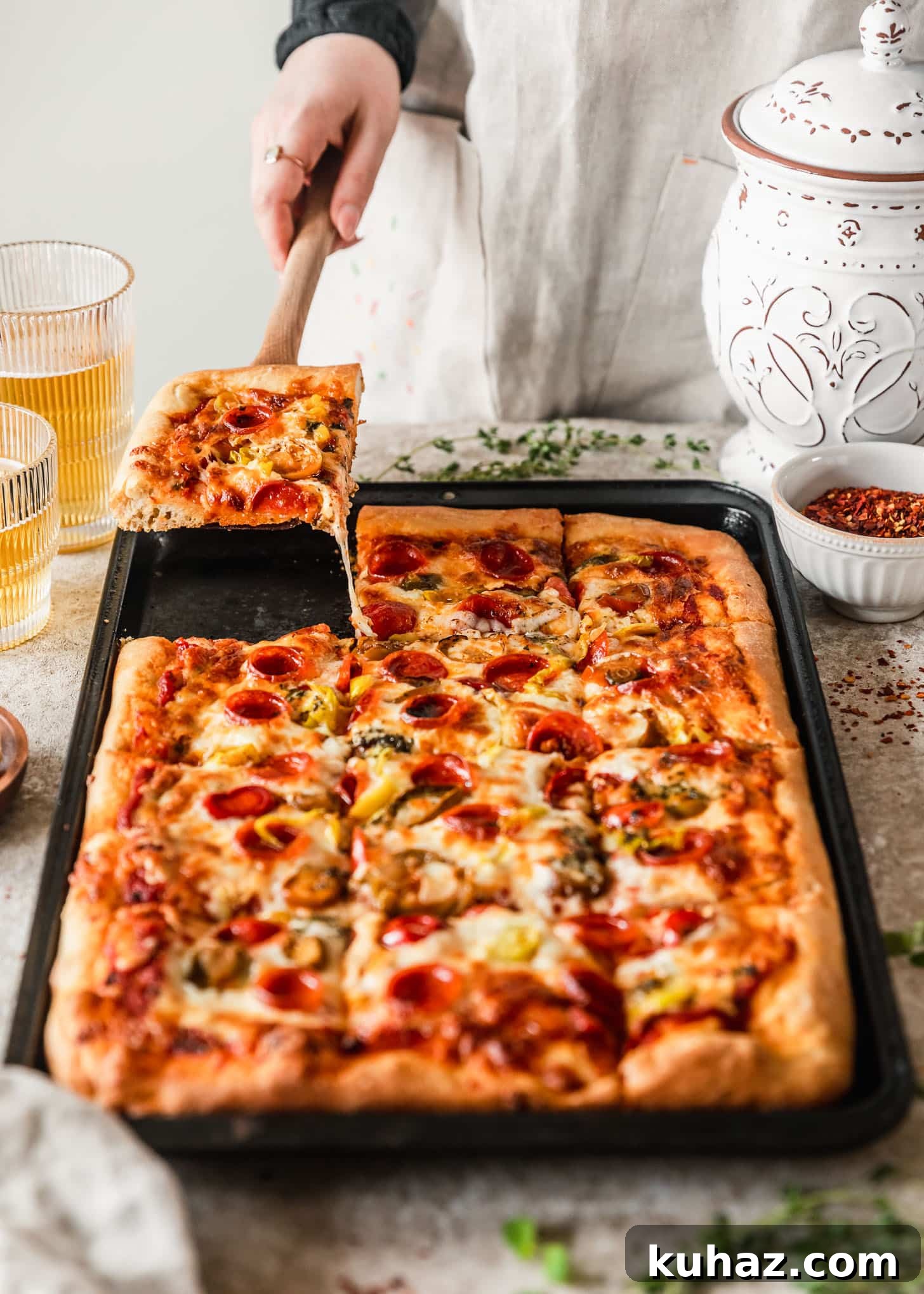
- Bake on the lower rack (on the pizza stone if using) for 20–25 minutes, until the crust is golden, the bottom is crisp, and the cheese bubbles. Cool 5 minutes, cut into 12 squares, and serve.
Notes
- If the dough is too dry, add water 1 Tbsp (15 ml) at a time. If too sticky, add flour 1 Tbsp (15 g) at a time.
- To test kneading, poke the dough: if it springs back, it’s ready; if the indent remains, knead more.
- To proof overnight, cover and slow‑rise in the fridge 8–24 hours. Warm at room temperature 20–30 minutes before shaping.
- The high altitude recipe was developed at 4,500 feet. If you live higher, reduce active dry yeast to 3 g (about 1 tsp).
Cuisine: American, Italian • Course: Main Course • Author: Sara Lynn Hunt Broka
Nutrition (per slice, no toppings): 276 kcal • Carbs 31.3 g • Protein 12.6 g • Fat 10.9 g • Sodium 628 mg