Since Meghan was a toddler, about three and three-quarter years old, I’ve followed Ellyn Satter’s feeding philosophy: parents decide what and when children eat, and children decide how much. The approach encourages no pressure, no pleading, and serving the same family meal to everyone while offering at least one familiar favorite. The idea is that repeated, neutral exposure to healthy foods eventually broadens a child’s palate.
I appreciate that philosophy, but for us it felt incomplete. Meghan routinely eats many healthy items—smoothies, nuts, oatmeal, avocado, and berries—but not many vegetables. Despite early exposure and consistent serving, she resisted plain vegetables at the table. After a while I realized that simply offering vegetables, however consistently, wasn’t guaranteeing she would actually eat them enough to grow to like them.
I read about a study that tried rewarding children for eating vegetables. Expecting the usual warnings about undermining intrinsic motivation, I was surprised: the kids who received small rewards for eating vegetables ate more and even reported liking them more. The effect continued after the rewards ended, likely because repeated exposure helped them acclimate to the taste.
That study gave me permission to try a different tactic. I didn’t want to abandon Satter’s principles entirely, but I also wanted practical results. I created a simple, age-appropriate reward system for Meghan that fits our family. The system is straightforward: if each of us clears our vegetable serving at dinner, we get a sticker. When our sticker chart reaches seven stickers, we treat ourselves to a special outing at the ice cream shop. For a three-year-old, ice cream is a powerful motivator, and the goal is not to promote sweets but to create an incentive that encourages repeated vegetable eating.
Operation Eat More Vegetables began with a challenging choice: broccoli. It’s one of the least-loved vegetables in our house, for both Meghan and her dad. Still, the sticker chart made a visible difference. Meghan was eager for a sticker even when she put on a dramatic face with every bite. She complained, she exaggerated, she made a fuss—but she ate the broccoli. For the first time in a while she finished a vegetable on its own, without it being hidden in a smoothie or muffin. That felt like progress.
We all participated—Mom, Dad, and Meghan each earned stickers that first night. The system is simple, family-centered, and easy for a young child to understand. I’m prepared to go to the ice cream shop regularly if it helps build healthy habits that last. The aim is to use the reward to jump-start repeated exposure; if Meghan keeps eating vegetables, she may eventually accept and even enjoy them without incentives.
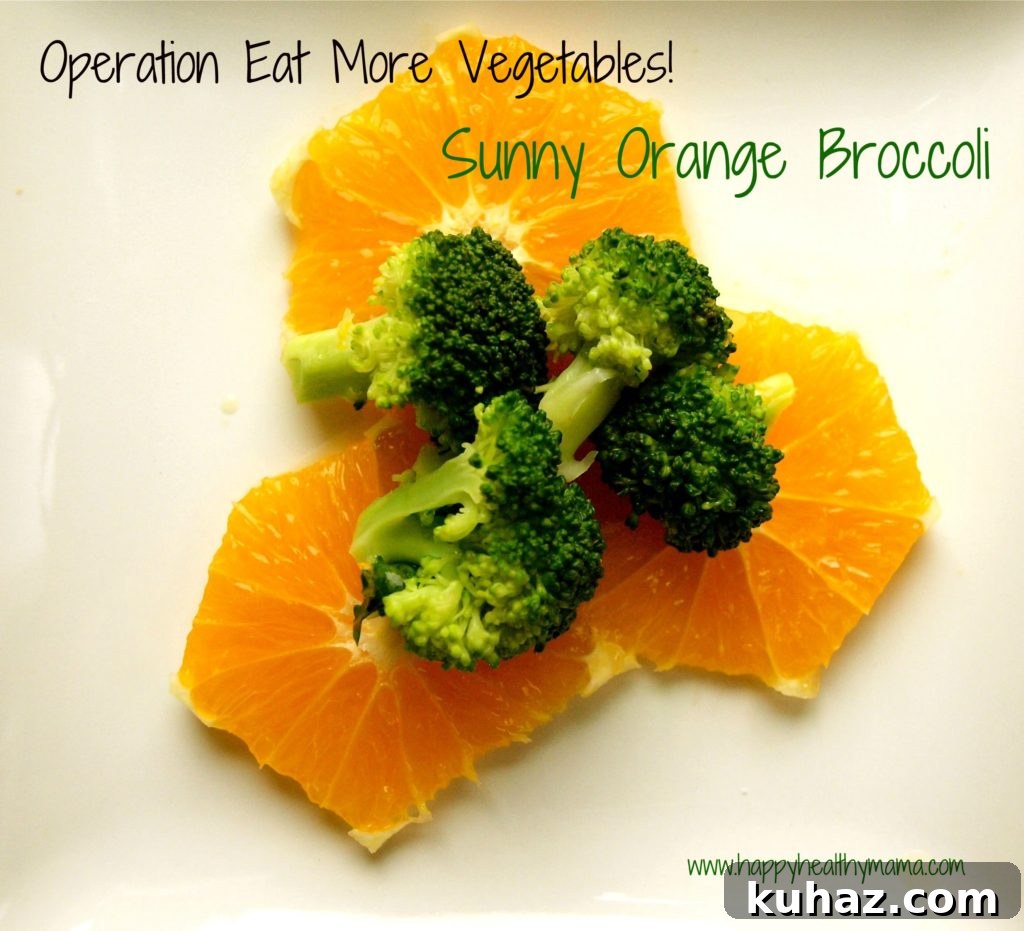
Each week I’ll share how Operation Eat More Vegetables is going and include one kid-friendly vegetable recipe. This week’s recipe is a bright, fresh side dish—Sunny Orange Broccoli. Don’t be fooled by Meghan’s facial expressions: a child’s resistance doesn’t always reflect the flavor. Often it’s just a learned reflex. Try this simple preparation and see if it helps your family enjoy broccoli more.


Operation Eat More Vegetables: Sunny Orange Broccoli
5 from 1 review
- Author: Healthy Happy Mama
- Total Time: 10 minutes
- Yield: 4 servings
Description
A fresh, simple, and child-friendly broccoli side dish with a touch of orange for brightness and flavor.
Ingredients
- 3 cups broccoli florets
- 2 tablespoons fresh orange juice
- 1/2 teaspoon orange zest (optional)
- Salt and pepper, to taste
- Orange slices with the peel removed, for serving (optional)
Instructions
- Gently steam the broccoli until it turns bright green and becomes tender but not mushy, about 5 minutes.
- Toss the warm broccoli with the fresh orange juice and orange zest, if using. Season with salt and pepper to taste.
- If desired, place the broccoli over peeled orange slices and serve immediately.
Notes
This recipe was adapted for simplicity and child-friendly flavor.
- Prep Time: 5 minutes
- Cook Time: 5 minutes
- Category: Side Dish
- Cuisine: American
Nutrition
- Serving Size: 1 serving
- Calories: 29
- Sugar: 1.5g
- Sodium: 9.5mg
- Fat: 0g
- Carbohydrates: 2g
- Protein: 0.8g
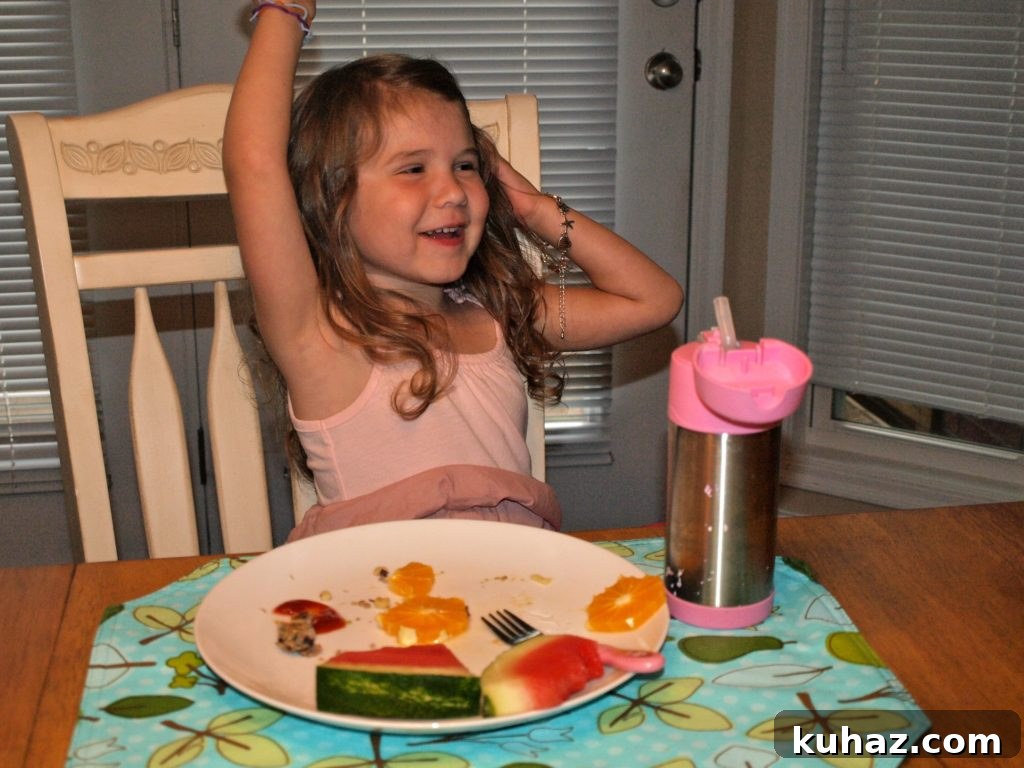
If Meghan consistently finishes her vegetable servings each night, I’ll call Operation Eat More Vegetables a huge success—even if it means an occasional trip to the ice cream shop. The goal is to build lasting, healthy habits through repeated exposure and positive reinforcement that makes sense for our child at her age.
What are your thoughts on rewarding kids for eating vegetables? I know some readers will strongly disagree with this approach, and that’s okay. I’d love to hear your experiences and suggestions.