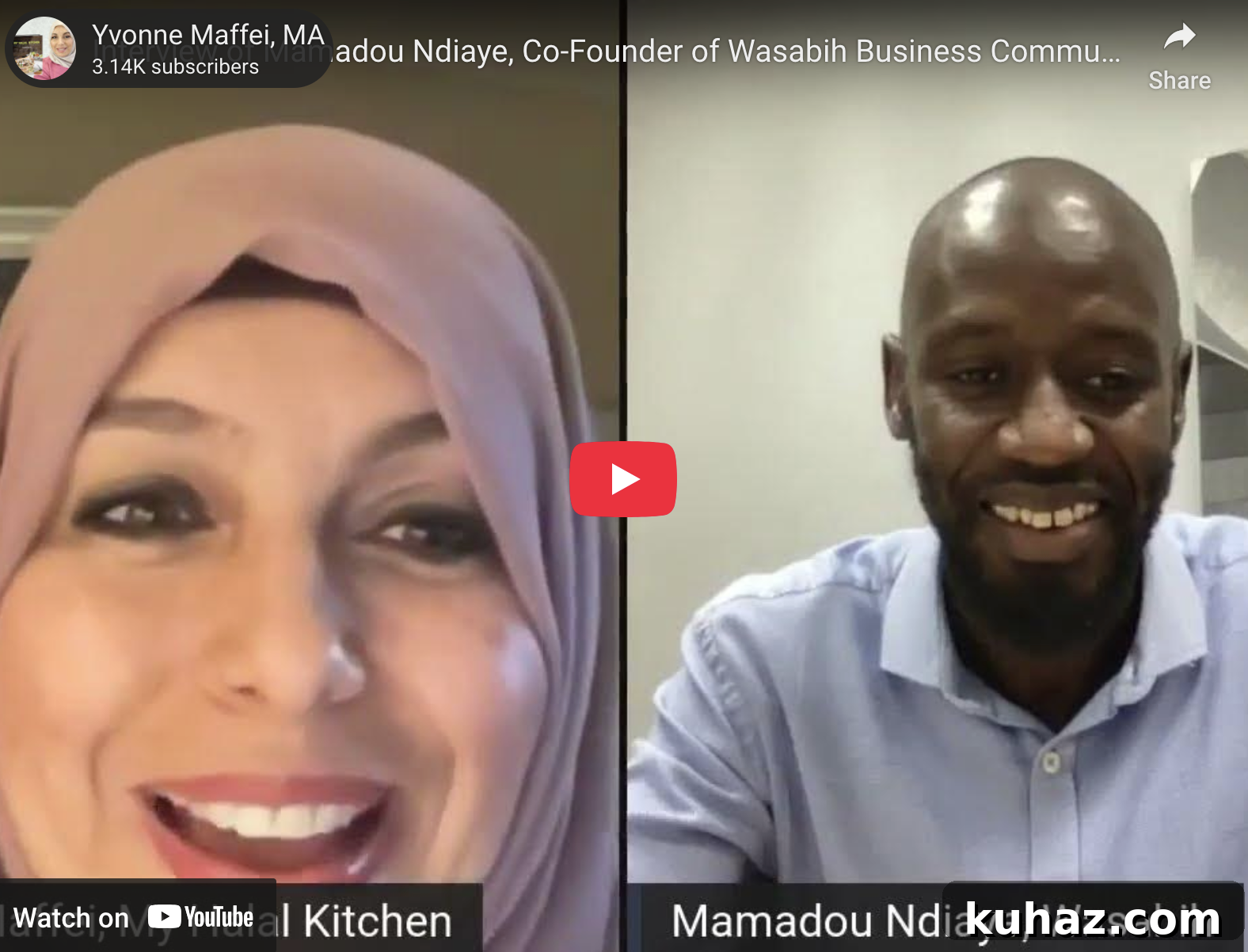
In this interview, Mamadou Ndiaye shares his remarkable journey from Senegal to France and onward to Malaysia. He reflects on the transition from student life into a corporate role at a major French company, and then the bold move into entrepreneurship that ultimately led him to found Wasabih. The conversation highlights the challenges and decisions involved in shifting careers, the cultural adjustments of living and working across continents, and the personal determination required to follow a vision that pushes beyond comfort and certainty.
Mamadou’s story is a practical example of how ambition, resilience, and strategic risk-taking can reshape a career. He discusses the lessons learned while working in the corporate world, how those experiences provided a foundation of skills and networks, and why he chose to apply that knowledge to build a company focused on the Halal economy. The interview explores the mindset needed to leave a stable path for entrepreneurship, and how maintaining clarity of purpose helped him navigate uncertainty and build momentum.
Wasabih is introduced as Mamadou’s response to an identified need within the global Halal industry: better ways for businesses and professionals to connect, collaborate, and grow. Rather than simply competing in existing markets, Wasabih aims to create meaningful value by enabling trusted business relationships and facilitating trade, partnerships, and community-building among participants in the Halal economy. The company is presented as a platform and community that supports entrepreneurs, suppliers, and service providers who operate in or serve Halal markets.
Throughout the interview, themes around cross-cultural leadership and global entrepreneurship recur. Mamadou emphasizes the importance of listening, learning from local markets, and adapting business models to respect cultural and regulatory differences. He also highlights the role of community—how connecting people, sharing knowledge, and promoting transparency can accelerate opportunities across regions. These insights are relevant not only to those in the Halal sector but to any professional aiming to scale ideas internationally.
For founders and aspiring entrepreneurs, the interview offers practical perspectives on launching and scaling a business. Mamadou touches on the balance between vision and execution, the need to assemble a complementary team, and the value of persistence when progress is slow. He frames setbacks as part of the learning curve and encourages entrepreneurs to treat risk as a calculated step toward building something sustainable.
The conversation also serves as inspiration for anyone considering a significant career pivot. Mamadou’s path—from academic pursuits to corporate experience and finally to entrepreneurship—illustrates how diverse experiences can combine to create unique opportunities. His journey underscores that strategic moves, even when risky, can produce rewarding outcomes when guided by clear goals and consistent effort.
If you are interested in the Halal economy or want to learn more about connecting with businesses and professionals in that space, Wasabih positions itself as a resource and community to explore. The interview is a useful introduction to both Mamadou’s motivations and the mission behind Wasabih, offering insights for business owners, investors, and community builders focused on Halal markets.
Connect and do business on Wasabih: www.wasabih.com