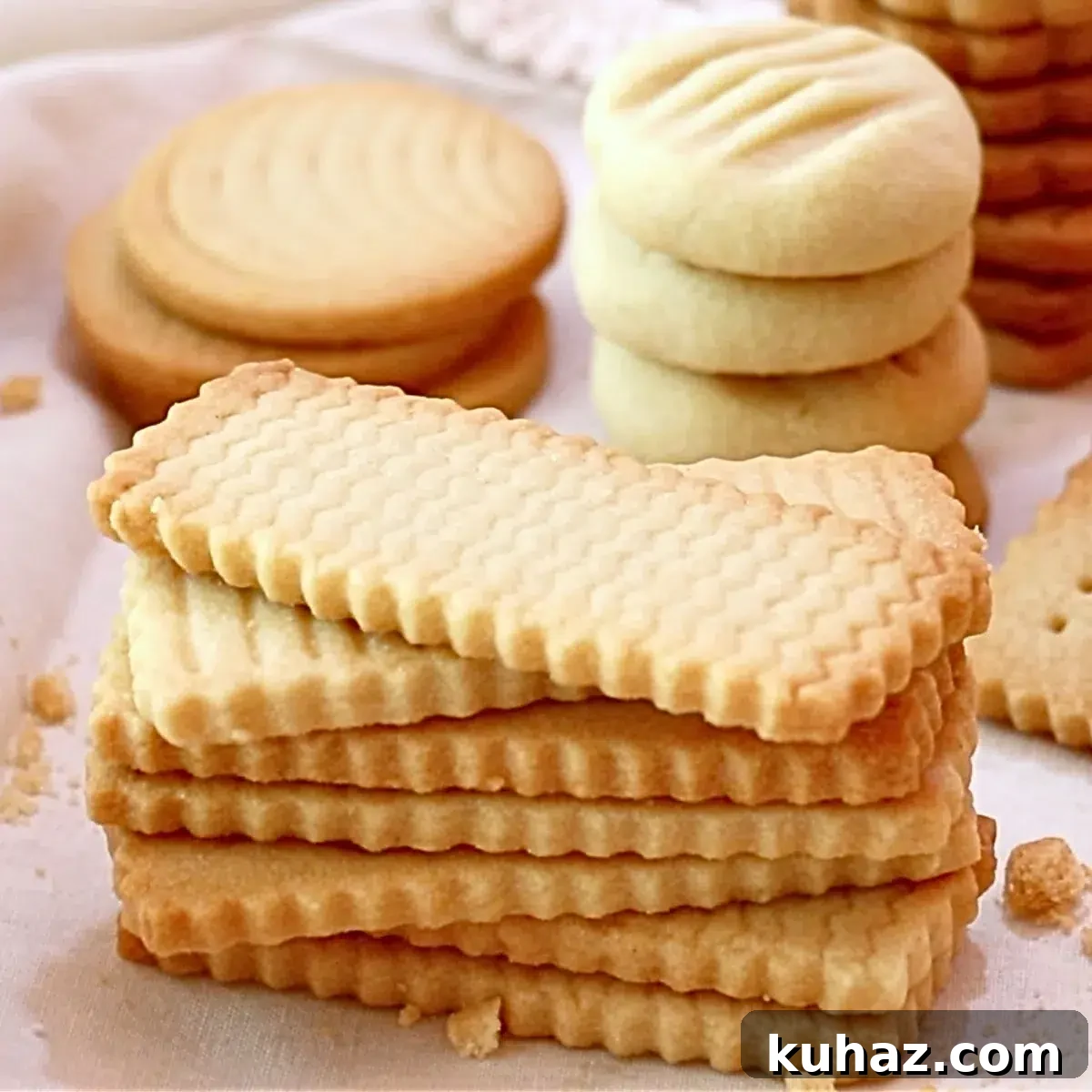
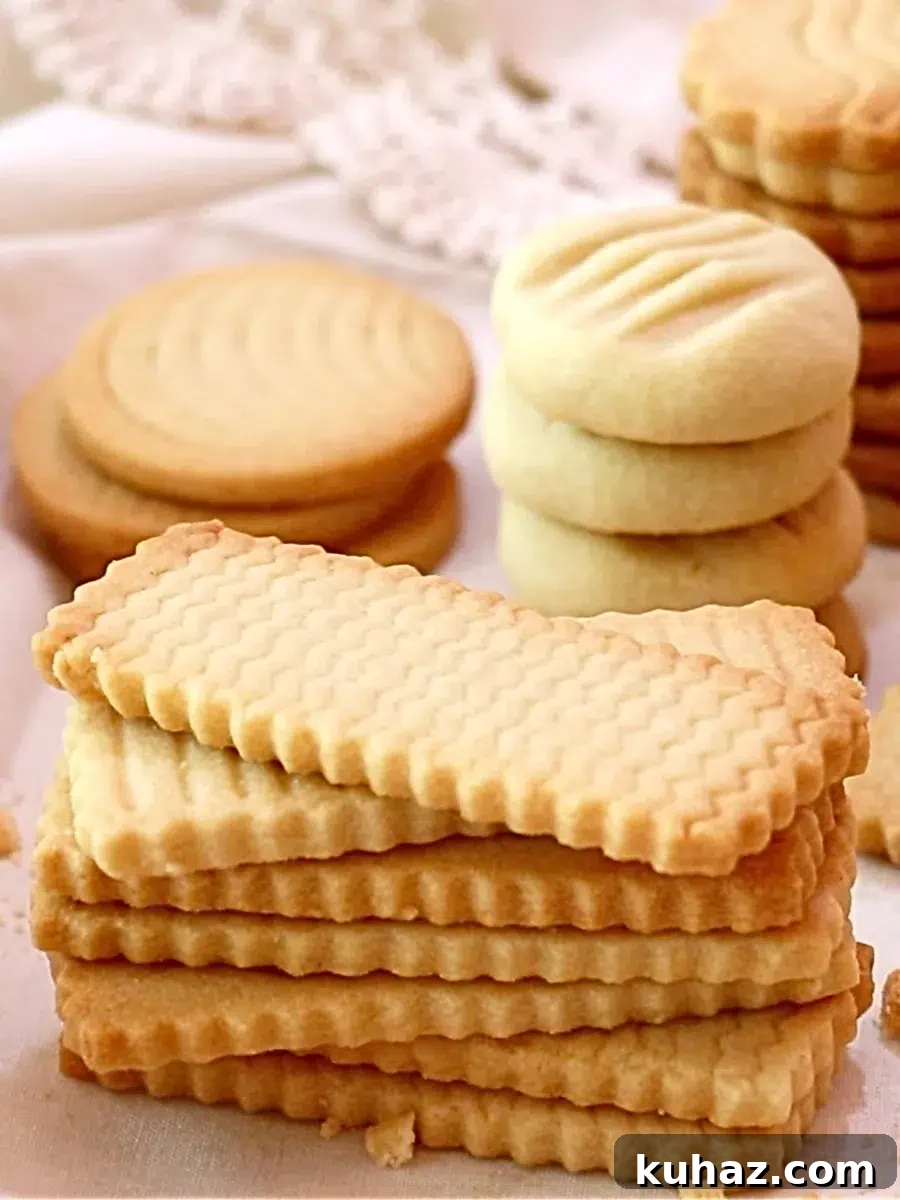
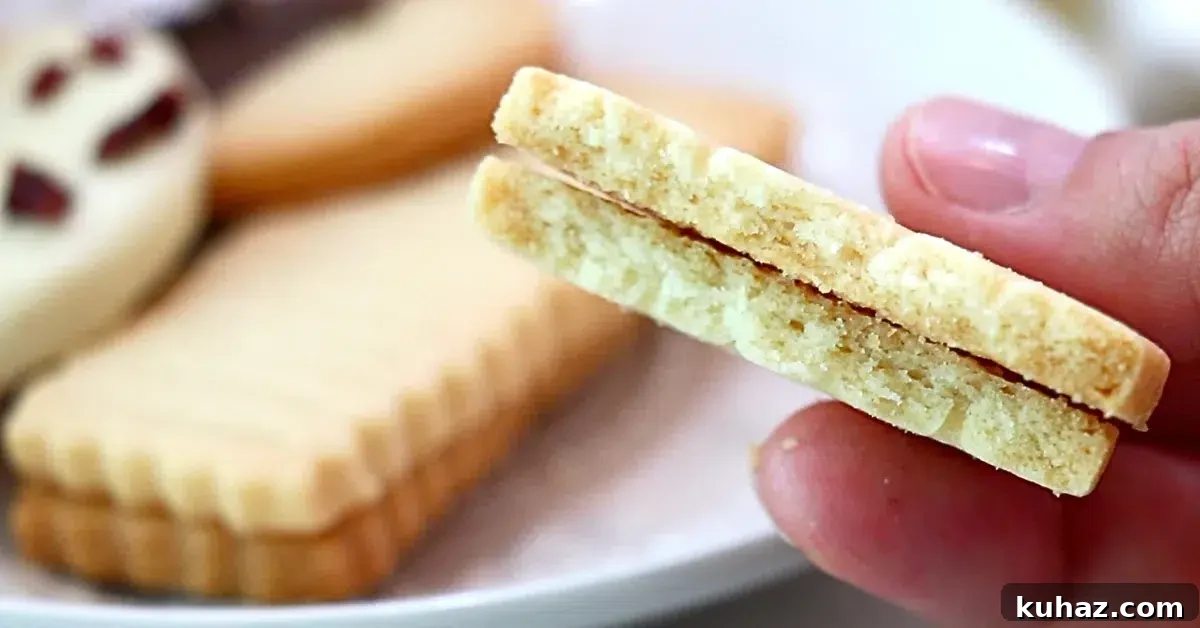
The buttery shortbread cookie is lightly crisp, tender, and not overly sweet. The dough comes together in about five minutes using six simple ingredients available at most grocery stores. These cookies are perfect for holiday baking, a tea-time treat, or a simple homemade gift.
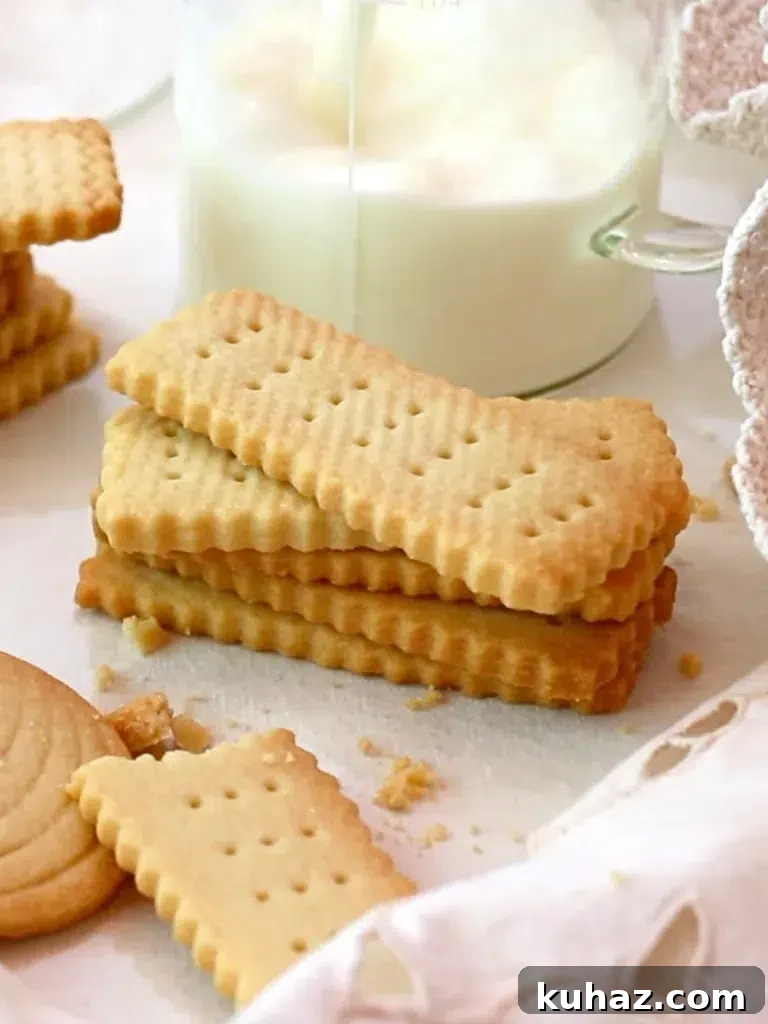
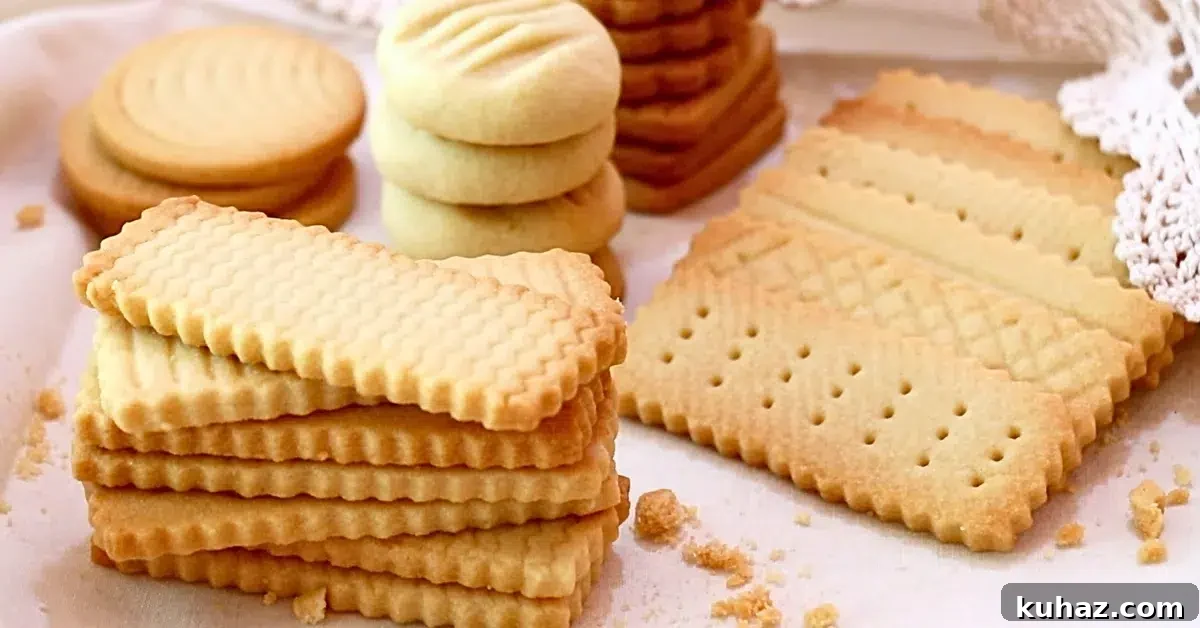
Why You’ll Love These Shortbread Cookies
- Light and delicately crisp – each bite has a fine, tender crumble rather than a heavy crunch.
- Simple to prepare – no complicated steps; the dough is forgiving and quick to mix.
- Holds shapes well – great for cut-out cookies and seasonal shapes.
- Not overly sweet – balanced sweetness so the buttery flavor shines.
- Rich, buttery flavor – plenty of butter gives a satisfying melt-in-your-mouth quality.
- Eggless – a straightforward egg-free cookie that works for many dietary preferences.
This is my favorite shortbread recipe for holiday cookie boxes and everyday baking. It complements other simple butter cookie recipes and can be adapted with lemon, chocolate, or other flavorings for variety.
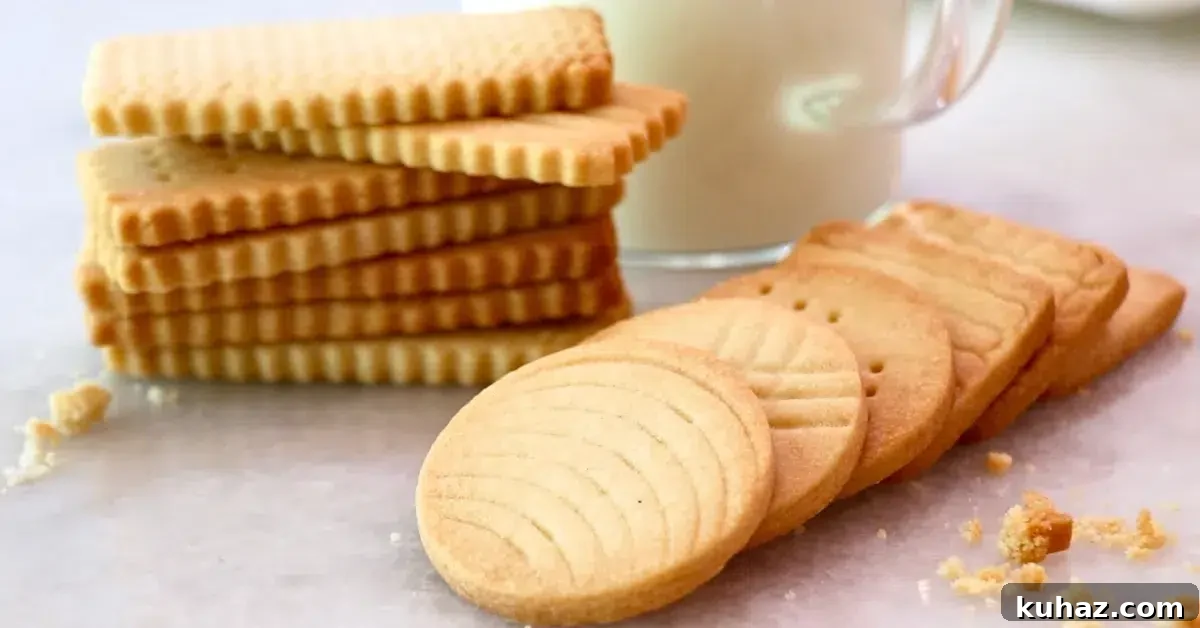
I made these with my daughter at Christmas; the dough is not sticky and is easy for kids to roll and cut, so it’s a fun baking activity for families.
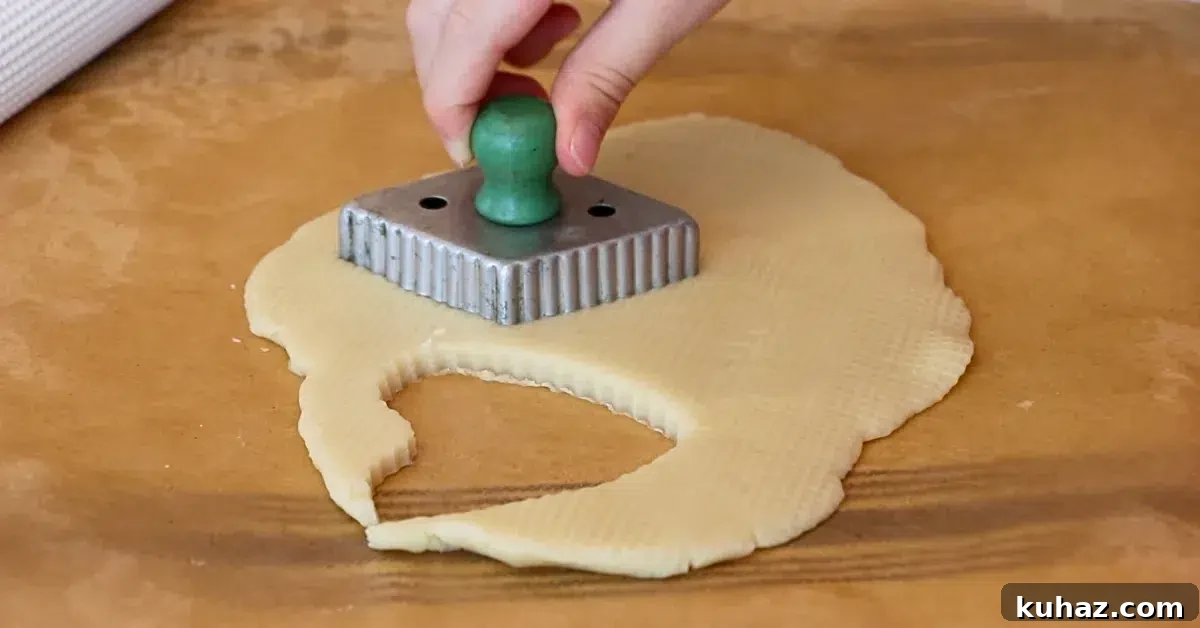
VIDEO: Watch How To Make the Shortbread Cookies
Step-by-step video tutorials are helpful for visual learners. Search for the recipe video title on the site or channel to follow along with the process and techniques demonstrated.
Tips For The Ingredients
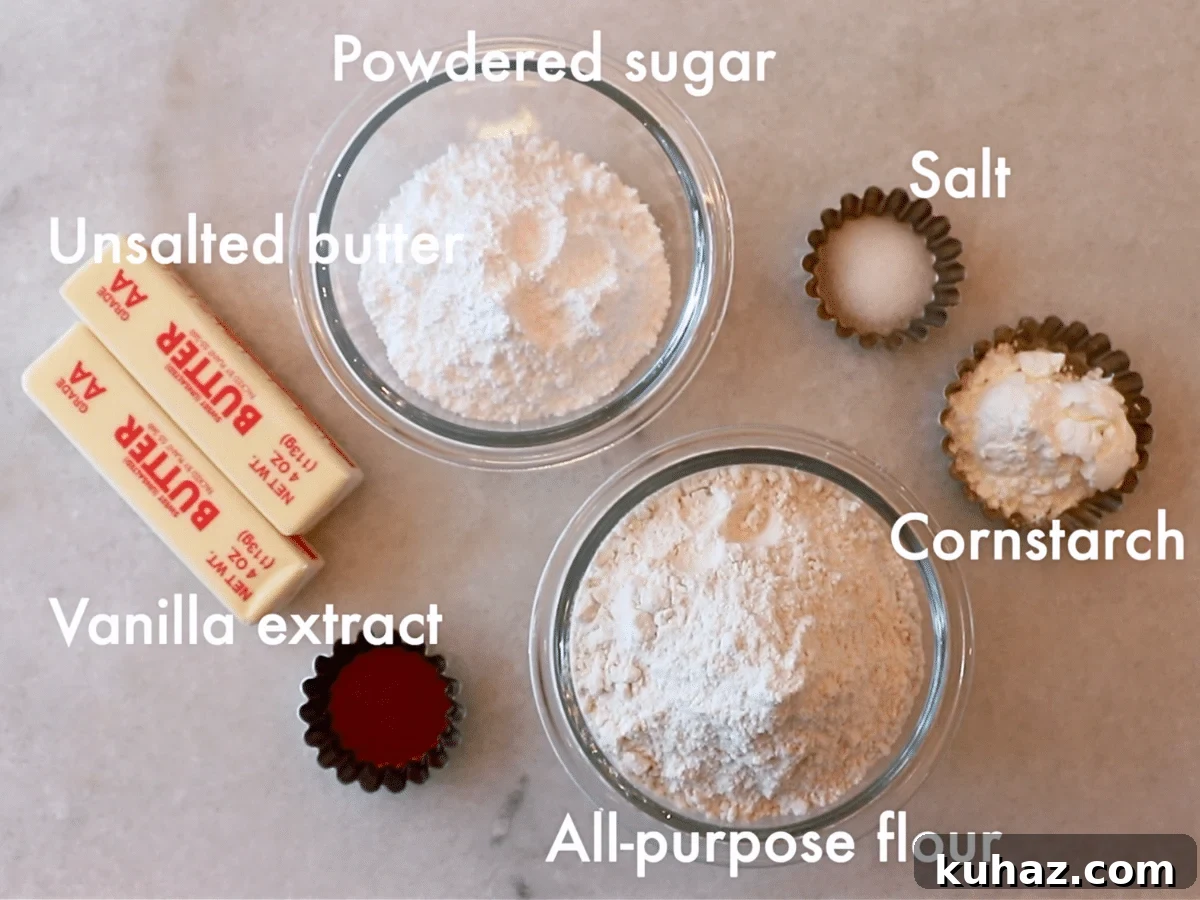
Classic shortbread uses butter, sugar, and flour. This recipe adds cornstarch, vanilla, and a pinch of salt for improved texture and balanced flavor.
- Unsalted butter: Use room-temperature butter so it blends smoothly with the sugar.
- Powdered sugar: Produces a finer, more delicate crumb than granulated sugar; granulated sugar will create a slightly coarser, firmer crunch and can make the dough spread a bit more.
- Vanilla extract: Adds warm, familiar flavor; optional but recommended.
- All-purpose flour: The base of the dough; measure accurately for consistent results.
- Cornstarch: A small amount lightens the texture and yields a more tender, delicate crumb. You can substitute with more all-purpose flour if needed.
- Salt: Enhances the buttery flavor and balances the sweetness.
Confectioners’ sugar or granulated sugar?
Use confectioners’ (powdered) sugar for a fine, tender crumb and delicate crispness. Granulated sugar delivers a more pronounced crunch and can cause a touch more spread during baking. Choose based on the texture you prefer.
Step-by-Step Instructions To Make Shortbread Cookies
Step 1: Combine softened butter, powdered sugar, and vanilla extract
Place butter, powdered sugar, and vanilla in a mixing bowl. Start mixing on low speed to prevent the sugar from puffing out, then increase speed until the mixture is smooth. Stop as soon as it is evenly combined — there’s no need to whip excessive air into the butter.
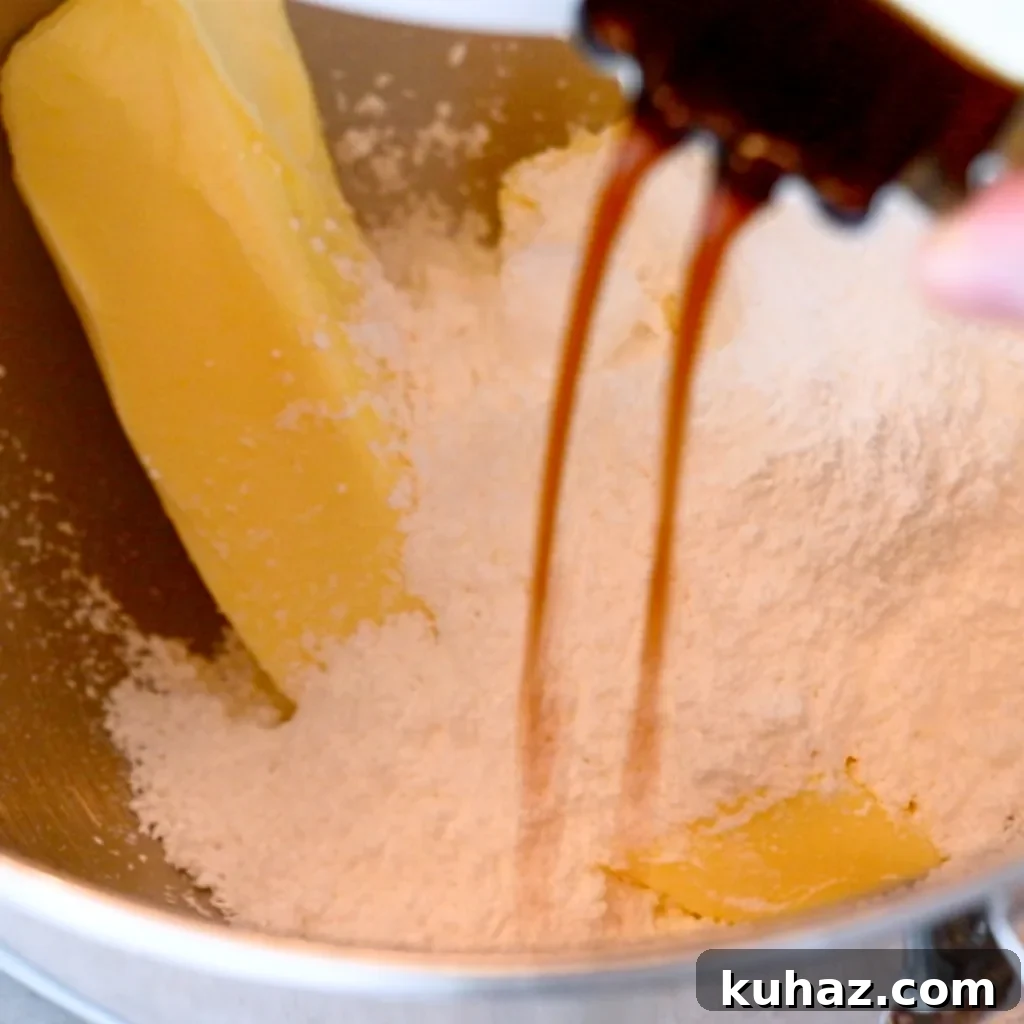
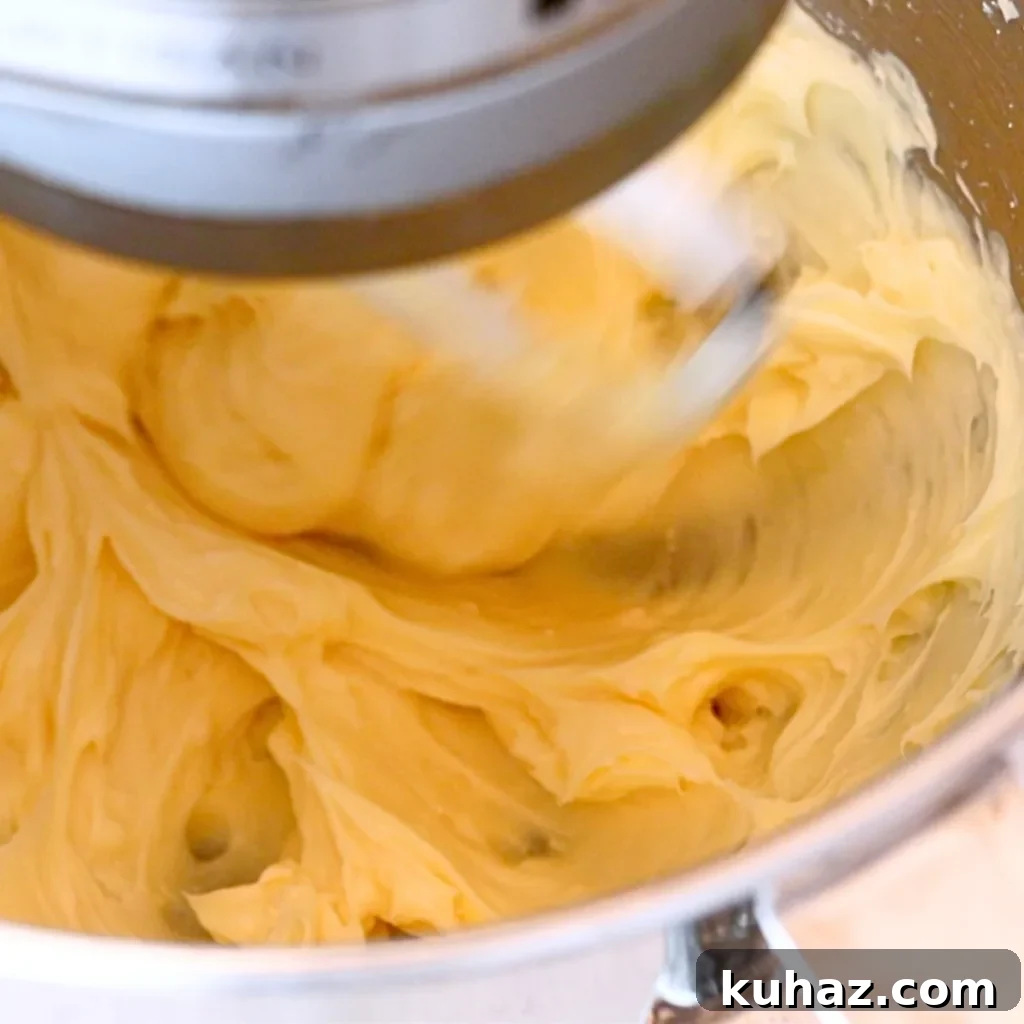
Should I whip the butter?
Do not over-whip. Incorporating too much air will cause more rise and can alter how well cut shapes hold during baking. Mix until smooth and combined for the best shape retention.
Step 2: Mix in all-purpose flour, cornstarch, and salt
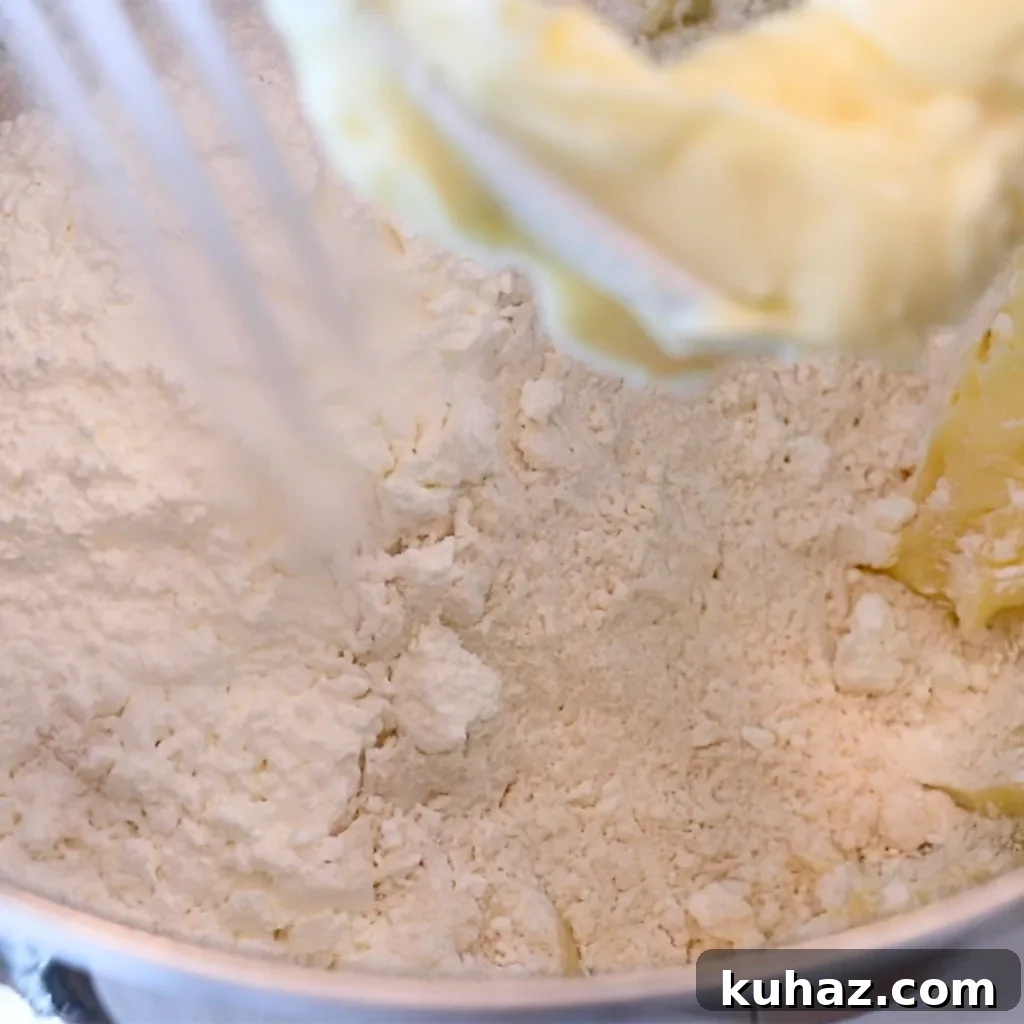
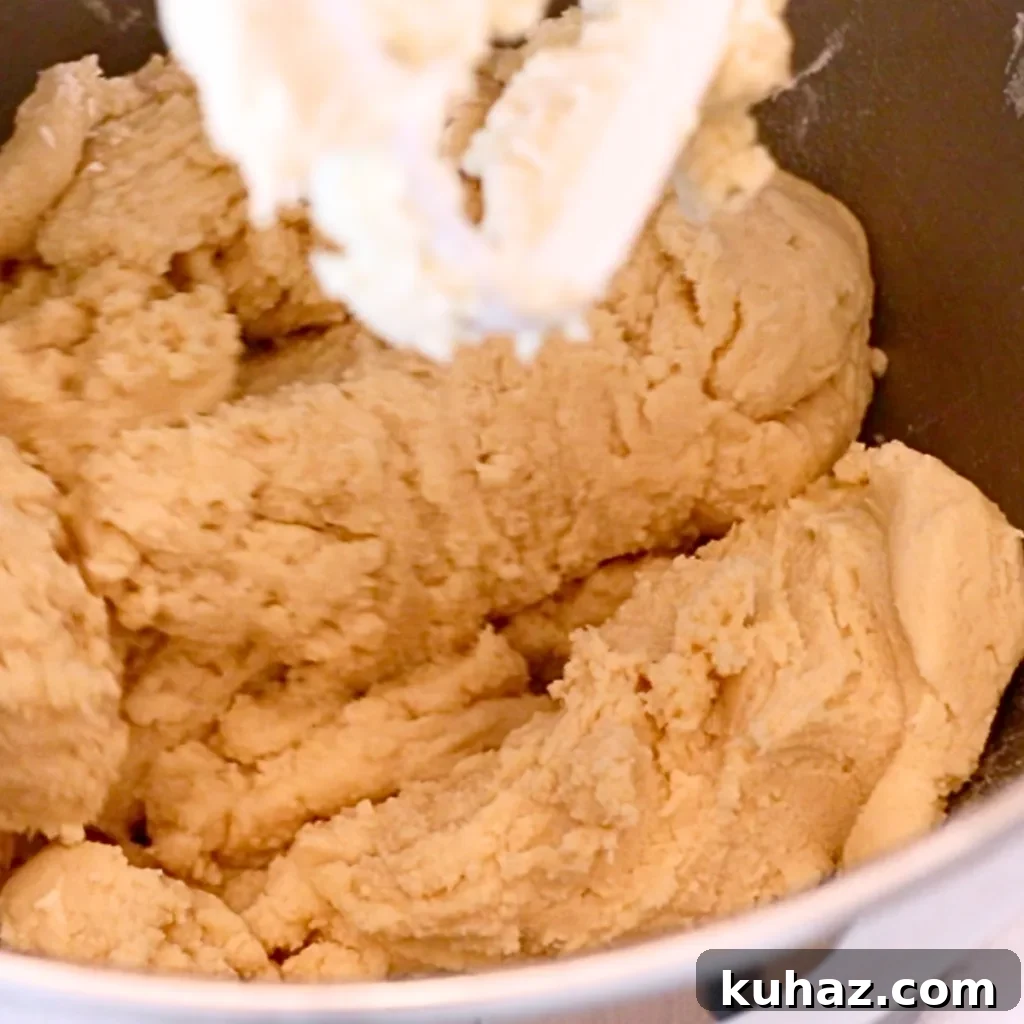
Add the dry ingredients and mix just until evenly incorporated. Scrape the sides and bottom of the bowl as needed to ensure all flour is mixed in and no pockets of dry ingredients remain.
Step 3: Roll the dough
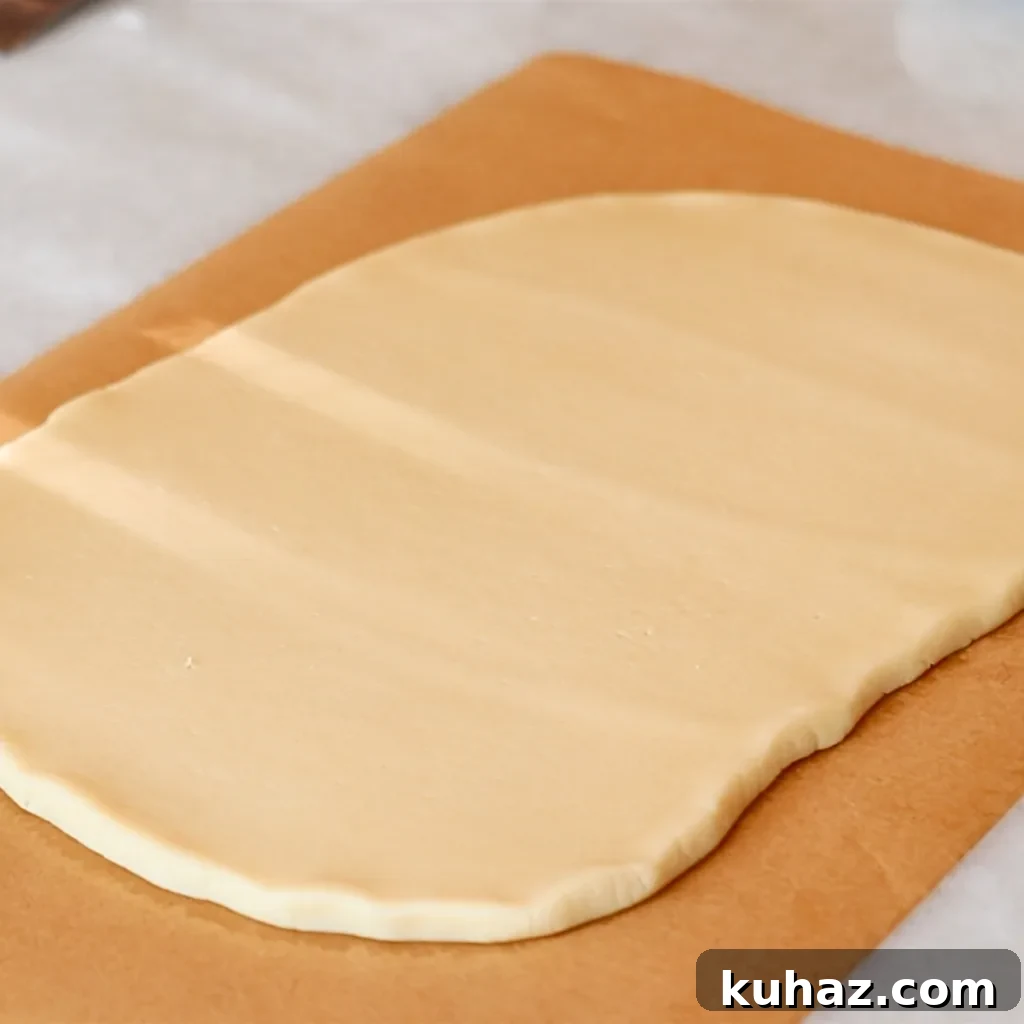
Divide the dough in half and sandwich each portion between sheets of plastic wrap. Roll to about 1/4-inch thickness. Rolling between plastic sheets avoids adding extra flour to the work surface and helps keep the cookies tender and lightly crisp.
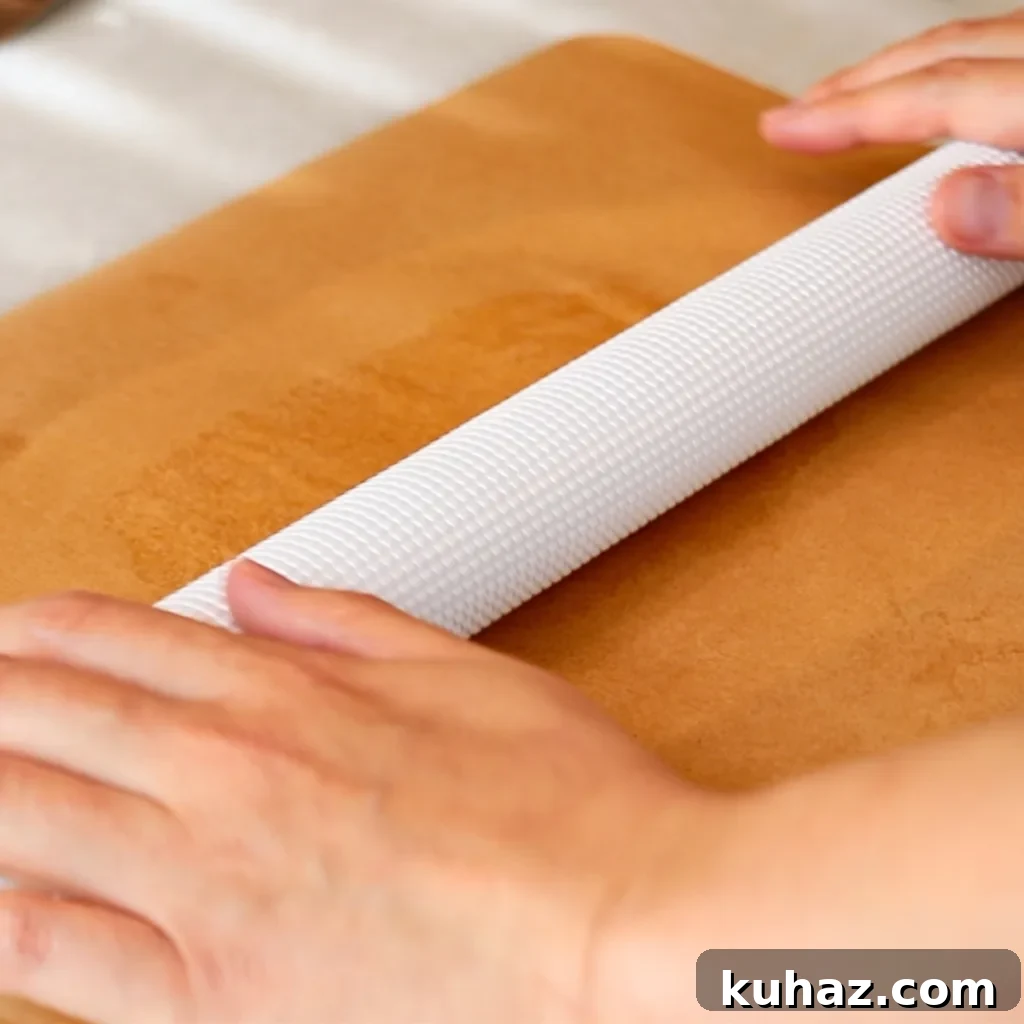
Tip
If your parchment slips while rolling, place a thin, rough cloth under it for traction. Press and smooth the dough against the parchment before rolling to help prevent sliding.
Step 4: Chill the dough and cut with cookie cutters
Chill the rolled dough for at least one hour to relax the gluten. This helps the cookies hold their shape and prevents excessive shrinking or puffing during baking. Cut shapes and place them on baking sheets lined with parchment or a silicone mat.
If using closed-top cutters, cut while the dough is slightly soft and then chill the cut shapes; very firm dough can stick in some cutters.
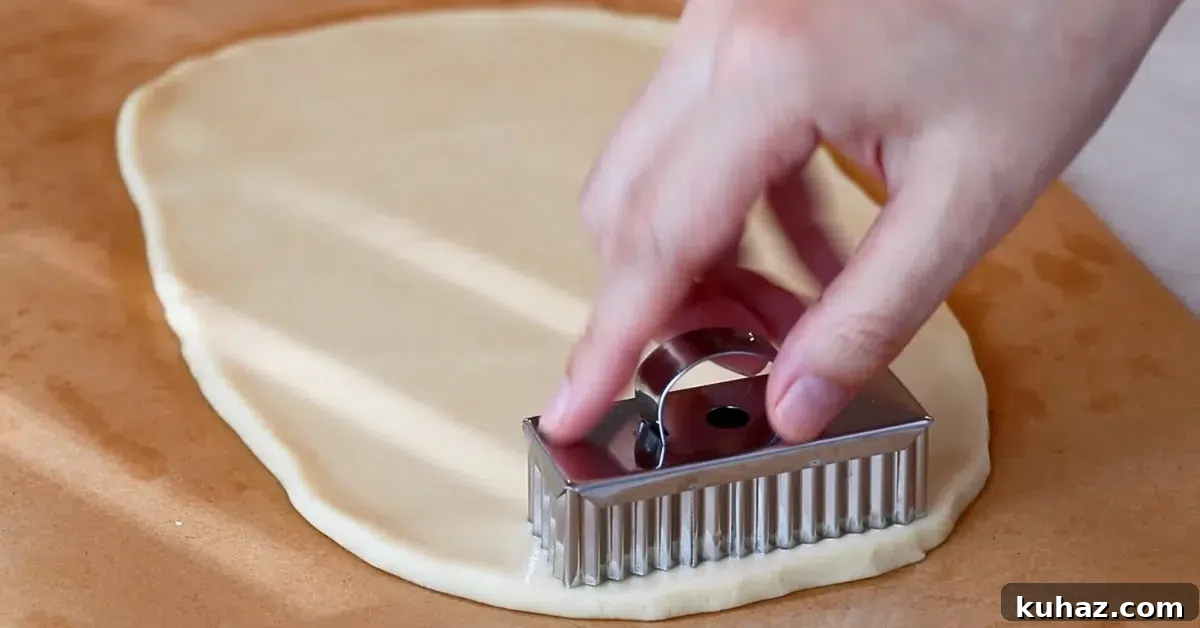
Decorate the surface by docking with a fork, pressing decorative stamps, or using patterned cutters. Collect scraps, re-roll, and repeat. One batch yields about three dozen 2.3-inch (6 cm) round cookies.
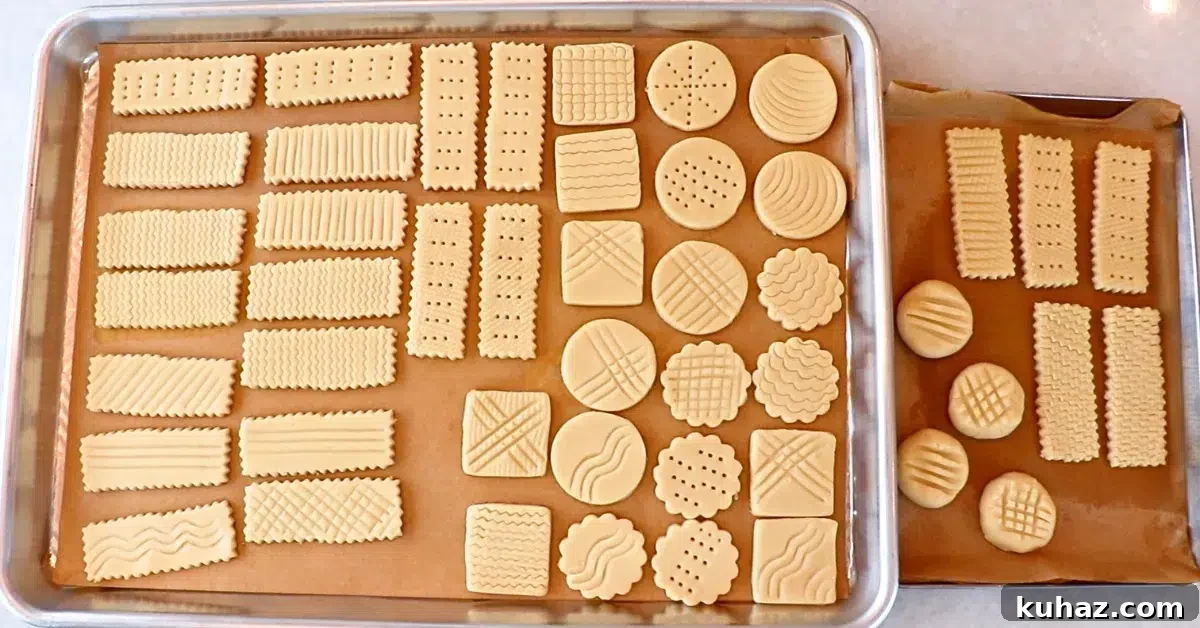
Step 5: Bake cookies
Preheat the oven to 350°F (175°C). Bake for about 13–15 minutes, or until the edges are lightly golden. Adjust time for thicker or larger cookies and for different ovens.
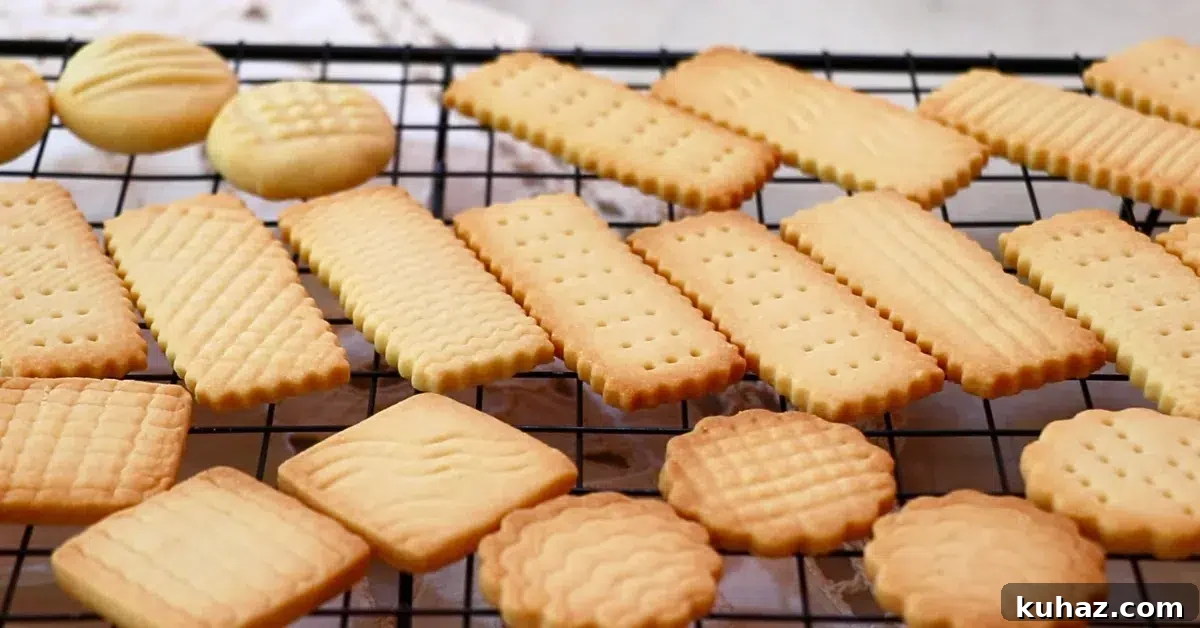
Cool the cookies on a rack and enjoy with tea, coffee, or milk. They make a comforting snack and an excellent homemade gift.
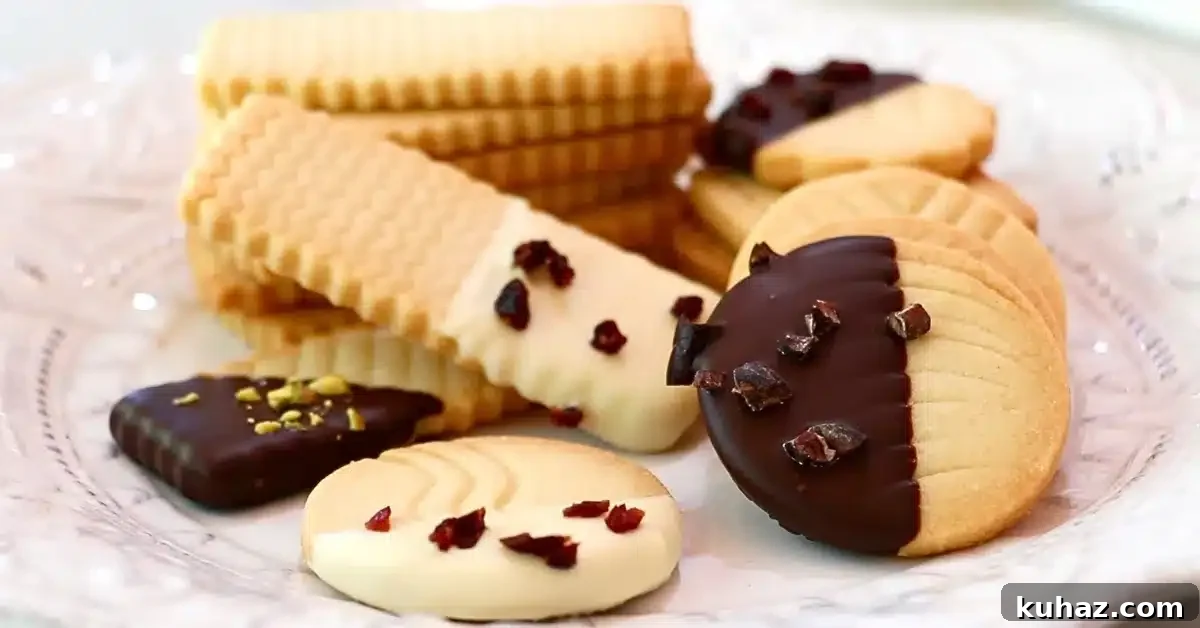
Coat It With Chocolate
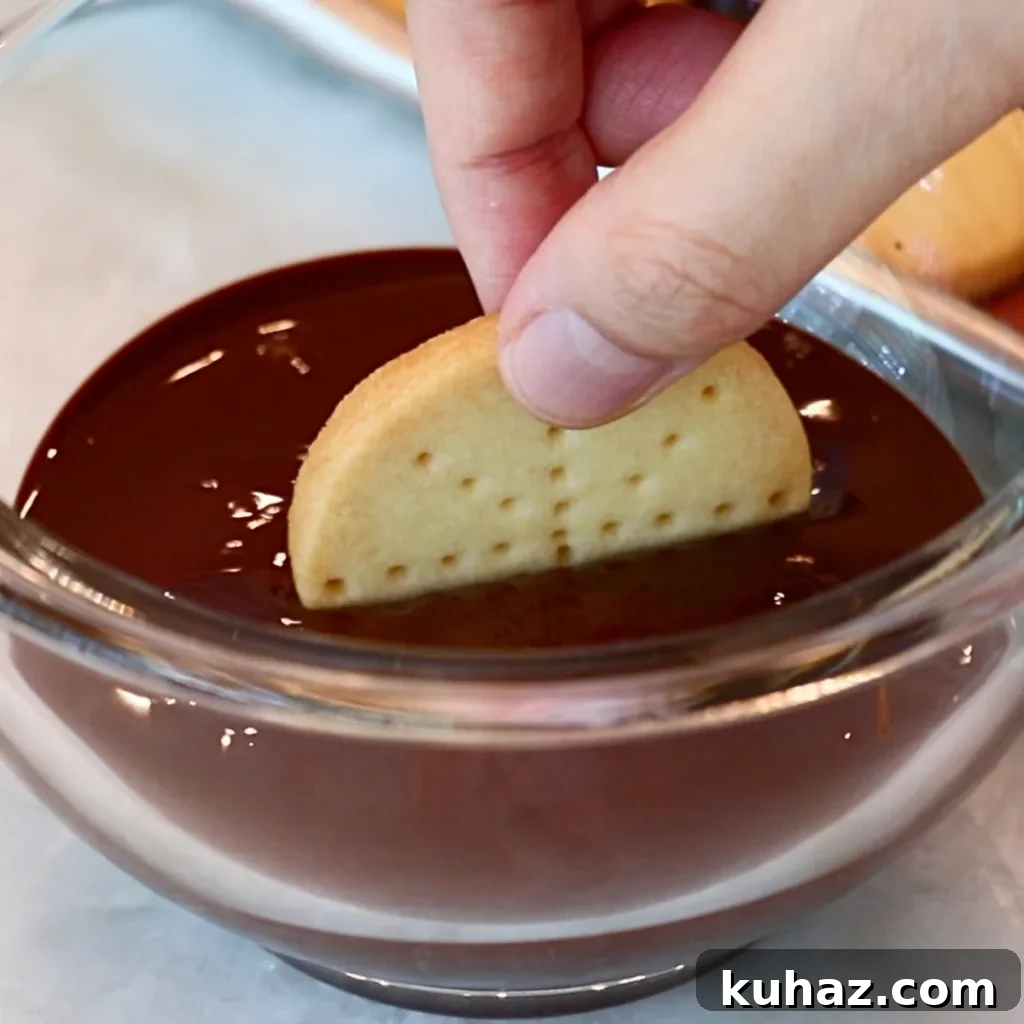
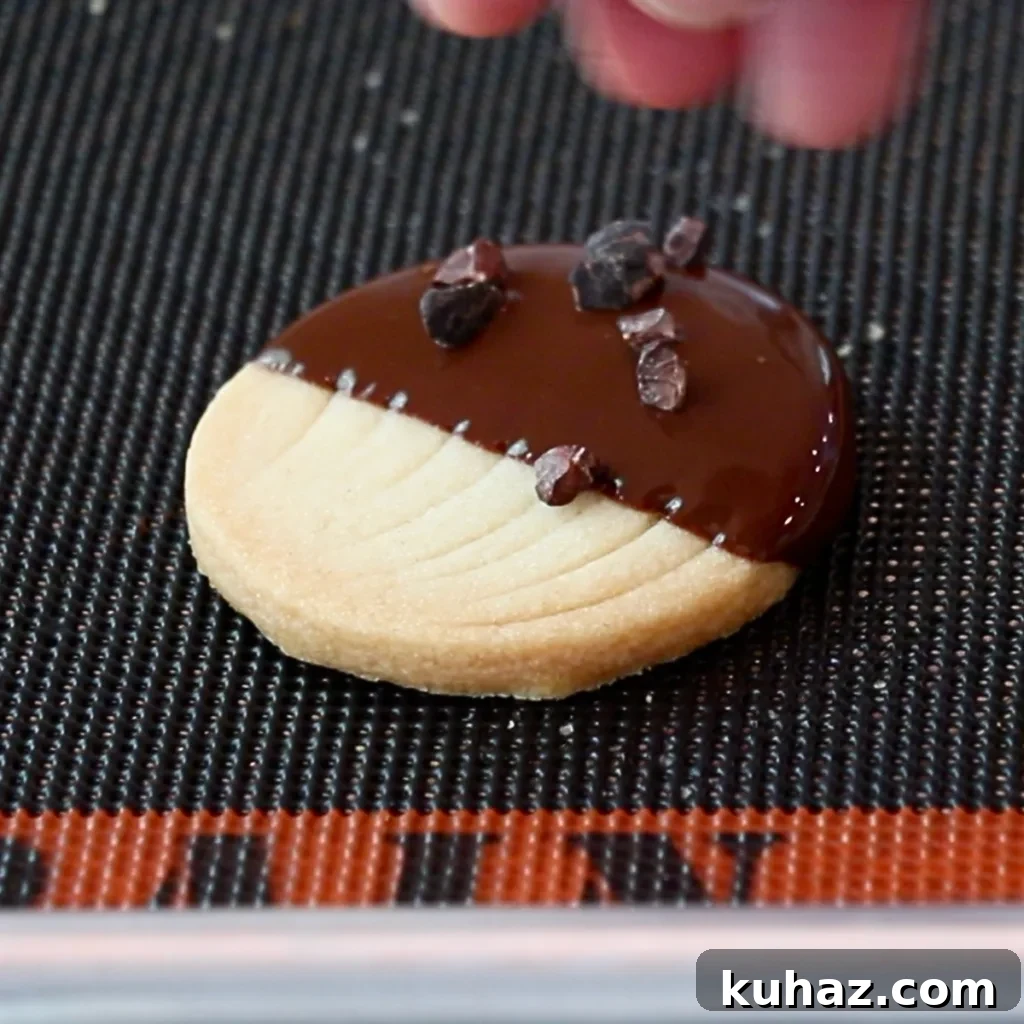
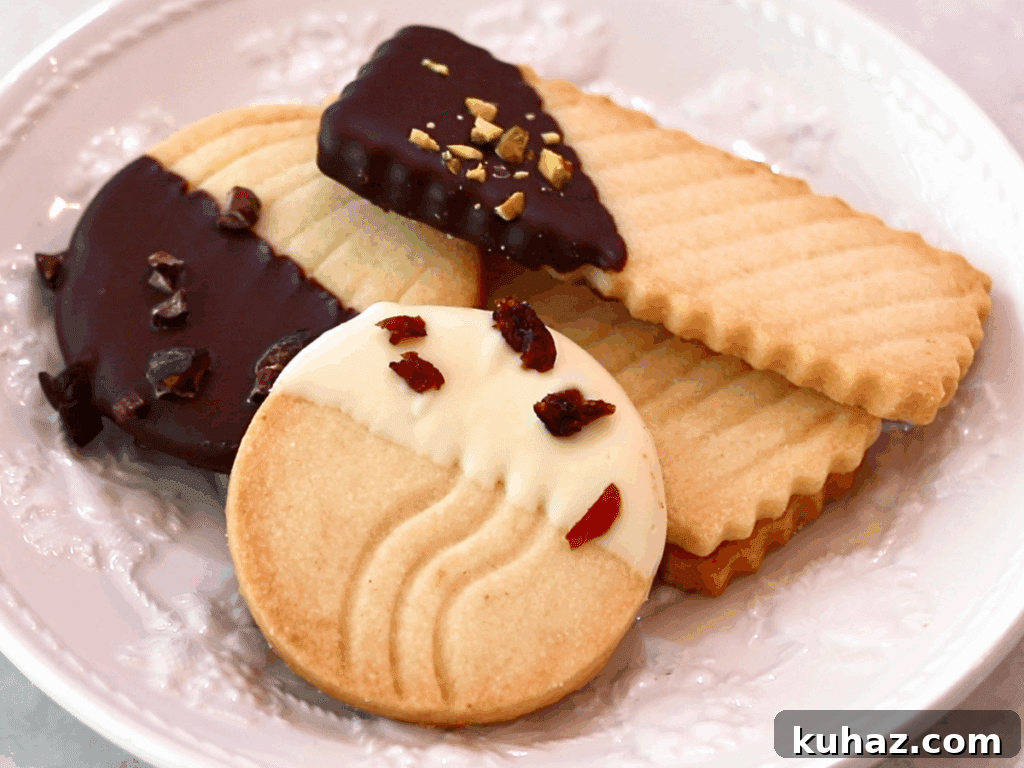
For a more decadent treat, dip cooled cookies in melted chocolate and allow them to set. While the chocolate is still wet, you can sprinkle toppings such as nuts, cocoa nibs, or sea salt to add texture and flavor.
Should we temper chocolate?
Tempering is recommended when using couverture chocolate to achieve a glossy finish and stable snap. If you use compound chocolate or chocolate chips designed to set without tempering, tempering is not necessary.
Pressed Shortbread Cookies
For pressed shortbread in an 8-inch (20 cm) tart pan, make a half batch and press the dough into the pan lined with parchment. Add patterns and fork marks, then bake until lightly golden. Cut into pieces while still warm then cool completely before removing from the pan.
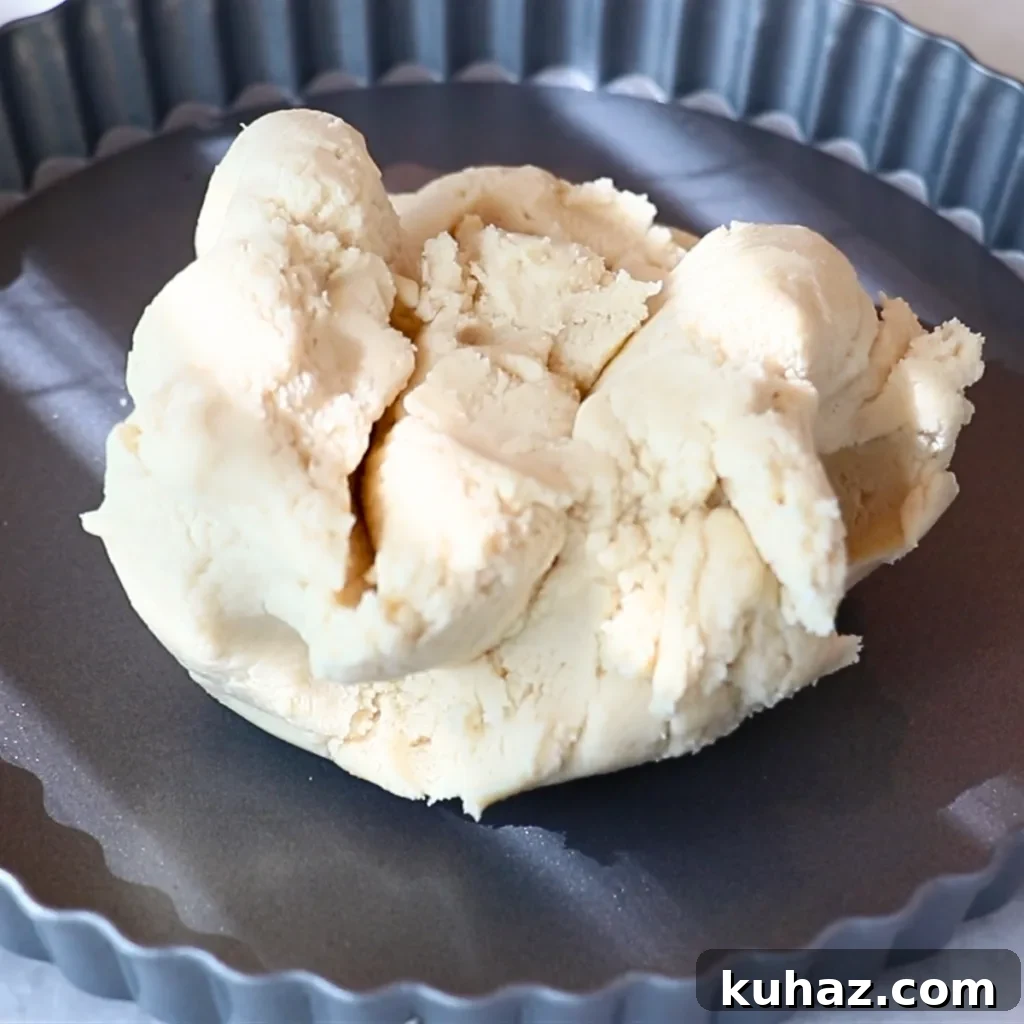
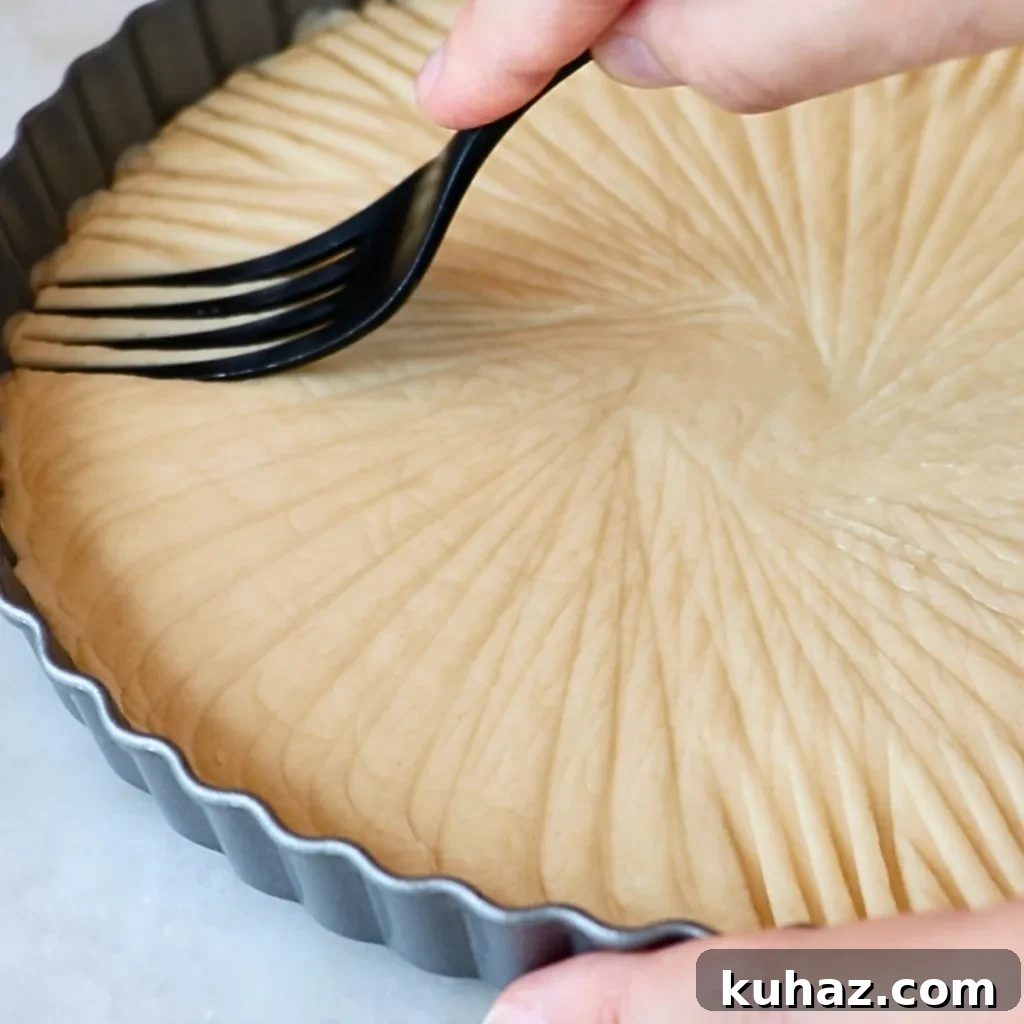
Bake at 350°F (175°C) for about 35–40 minutes for pressed cookies, until the surface is lightly golden. Cut while hot and allow to cool before removing from the pan. For a slightly flakier texture, an additional low-temperature bake at 300°F (150°C) for 25–30 minutes is optional.
Tips
- Chill the dough for about one hour before baking to let the gluten relax, which helps the cookies stay flat.
- For pressed cookies, cut them within 10 minutes of baking while they are still warm for cleaner edges.
- Optional: After the initial bake, an additional low-temperature bake can increase flakiness without sacrificing crispness.
Uses For Shortbread
Shortbread cookies are versatile. They work well as:
- Small gifts – pack them in gift bags for friends, teachers, or coworkers.
- Cookie boxes – bake several varieties to create a festive assortment.
- Tea-time snacks – pair with tea, coffee, or hot chocolate.
- Kids’ activities – the dough is easy to roll and cut, making it ideal for baking with children.

Frequently Asked Questions
Docking (pricking with a fork) helps cookies bake evenly and keeps the surface flat, reducing puffing or shrinking during baking.
Store cookies in an airtight container. They keep about one week at room temperature or up to 10 days in the refrigerator. For optimal crispness, store with a desiccant packet if you have one.
Yes. Cream the butter and powdered sugar by hand with a whisk, then fold in the dry ingredients with a rubber spatula until just combined.
Yes. Pulse flour, salt, and cubed cold butter until the mixture forms a dough. Finish with the powdered sugar and vanilla as directed, then proceed with rolling and chilling.
Yes. Room-temperature cookies may spread slightly more than chilled ones, but the difference is minor. Chilling is recommended when you want the shapes to stay defined.
Yes. Substitute an equal amount of all-purpose flour if you prefer. Cornstarch is recommended for a lighter, more delicate texture.
The dough keeps well for up to 4–5 days when wrapped tightly in the refrigerator.
Yes. Wrap dough tightly in plastic and freeze for a few months. Thaw overnight in the refrigerator before rolling; allow it to soften at room temperature if it becomes very firm.
More Cookie Recipes
If you enjoyed this shortbread recipe, try other cookie variations such as lemon shortbread, tuiles, gingerbread, or flaky butter cookies for more flavor and texture options.
Did you try the recipe?
Share your feedback in the comment section below and tell us how you served the cookies for family gatherings or special occasions.
Thank you! – Aya

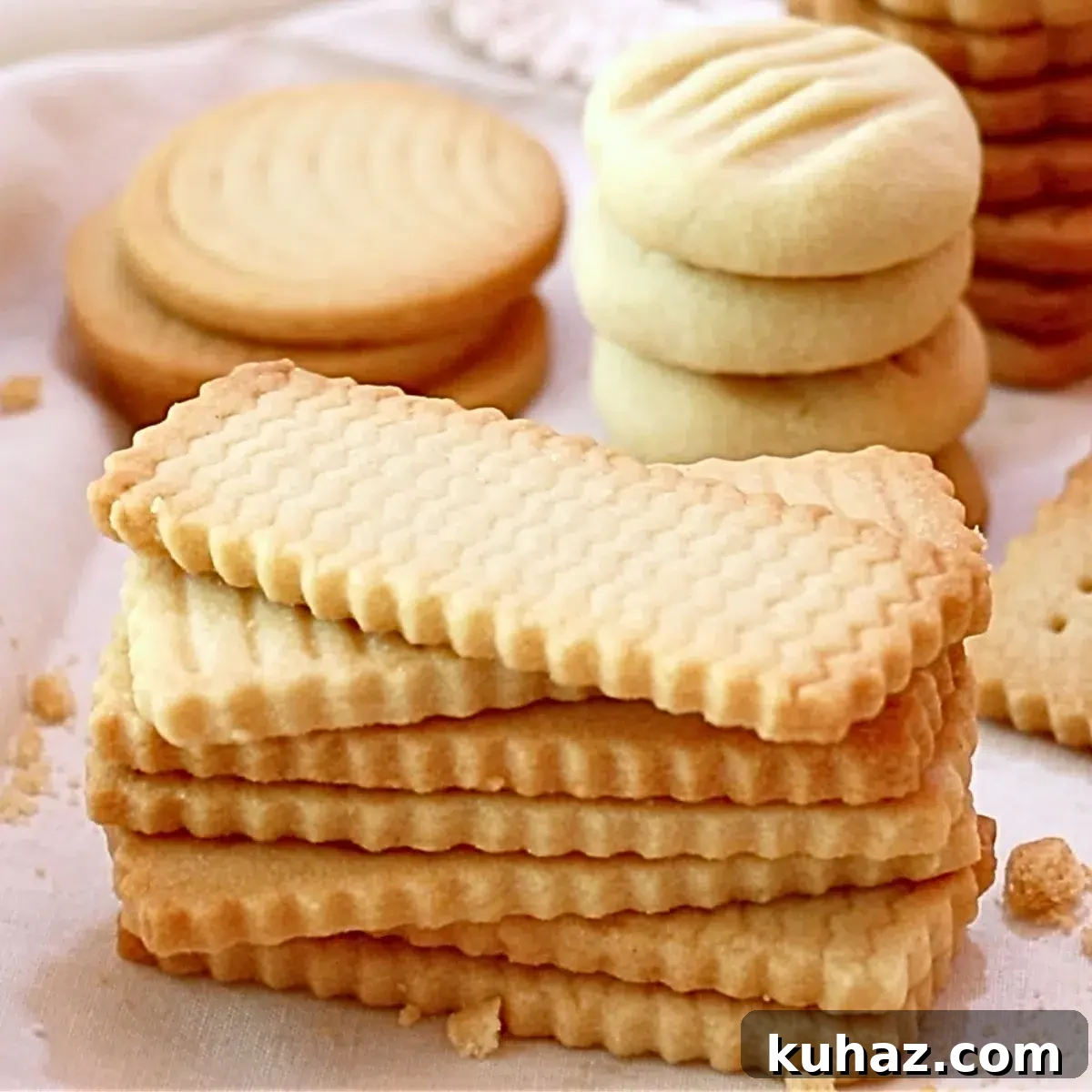
Simple Shortbread Cookies
Pin Recipe
Ingredients
- 226 g (1 cup) Unsalted butter
- 90 g (¾ cup) Powdered sugar
- 1 teaspoon Vanilla extract
- 290 g (2 ⅓ cups) All-purpose flour
- 25 g (3 tablespoon) Cornstarch
- ½ teaspoon Salt
Equipment
- Stand mixer or hand mixer
- Spatula
- Parchment paper
- Rolling pin
- Cookie cutters
- Fork
- Baking tray
Method
-
Combine softened butter, powdered sugar, and vanilla extract:
Add to a mixing bowl and mix with a paddle or hand mixer on low to start, then increase speed until smooth.
-
Mix in all-purpose flour, cornstarch, and salt:
Mix until just incorporated. Scrape the bowl and mix again briefly so no dry streaks remain.
-
Roll the dough:
Divide the dough, sandwich between plastic wrap, and roll to about 1/4 inch thick. Avoid dusting extra flour for the most delicate texture.
-
Chill and cut:
Chill the rolled dough for at least 1 hour, cut shapes, and place on lined baking sheets. Dock or pattern the tops as desired.
-
Bake:
Preheat oven to 350°F (175°C) and bake for 13–15 minutes until edges are lightly golden. Cool on a wire rack.
Notes
Storage
Keep cookies in an airtight container. They stay fresh about one week at room temperature or up to 10 days refrigerated. Dough can be refrigerated 4–5 days or frozen for several months.
Pressed cookie tips
Bake pressed shortbread at 350°F (175°C) for 35–40 minutes until lightly golden. Cut while hot and cool before removing. Optionally, bake again at 300°F (150°C) for 25–30 minutes for a flakier finish.
Nutrition
Carbohydrates: 9g
Fat: 5g
Tried this recipe?
Let us know how it was!