Ready to enjoy fruits and vegetables at their peak this February? Eating produce in season not only tastes better but can also help you save on groceries. Below is a fresh, easy-to-use guide to what’s in season this month so you can plan meals that are flavorful, nutritious, and budget-friendly.
Here’s a curated list of fruits, vegetables, and nuts that shine in February.
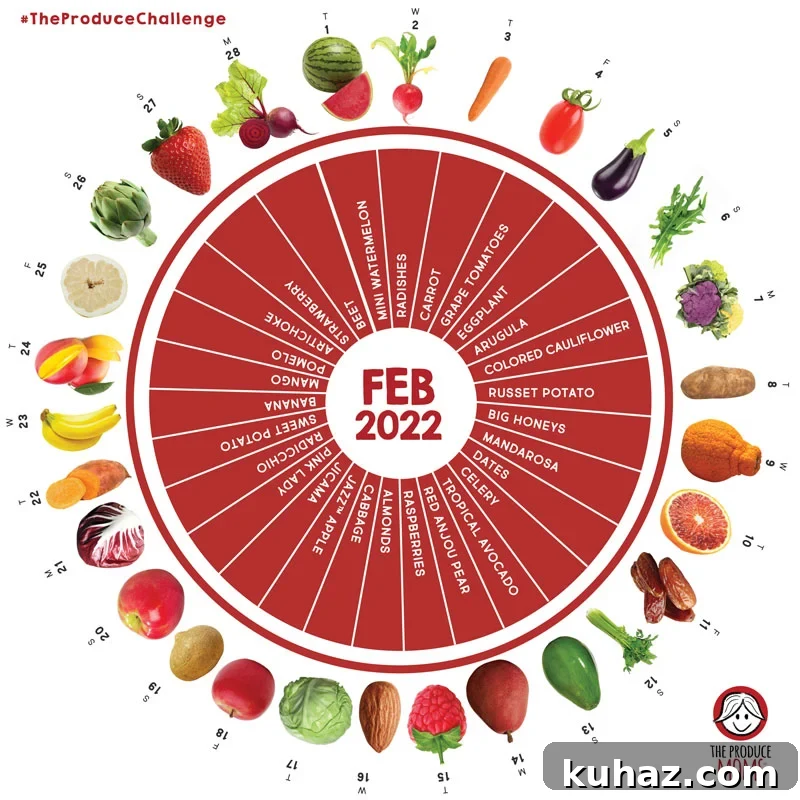
Fruits in Season February
February brings a wide range of delicious fruits — from crisp apples to juicy citrus — perfect for snacks, breakfasts, and desserts.
Banana
Bananas are sweet, portable, and a great everyday fruit. Choose ripe bananas with yellow skin and brown speckles for immediate use, and pick some firmer, brighter yellow ones if you want them to last through the week. Bananas are ideal for smoothies, fruit salads, or banana pancakes.
Big Honeys (Dekopon Mandarins)
Big Honeys, also known as Dekopon mandarins, are large, seedless, and very sweet. They’re easy to peel and great for eating fresh or adding a burst of flavor to desserts and breakfasts.
Dates
When in season, dates are soft, slightly sticky, and wonderfully sweet. They’re delicious eaten plain or stuffed with fillings such as cream cheese or chopped nuts. Dates work well as a natural sweetener in energy bites and baked treats.
Grape Tomatoes
Grape tomatoes are small, sweet, and convenient—no chopping required. Look for shiny skin and a slight give when gently squeezed. They’re perfect in salads, pasta, or roasted as a quick side.
Jazz™ Apple
Jazz™ apples are known for their crisp texture and a lively balance of sweet and tart flavors. Excellent for snacking and baking alike, they hold up well in pies, tarts, and breakfast dishes like apple waffles.
MandaRosa
MandaRosa is a hybrid mandarin that’s slightly larger and sweeter than some other varieties. Rich in vitamin C, it brightens smoothies, salads, and winter breakfasts with a sunny citrus note.
Mango
Mangoes bring tropical sweetness to February produce lists. Ripe mangoes yield slightly to touch and show warm yellow or orange hues. Use mango in fruit salads, smoothies, salsas, or enjoy simply sliced.
Mini Watermelon
Mini watermelons are compact, sweet, and refreshingly juicy. Their flesh can range from deep pink to red and they’re excellent for snacking, fruit platters, or playful treats like chilled fruit skewers.
Pink Lady®
Pink Lady® apples feature a rosy blush and crisp bite, with a sweet flavor that’s great raw or baked. They’re a classic choice for pies, crumbles, and quick desserts.
Pummelo
Pummelos are large citrus fruits similar to grapefruit but often milder and a bit floral. Choose pummelos with pale green to yellow skin; their flesh is typically light-colored and bright in flavor. Enjoy them fresh, juiced, or added to citrus salads.
Raspberries
Raspberries are delicate, sweet, and excellent for topping yogurt, oatmeal, or desserts. They’re also a flavorful ingredient in energy bites and no-bake treats.
Red Anjou Pear
Red Anjou pears have smooth maroon skin and a tender, sweet flavor. They’re often in season through winter and spring and work well for snacking, baking, or poaching. Gently press near the stem to check ripeness—if it yields slightly, the pear is ready to eat.
Strawberry
Certain strawberry varieties are available in February, offering bright, sweet flavor. Look for uniformly red, firm berries. Enjoy fresh, in smoothies, or as a topping for desserts and breakfasts.
Tropical Avocado
Tropical avocados are large and creamy, with a slightly sweeter taste than some other varieties. They’re versatile for guacamole, salsas, or simply spread on toast for an easy meal.
Recipe ideas: smoothies, fruit salads, avocado toast, salsas, baked fruit desserts.
Vegetables in Season February
February offers a variety of vegetables that strengthen winter meals, from crisp greens to hearty roots.
Arugula
Arugula has a peppery bite that livens up salads, sandwiches, and grain bowls. It also pairs nicely with roasted fish or in savory pancakes and fritters.
Artichoke
Artichokes are the edible flower buds of a thistle, with a mild, nutty flavor. Choose artichokes with firm, tightly packed leaves. They’re delicious steamed, grilled, or used in dips and salads.
Beet
Beets have an earthy-sweet flavor and vibrant color. Both the root and greens are edible—try roasting beets for salads, adding them to grain bowls, or slicing them thin for pickles.
Cabbage
Cabbage stores well through winter and into early spring. Look for compact heads that feel dense and firm. Use cabbage raw in slaws, sautéed as a side, or braised for warming dishes.
Carrot
Carrots are crunchy, slightly sweet, and versatile. They’re great raw as a snack, roasted to bring out sweetness, or incorporated into soups and stews.
Colored Cauliflower
Look for purple, orange, and green cauliflower varieties to add color to your plate. They taste similar to white cauliflower and can be roasted, steamed, or used raw in crudité platters.
Celery
Celery adds crunch and a fresh, savory note to salads, dips, and cooked dishes. It’s also excellent in soups and braises where it contributes aromatic depth.
Eggplant
Eggplants bring a tender, slightly smoky texture when cooked. Use them in classics like eggplant parmesan, roasted vegetable medleys, or grilled as a hearty side.
Jicama
Jicama is a crisp, mildly sweet root vegetable often eaten raw. Peel and slice it into sticks for salads, slaws, or a refreshing snack with a squeeze of lime.
Radicchio
Radicchio offers bold, slightly bitter leaves that add contrast to salads and grilled dishes. Try it charred on the grill or tossed with warm grains and vinaigrettes.
Russet Potato
Russets are the classic baking and mashing potatoes. With a fluffy interior, they’re perfect for mashed potatoes, baked potatoes, fries, and hearty soups.
Sweet Potato
Sweet potatoes have a naturally sweet, starchy flesh that works well in both savory and sweet recipes. Roast, mash, or use them in pies and casseroles.
Nuts in Season February
Nuts add texture, flavor, and nutrition to February menus.
Almonds
Almonds are a convenient, nutrient-dense snack and a versatile baking ingredient. Use them toasted as a topping, blended into spreads, or incorporated into quick breads and granola.
Produce in Season During February – Final Thoughts
February offers a satisfying mix of winter and early-spring produce. Choosing in-season fruits and vegetables gives you better flavor and value. Explore these items in salads, roasted dishes, smoothies, and baked goods to make the most of peak-season produce this month.