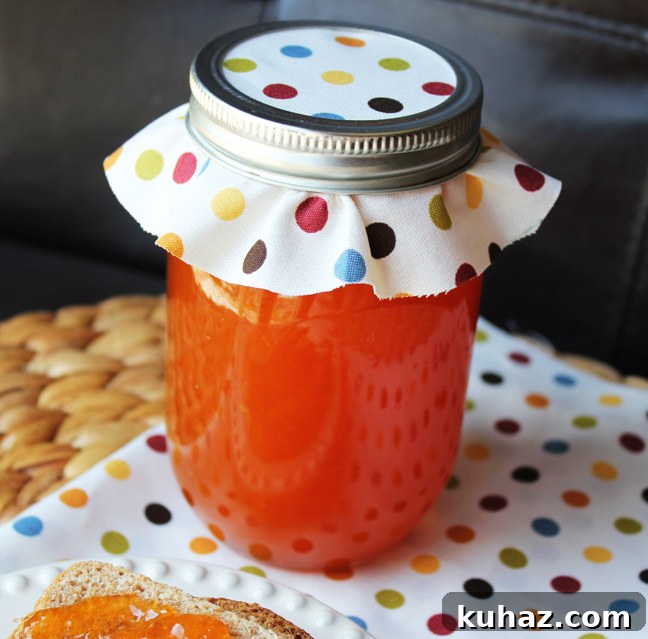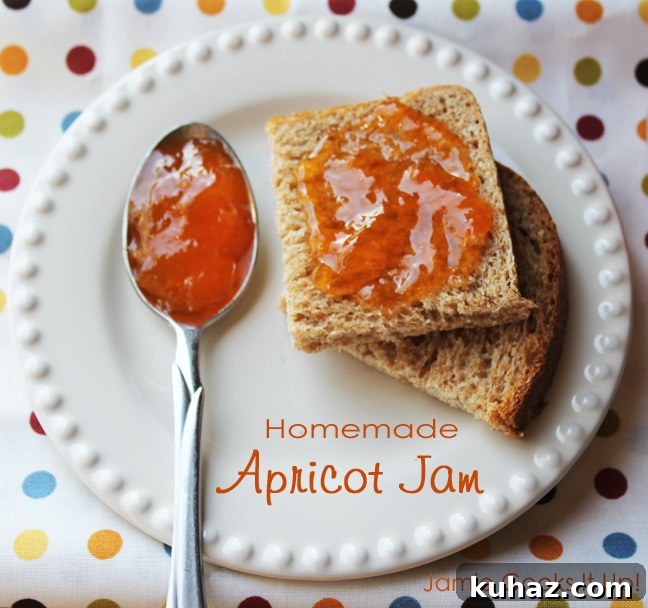
While visiting my mom a few weeks ago, I spotted a beautiful bowl of fresh apricots on the counter. I’d been searching for apricots to make jam for weeks—calling produce suppliers and checking farmers’ markets with little luck—so I was thrilled when she told me the neighbor had an abundance and would gladly share a bag or two. I grabbed my kids and some big paper bags and we picked apricots in the heat. The next day I turned that haul into apricot jam, and it was worth every sticky spoonful.
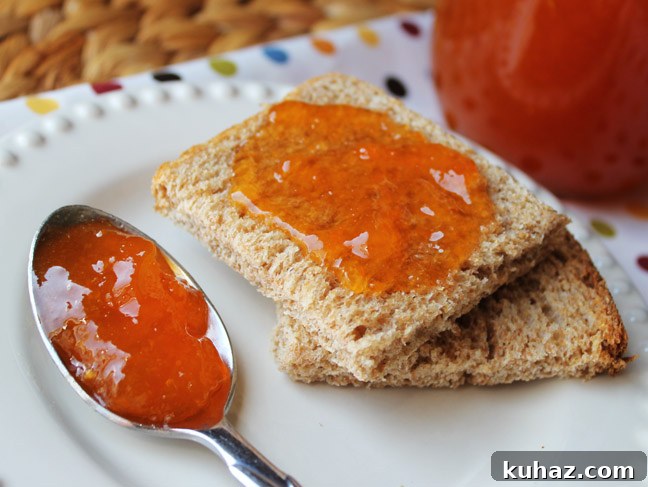
This recipe yields five pints of jam. If you have extra apricots, make additional batches rather than doubling everything at once—it’s easier to manage one batch at a time and rinse the pot between batches. I used MCP fruit pectin and basic canning supplies purchased locally.
Homemade Apricot Jam — PRINT RECIPE
Time: About 1 hour
Yield: 5 pints
From: MCP Fruit Pectin basic recipe, adapted
Equipment:
5 pint-sized jars, new lids, rings (can be reused), blender or food processor, water bath canner, wide-mouthed funnel, large heavy pot
Ingredients:
3 1/2 pounds ripe apricots (about 5 cups blended apricots)
1/2 cup lemon juice
8 cups granulated sugar
1 (2-ounce) box fruit pectin (MCP recommended)
1 teaspoon butter (optional, reduces foaming)
Follow these steps for a reliable, delicious apricot jam.
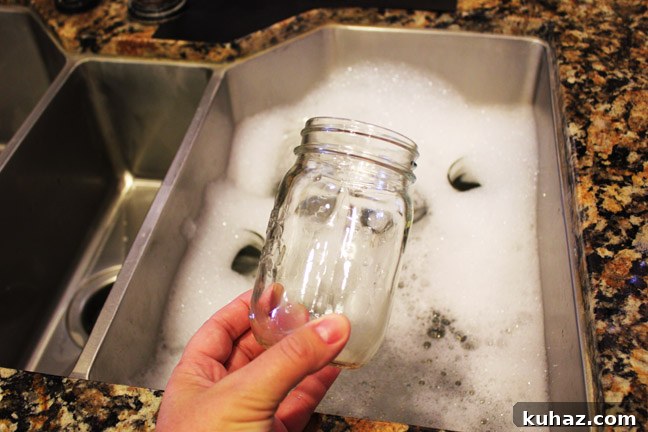
- Prepare jars and rings by washing them in hot, soapy water or running them through the dishwasher. Place the new lids in hot water to keep them warm; you’ll bring that water to a boil for one minute just before sealing.
- Wash the apricots and remove any that are underripe or damaged. Split each apricot, remove the pit, and place the fruit in a blender or food processor. You need about 5 cups of blended apricot purée. Pour the purée into a large, heavy-bottomed pot.
- Sprinkle the pectin over the blended apricots and stir it in, then add the lemon juice and the teaspoon of butter. The butter helps reduce foam during cooking.
- Turn the heat to medium-high and begin stirring as the mixture heats. Gradually add the sugar a little at a time, stirring until it dissolves completely.
- Bring the mixture to a full, rolling boil that cannot be stirred down. Stir constantly to prevent sticking. Once it reaches that boil, allow it to boil hard for 1 minute. If it starts to boil over, reduce the heat briefly; the jam will still gel properly.
- While the jam is boiling, bring the saucepan of water holding the lids to a hard boil for 1 minute. Keep your hands free for stirring the jam, so get the lids heating before you begin cooking.
- Remove the jam from the heat. Using a wide-mouthed funnel, carefully ladle the hot jam into the prepared jars, leaving appropriate headspace (about 1/4 inch). Wipe the rim of each jar with a damp paper towel to remove any residue and ensure a clean seal.
- Using a knife or jar lifter, remove the lids from the hot water and place one on each jar, then screw on the rings until fingertip-tight.
- Place the filled jars on the rack in your water bath canner, cover with warm water so the jars are submerged by at least an inch, and bring to a boil. Process the jars in boiling water for 25 minutes.
- Carefully remove the jars from the canner and set them on a towel or cooling rack. You will hear the lids “pop” as they seal; that indicates a successful vacuum seal. After cooling, test each lid by pressing the center—if it’s firm and doesn’t flex, the jar is sealed. If a lid hasn’t sealed, refrigerate that jar and use it first.
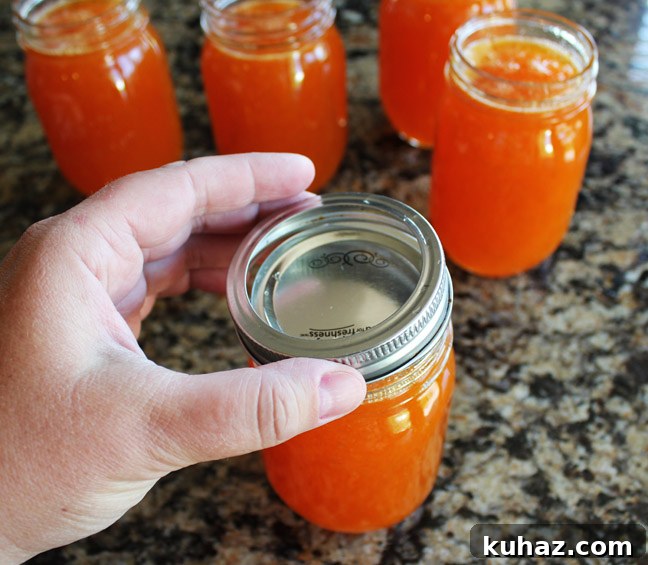
Store sealed jars in a cool, dark place. Once opened, refrigerate and use within a few weeks. The flavor of apricot jam is wonderful on toast, scones, yogurt, or as a glaze for baked goods. Enjoy your homemade apricot jam and the simple pleasure of preserving summer fruit.