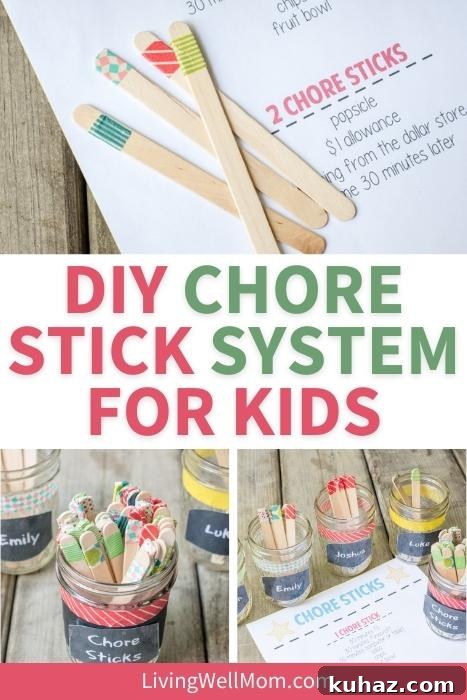
If you’re worn out from nagging your kids to help around the house, try this simple system. These small, inexpensive chore sticks have transformed how my children respond to chores — they actually look forward to earning them.
After testing many methods over the years, I finally landed on a straightforward chore system for kids that consistently works. It’s easy to set up, flexible, and teaches responsibility and the value of effort.
We call it chore sticks. The idea is intuitive: children earn sticks for completing tasks, then trade those sticks for privileges, treats, or allowance. The whole process feels a lot like play money and helps kids learn how earning and saving work.
Why This Chore System Works
- Effective motivation — kids are driven by rewards they actually care about.
- Real-life lessons — it reinforces work, earning, and delayed gratification.
- Low cost and easy — you only need a few basic supplies.
- Customizable — chores and rewards can be tailored for each child and family.
- Flexible rules — adjust stick amounts based on effort and attitude.
- All ages can participate — younger children can do simple tasks while older kids handle bigger responsibilities.
- Fun to create — decorating jars and sticks makes kids invested from the start.
If you’re unsure what chores suit each age, consider a list of age-appropriate tasks and match responsibilities to your child’s abilities.
What Are Chore Sticks?
Chore sticks are physical tokens children earn by completing chores. You decide how many sticks a task is worth. The children turn in those sticks to claim rewards like screen time, treats, or allowance. Because they must hand over a stick to receive a reward, the system offers a tangible way to teach money basics at home.
In our home, kids exchange sticks for TV time, tablet or game time, snacks, a later bedtime on occasion, or cash toward a toy. The flexibility allows you to make rewards meaningful for your family.
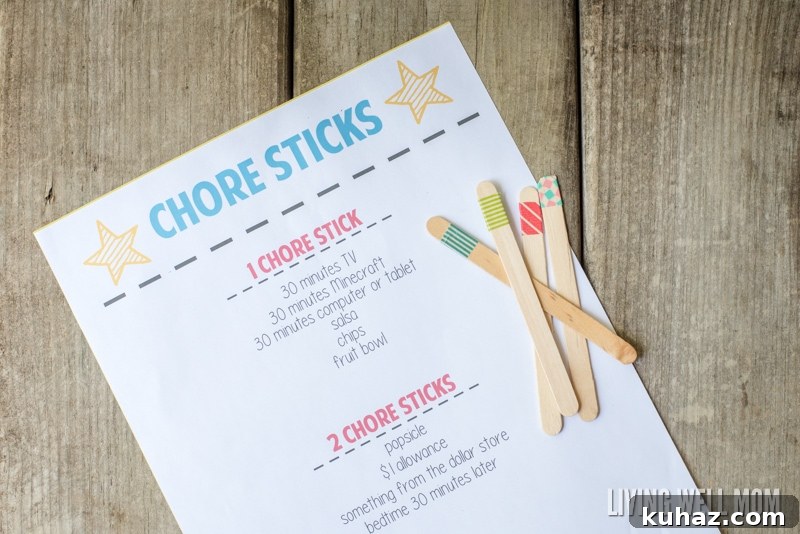
Treat the sticks like currency. Kids earn and hand over sticks when they redeem rewards, which reinforces the connection between work and reward.
Supplies You’ll Need
- At least two small jars (one main jar and one for each child)
- About 50 craft popsicle sticks (adjust for the number of children and chores)
- Washi tape or thin decorative tape
- Tape or a hot glue gun for labels
- Chore stick labels and a reward chart (printables you can customize)
How to Make Chore Sticks
Step 1:
Get the kids involved. They usually enjoy decorating the sticks and jars, which increases buy-in.
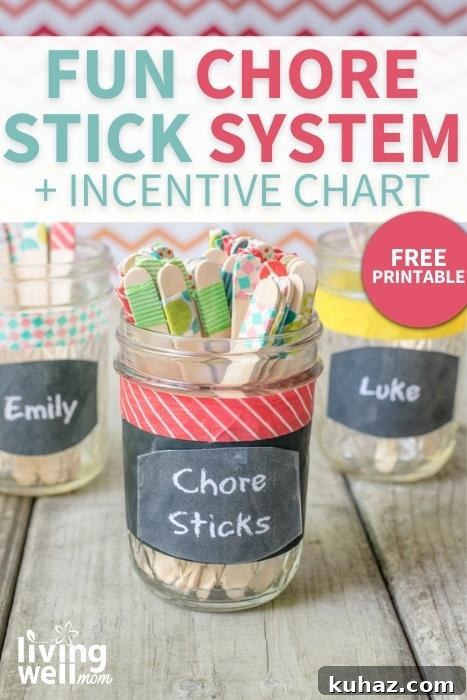
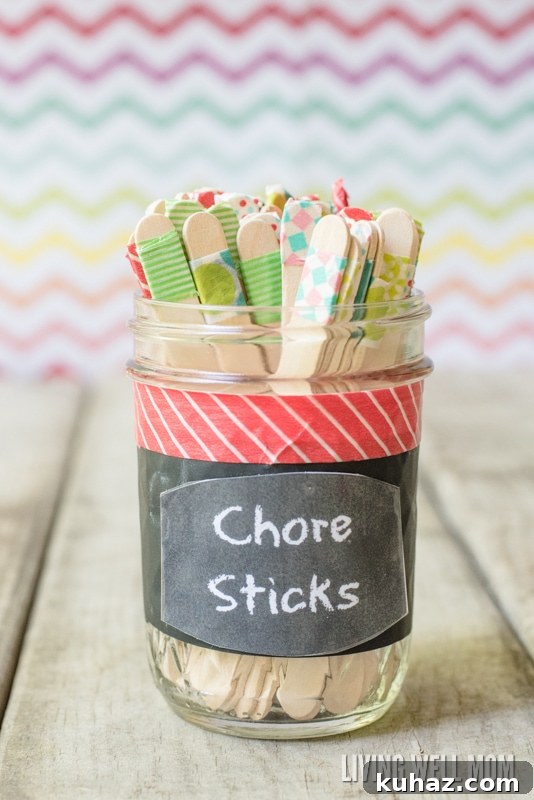
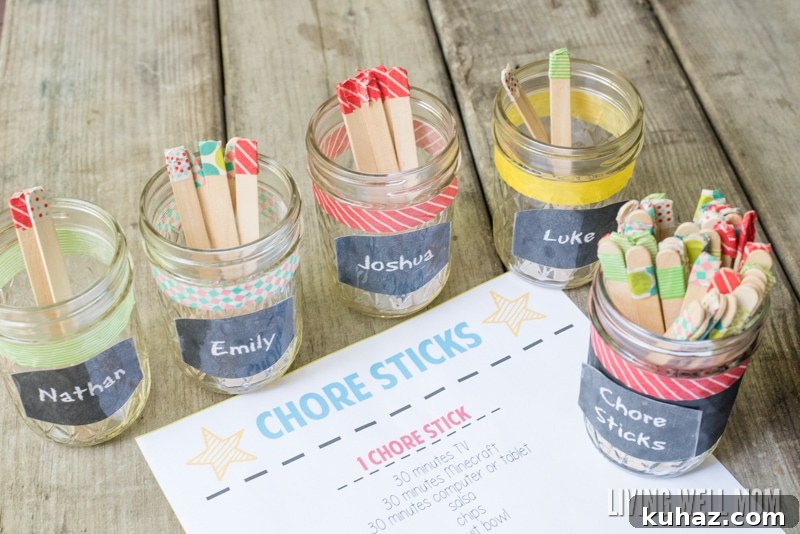
Wrap a small length of washi tape or decorative tape around the top of each craft stick. You can use different colors to match each child or to make the set look cheerful.
Step 2:
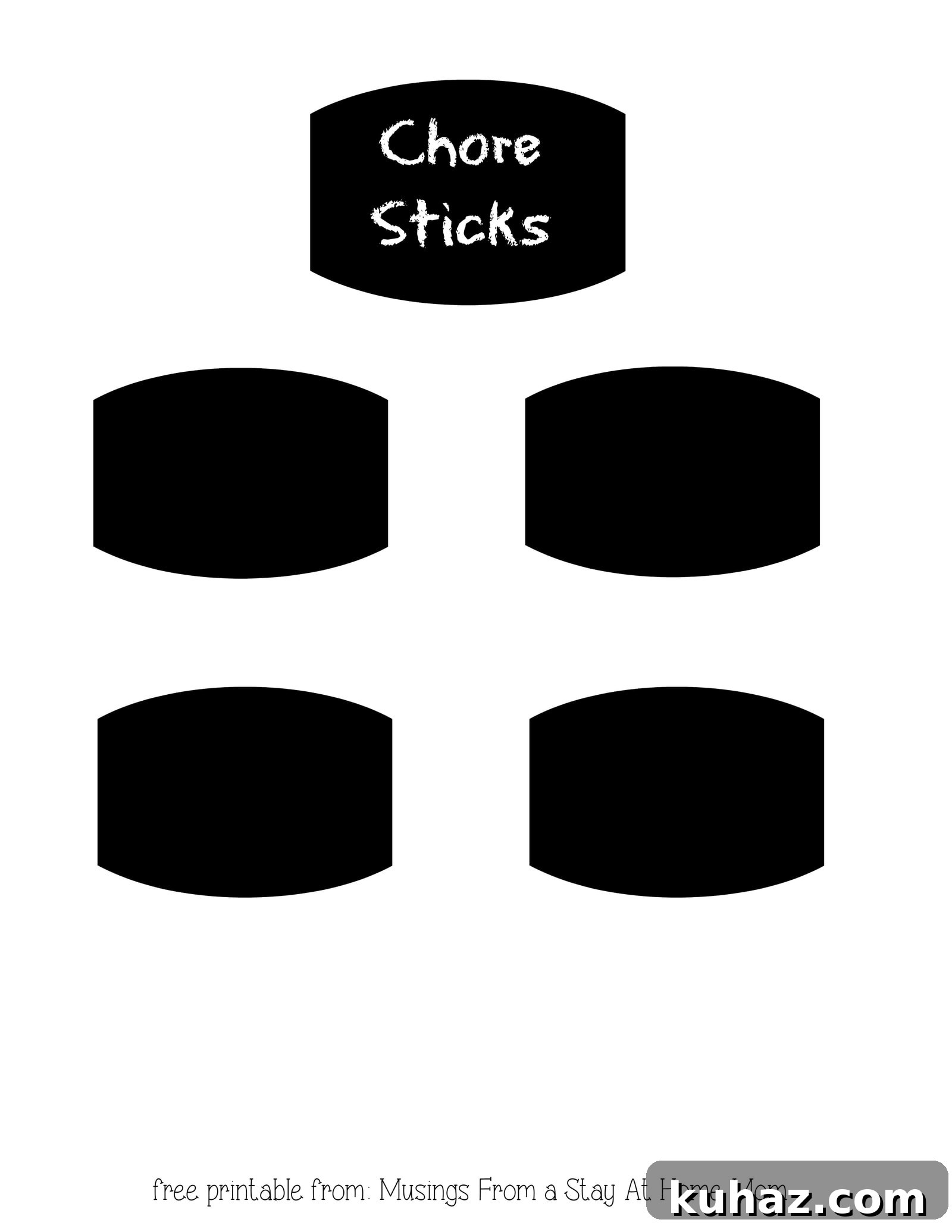
Create or print labels for each jar and the reward chart. Laminate the labels or cover them with clear tape so they last longer.
Step 3:
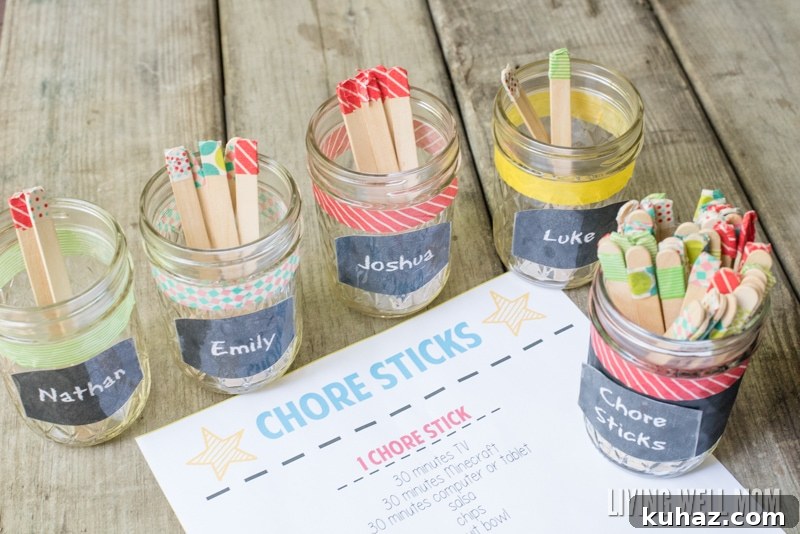
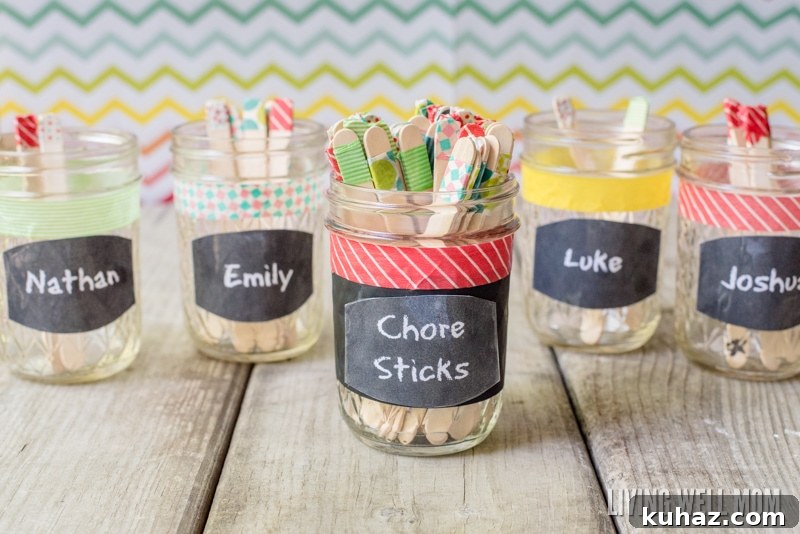
Attach labels to the jars. One jar becomes the main jar holding all unearned chore sticks. The other jars belong to each child for storing earned sticks.
Step 4:
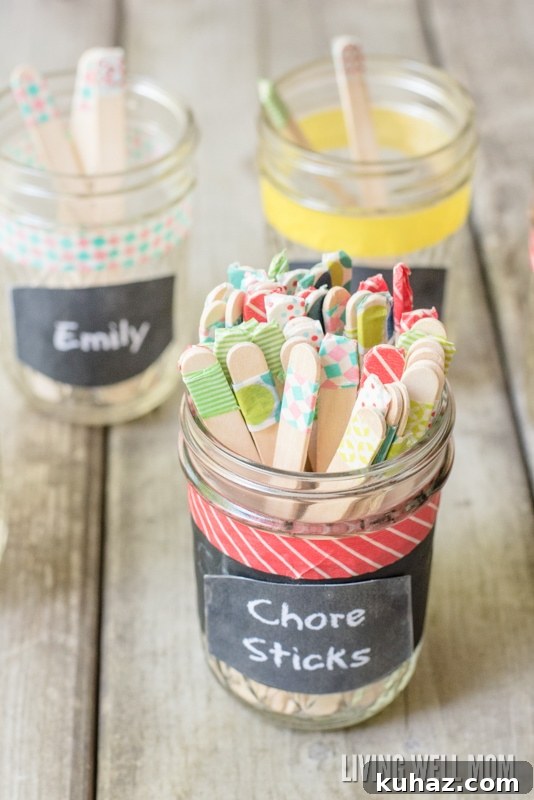
Place all finished sticks in the main jar. When a child completes a chore, move the appropriate number of sticks into that child’s jar. Keep a reward chart visible so everyone remembers what each reward costs.
You can turn chores into friendly competitions — for example, a weekly prize for the child with the most sticks — or adjust the system as needed to keep it engaging. Experiment with ideas until it fits your family’s rhythm.
Place the reward chart somewhere prominent, such as a family command center or the refrigerator, so the incentives stay top of mind and motivate consistent effort.
Where to Hang the Reward Chart
Display the reward chart in a high-traffic area where everyone can see it. A visible chart helps children remember goals and encourages them to earn sticks regularly.
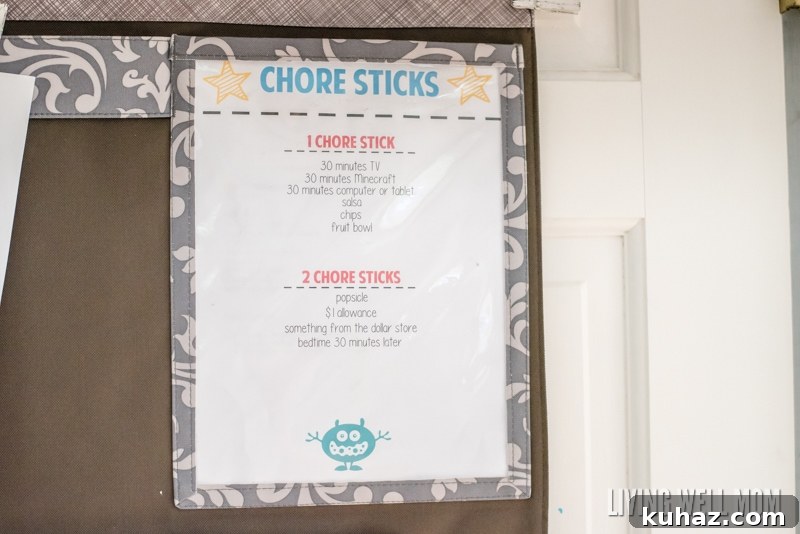
This system mirrors real life: better performance and a positive attitude tend to earn more rewards, while poor effort or attitude earns fewer or no sticks.
I don’t assign a fixed number of sticks for every chore. Instead, I consider quality and attitude. If a child rushes through a task or needs repeated reminders, they may earn fewer sticks. That accountability teaches follow-through.
What to Put on the Reward Chart
I don’t write chores on the sticks themselves — sticks are tokens to represent earned value. We pair the chore sticks with a zone chore chart: children usually earn two sticks for completing their zone chores with a good attitude, and they can ask for extra chores when they want more sticks.
Common chores you might include:
- Wash and fold laundry
- Put away clothes
- Clean toilets and sinks
- Wipe kitchen cabinets and counters
- Load and unload the dishwasher
- Vacuum and mop floors
- Dry dishes and clean mirrors
Keep a “parent’s choice” category for immediate tasks like returning library books or unloading groceries. Letting kids choose chores from a list gives them a sense of control and makes them more likely to participate.
Printable Charts and Extras
Create a printable reward chart that fits your family’s needs. Customize rewards and stick prices so they are meaningful and achievable. Posting the chart where the family gathers reinforces the routine.
Chore sticks can stop arguments, teach responsibility, and help keep your home tidier. With a bit of consistency and patience, this system often becomes a natural part of family life and makes chores feel fair and motivating for kids.